

A multiple-choice quiz with three options for upper elementary students. Questions you can enjoy between classes or at home.

For those of you who think, “Isn’t there something fun we can do?” during breaks between classes, school events, or family gatherings—multiple-choice quizzes are sure to liven things up in no time! For upper elementary school kids, questions that make you think a little or surprising trivia are especially recommended.
In this article, we’ll introduce a wide variety of three-choice quiz questions on familiar topics and more.
Compete with friends, check answers together with family—there are lots of ways to enjoy them! Be sure to give them a try and have fun with everyone.
- A multiple-choice quiz with three options for upper elementary students. Fun questions that build thinking skills.
- [Play Right Away!] Multiple-Choice Quiz Questions for Lower-Grade Elementary School Students
- [For Elementary School Students] 3-Choice Quiz to Deepen Knowledge of Living Things
- [For Elementary School Kids] A New Year’s Quiz Everyone Can Enjoy! Learn surprising fun facts with multiple-choice questions
- For upper elementary school students! A lively and educational true-or-false quiz
- Recommended for upper elementary school students! True-or-false quizzes that make you think
- Let's get excited with a two-choice quiz that everyone—from kids to adults—can enjoy!
- Recommended for upper elementary grades! A fun quiz for elementary school students where you can learn while enjoying yourself
- Fun quizzes for elementary school kids: a collection of questions everyone can enjoy together
- [Difficult] A top recommended quiz collection for junior high school students. Casual questions you can enjoy easily.
- Funny quizzes for middle school students. Quizzes that can liven up a middle school setting.
- Recommended for upper grades! A fun, educational quiz for elementary school students
- [For Lower Elementary Students] Play Right Away! Learn with Fun True-or-False Quizzes
Multiple-choice quiz with three options for upper elementary students. Fun questions to enjoy between classes or at home (1–10)
What color is a polar bear’s skin?

- white
- black
- yellow
See the answer
black
When we think of polar bears, we tend to imagine them covered in fluffy white fur, but the skin underneath is actually black. Their black skin helps absorb sunlight efficiently and maintain body heat. Thanks to this black skin and their transparent, light-transmitting fur, polar bears can live in extremely cold places like the Arctic without succumbing to the cold.

What language is the word “ikura” from?

- Japanese
- Russian
- French
See the answer
Russian
The word “ikura” actually didn’t originate in Japan; it comes from Russian. In Russian, “ikra” refers to fish eggs in general. The term entered Japan during the Taisho to Showa eras and became established as a word that specifically refers to salmon roe.
Which of these is a game that originated in Japan?

- Trump
- chess
- Othello
See the answer
Othello
Othello is a board game devised in Japan in the 1970s. It was originally popularized by a Japanese inventor, who refined and organized the rules based on the game “Reversi.” Today it is enjoyed not only in Japan but around the world, yet its origins lie in Japan.
Multiple-choice quiz with three options for upper elementary school students. Fun questions to enjoy between classes or at home (11–20)
What is the approximate body fat percentage of pigs?

- about 15%
- About 30%
- About 45%
See the answer
about 15%
A pig’s body fat percentage isn’t that high compared to humans. It’s said that a healthy pig’s body fat is around 15%. Pigs are relatively muscular and have less fat than you might think. Although the word “pig” is often used to call someone fat, the funny thing is that pigs actually aren’t that fat.
Who invented the jungle gym?

- doctor
- lawyer
- kindergarten teacher
See the answer
lawyer
The jungle gym is a piece of playground equipment invented by a lawyer. Sebastian Hinton, a lawyer, came up with equipment for children to play on and obtained a patent in the United States in 1918. He originally devised it so his children could exercise and play, and from there it came to be used in parks around the world.
What is inside a Stevenson screen?
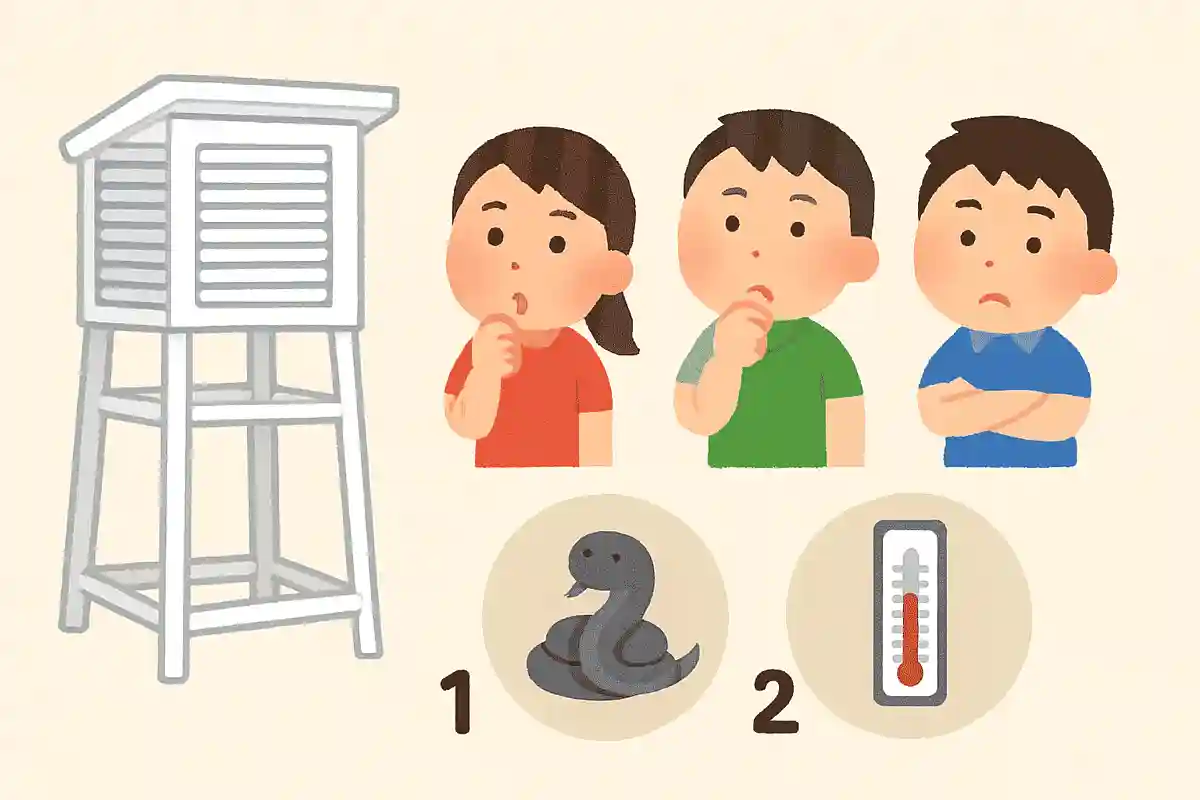
- empty
- animal feed
- thermometer
See the answer
thermometer
A Stevenson screen is a white box placed in schoolyards and meteorological stations. Inside the box are observation instruments such as thermometers and hygrometers, allowing for accurate measurement of temperature and humidity. The box’s shape and color are designed to reduce the effects of direct sunlight, rain, and wind.
What animal were pigs selectively bred from?
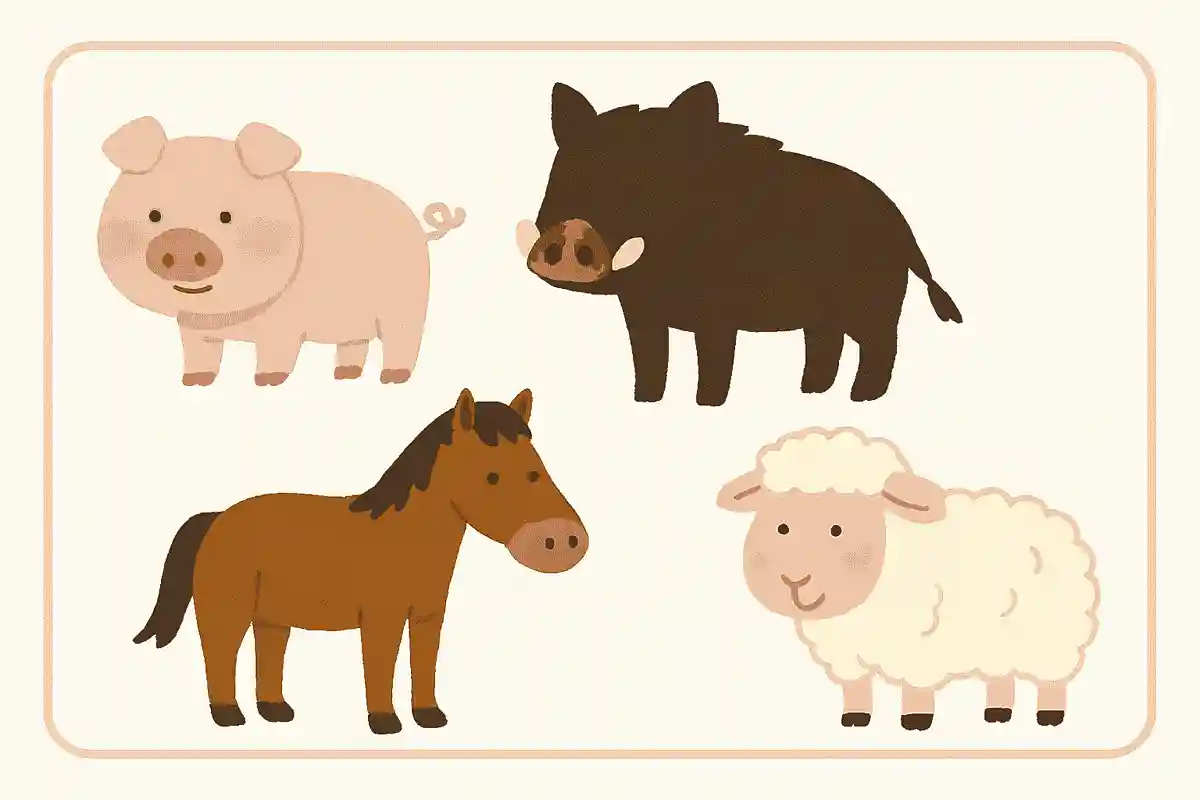
- wild boar
- raccoon dog
- dog
See the answer
wild boar
Pigs are animals that were originally wild boars, domesticated by humans over many years and selectively bred to be easier to eat and to have larger bodies. Today’s pigs are kept as livestock and have evolved to be useful to our lives, providing meat, fat, and more. Although their appearance and temperament differ, pigs and wild boars are very closely related.