

[Beginner-friendly] Easy Mozart piano pieces. Recommended Mozart works.


Wolfgang Amadeus Mozart, a composer familiar from textbooks.
A genius of the classical world known as a child prodigy, he excelled in every kind of music—opera, concertos, symphonies, chamber music, and sonatas.
It’s said he wrote more than 600 works.
This time, we’ve selected some of Mozart’s piano pieces that are on the easier side.
We also point out which aspects make them easy, and, even within that, which parts can be challenging—so be sure to check it out.
- [For Elementary School Students] Brilliant, Showy Masterpieces That Sound Impressive at Piano Recitals
- Beginner to Intermediate: Chopin pieces with relatively low difficulty. Recommended works by Chopin.
- [For Piano Recitals] Simple yet Cool Classical Pieces
- Lower difficulty: Not as hard as it sounds!? Debussy’s piano pieces
- Beginner to Intermediate: Recommended Bach Pieces You’ll Want to Play on Piano
- Beethoven: A selection of gem-like masterpieces that are easy to play on the piano
- [Intermediate Level] Cool Piano Pieces You Can Play [Great for Recitals Too]
- [For Adults] Recommended for Piano Recitals! A Curated Selection of Impressively Sounding Masterpieces
- Piano Masterpieces: Surprisingly Easy Despite Sounding Difficult!? A Curated Selection Perfect for Recitals
- [Piano Pieces] Easy for Children to Play! A Roundup of Simple Classical Works
- [Classical Music] All pieces under 3 minutes! A collection of short and cool piano pieces
- [Piano Recital] Recommended for Boys! A Curated Selection of Cool, Impressive, and Popular Pieces
- [For 5-year-olds] A curated selection of recommended pieces for a piano recital!
[Easier Level] Simple Mozart piano pieces. Recommended Mozart pieces (21–30)
Minuet in F major, K. 2, from the Nannerl NotebookWolfgang Amadeus Mozart
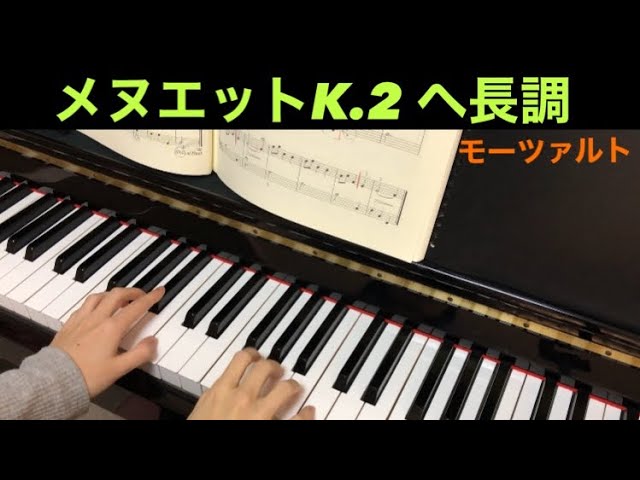
The piece Minuet in F major, K.
2 is said to have been composed by Mozart when he was six years old.
To write something like this at six—what a frighteningly gifted child, right? Jokes aside, this work is popular as a beginner-friendly Mozart piece.
Its characteristic, very Mozart-like structure features a steady rhythm in the right hand while the mood shifts with the left-hand melody.
It’s also great practice for the left hand, so if you’re just starting out, be sure to check it out.

Allegro in G minor, K. 312Wolfgang Amadeus Mozart

Mozart’s piece Allegro in G minor, K.
312, known as an unfinished masterpiece.
Although the reason it was composed remains unknown, it is still performed by many piano enthusiasts today.
In terms of difficulty, it’s suited for intermediate players: while it includes repetitive, straightforward phrases that are approachable even for beginners, it also features frequent hand crossings and some fast passages in tricky spots.
If you can just about manage Fantasia in D minor, K.
397, it’s definitely worth tackling—be sure to check it out.
Serenade No. 13 in G major “Eine kleine Nachtmusik,” First MovementWolfgang Amadeus Mozart

Mozart’s famous piece often used in various media, the first movement from Serenade No.
13 in G major “Eine kleine Nachtmusik.” Because it’s frequently used as background music while cooking, many people find it very familiar.
Although originally a serenade, it’s a staple at piano recitals.
In terms of difficulty, it’s recommended especially for beginners with relatively little experience.
The tempo and the hand leaps are set at a level that’s just right for novices, so be sure to check it out.
Piano Concerto No. 23 in A major, K. 488 – II. MovementWolfgang Amadeus Mozart

Among Classical-era piano works, Mozart’s Piano Concertos are especially beloved.
Here, I’d like to introduce the second movement from his Piano Concerto No.
23 in A major, K.
488.
This piece, classified as an Adagio, is notable for its melody that blends clarity with a sense of pathos.
Since the music was sketched from the piano part, its structure showcases the instrument’s strengths to striking effect.
Although not a short work, it isn’t constructed in a way that demands great stamina, so even beginners should be able to perform it without much difficulty.
Fantasia in D minor, K. 397Wolfgang Amadeus Mozart

Among Mozart’s fantasies, the Fantasy in D minor, K.
397 is especially popular.
Many listeners have surely been captivated by its beautifully melancholic main theme.
As for difficulty, it’s probably best suited to intermediate players.
It may sound as though a beginner could manage it, but that’s the catch.
While the fast passages are limited, without a solid sense of musical expression, it won’t make for a good performance.
That said, it’s not beyond a beginner’s reach, so it’s also recommended as a study piece to work on regularly.