



As a pinnacle of adventure fantasy anime, Studio Ghibli’s Castle in the Sky enjoys cross-generational popularity.
One of the key antagonists who amplifies the film’s worldbuilding is Muska, a character who ranks among the most popular in all Ghibli works.
This time, we’ve compiled a list of Muska’s famous lines.
Many of them are even more well-known than the protagonists’ quotes, and they’re all unforgettable.
If you love Castle in the Sky, this will surely make you want to watch it again!
- Short quotes from Studio Ghibli works: profound words that give us strength
- A dark fantasy that was also adapted into a live-action film! Famous quotes from Attack on Titan
- That one line is sure to jolt you! Short but cool words
- Both main and supporting characters are full of famous quotes! Memorable lines that color One Piece.
- A masterpiece that transcends the realm of shonen manga! Famous quotes from Hunter x Hunter
- The famous quote by Kyojuro Rengoku, who enjoys immense popularity in Demon Slayer.
- Cojicoji’s famous quotes: words that make you chuckle and gently lighten your heart
- Jujutsu Kaisen's quotes that strike the heart: memorable lines that drew attention in the anime and film
- A masterpiece themed around the celebration of humanity! Famous quotes from JoJo’s Bizarre Adventure
- Famous quotes everyone knows, including words from great figures and characters
- When your tension or motivation is low! Short phrases to boost your motivation
- Not just the main characters! Short quotes that add depth to anime works
- Catch a glimpse of each character’s individuality! Memorable quotes from My Hero Academia
Another protagonist of 'Castle in the Sky'? Popular character Muska’s famous quotes (1–10)
Look! People are like trash!Muska

These are the words Muska uttered with a laugh as he controlled Laputa and attacked the soldiers, watching people scatter.
You can sense his cold-blooded nature, as well as his belief that anyone other than himself is unnecessary.
The fact that he’s observing the situation through a monitor is also key, conveying the chilling way he treats people like characters in a video game.
It also feels like his complacency is emphasized here, since this scene leads to things taking a turn for the worse for Muska.

You’d better not make me too angry.Muska
These are words directed at Sheeta, who continues to be defiant even in an unfavorable situation, meant to assert his superiority.
He’s saying that even someone usually calm like himself might do something unpredictable when angry, and that for the sake of survival she should keep him in a good mood.
It’s a line that reveals an intent to rule through fear, conveying not only his cold-blooded true nature but also overwhelming confidence.
You can also sense Muska’s ambition in it—the belief that he will become a god who rules over all humankind.
My eyes, my eyes!Muska

These are the words uttered by Muska after he suffered severe eye damage from the light of the levitation stone unleashed by chanting the spell of destruction.
His sunglasses were blown off and he lost his sight, which really drives home how intense that light was.
Blinded and wandering until he’s finally cast into the sky—this pathetic end that follows conveys the idea that evil is vanquished, a kind of karmic retribution.
Because he gasps the line over and over in pain, it leaves a strong impression as Muska’s signature quote.
Laputa will not perish! It will be reborn again and again!Muska

These are the words he fired off along with bullets, as if to reject Sheeta’s explanation for Laputa’s downfall.
You can hear his confidence: that he could revive the once-ruined Laputa, and that as long as he exists, it will never fall again.
Even if the civilization within had stopped, the very fact that Laputa still stands here lends his claim a certain persuasiveness.
Considering Muska’s ambition to become a god who rules the earth using Laputa, you can also feel a kind of powerful resolve in his words.
Once this settles down, I’ll burn everything to the ground.Muska

This is a line Muska delivers when his path is blocked by the tree roots sprawling throughout Laputa’s interior.
Even this offhand remark reveals his frustration when he can’t reach his destination smoothly or when things don’t go exactly as he wishes.
It also conveys his mindset that anything he deems unnecessary is entirely dispensable, and that he himself should take precedence over all else.
You can also hear in it the desire to reach his ideal as quickly as possible.
Tell me where the stone is, or would you rather face me with that cannon?Muska
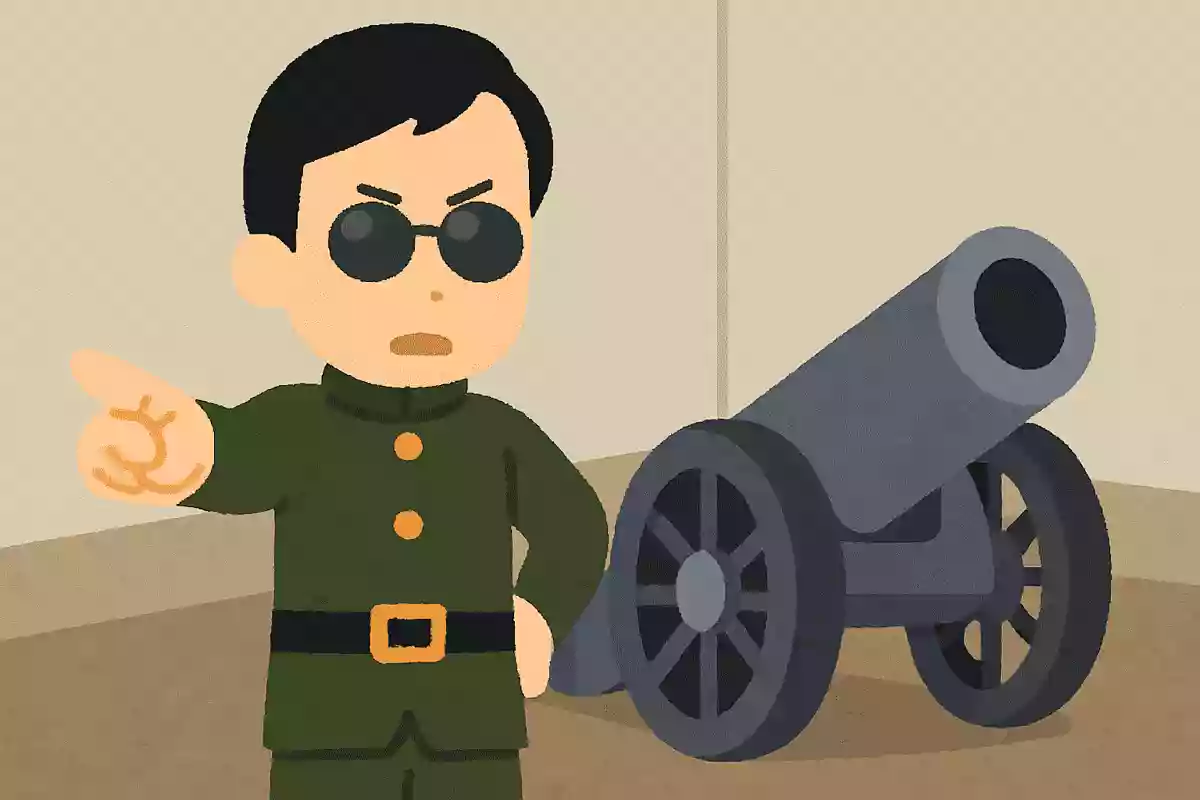
These are the words Muska hurled at Pazu—who had been entrusted with the levitation stone by Sheeta—when they faced off, with Pazu aiming a cannon at him.
Since Muska had Sheeta as a hostage, he knew the situation would be difficult, yet he deliberately chose to speak, which underscores his cold-blooded nature.
It also comes across as a line meant to flaunt his advantage, implying that, because he holds a hostage, the other side has no choice but to yield.
The expression reflects his conviction that he has overwhelming superiority, and it also evokes a sense of carelessness born of overconfidence.
If something like that is still wandering through the skies, you can understand just how dangerous it would be for peace.Muska

These are words in which he argues how dangerous it is that Laputa, with its terrifying scientific power, exists in the sky, and he appeals that he is taking action to deal with that danger.
The fact that every part of this long speech, delivered to persuade, is a lie also conveys Muska’s dictatorship and ruthlessness.
Even if ordinary people feel fear, there’s also the implication that he is different, revealing a strong sense of confidence.
The way he can spin a lengthy lie to realize his ideals also reflects Muska’s self-centered worldview.