

A classic song that sings of Nagasaki: the enduring heart of our hometown

Nagasaki Prefecture, located at the western edge of Kyushu, has the most islands of any prefecture in Japan.
Some of you may feel it often comes up in Japanese history classes.
It’s a region with a rich history, where many elements of Western culture spread throughout Japan via this very gateway.
In this article, I’ve compiled a selection of Japanese songs themed around Nagasaki.
Laying them out side by side, I feel “diverse” is the perfect word—there’s a wide range of genres and tracks represented.
I hope this helps you rediscover the charm of Nagasaki!
- [2026] A Collection of Classic Enka and Kayōkyoku Songs About Nagasaki [Local Songs]
- A classic song about Nagano. The enduring spirit of our hometown passed down through song.
- Folk songs, children's songs, and nursery rhymes of Nagasaki: the heart of the hometown passed down through song
- A classic song that sings of Nagasaki: the enduring heart of our hometown
- [Local Songs] Recommended tracks packed with Japan’s nationwide classics and hometown pride
- [Songs of Kagoshima] The heart of our hometown carried on in song | A curated selection of classic tracks that embody Kagoshima
- A famous song about Fukuoka. The heart of the hometown passed down through song.
- Classic Songs About Nara: Local Anthems and Popular Hits [2026]
- [Hiroshima Songs] The Heart of Our Hometown Passed Down in Song | A Curated Selection of Timeless Classics Loved Across Generations
- A roundup of regional enka songs: classic hits that feature places from all across Japan in their lyrics.
- Classic songs about Saga. A number of tracks related to Saga Prefecture.
- Famous songs and local tunes that sing of Wakayama: melodies that carry on the spirit of our hometown.
- [Song of Osaka] A selection of passionate, warm-hearted Osaka tunes
Classic songs about Nagasaki: the enduring spirit of our hometown (21–30)
It was sunny in Nagasaki today.Ushirogawa Kiyoshi & Hotto Faibu

This is a parody song of the classic local hit “Nagasaki wa Kyou mo Ame Datta” (“It Was Rainy Again in Nagasaki Today”).
The singer is Kiyoshi Ushirogawa, an impersonator of Kiyoshi Maekawa, and two former members of the Cool Five, Etsuro Miyamoto and Masaki Kobayashi, also participate.
In fact, Nagasaki doesn’t get that much rain.
How about spending a sunny day listening to this track?
Under the skies of my hometownMaruyama Akihiro
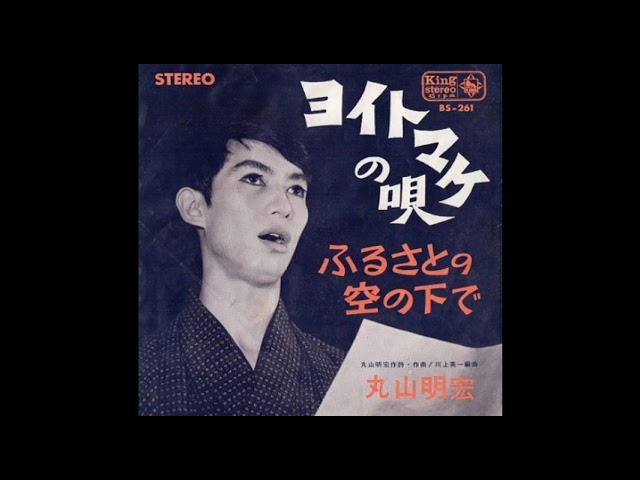
“Under the Sky of My Hometown,” the B-side to “Yoitomake no Uta,” which Akihiro Miwa released under his real name Akihiro Maruyama.
It’s an encouraging song imbued with the background of him having been exposed to the atomic bombing while painting at home and with his feelings for his hometown.
The Hill of PromisesFukuyama Masaharu

This is Masaharu Fukuyama’s sixth single, released in 1992.
The title, “Yakusoku no Oka” (The Hill of Promise), is said to be modeled after Mount Inasa in his hometown of Nagasaki City.
It’s a powerful song about pursuing one’s dreams.
It was performed as the opening number at his hometown homecoming concerts held in 2000 and 2009.
The Bells of NagasakiFujiyama Ichirō

Dr.
Takashi Nagai, a physician who himself suffered from the Nagasaki atomic bombing yet remained on site to treat survivors.
This song of the same title was created based on his essay “The Bells of Nagasaki.” It was released as a single in 1949.
With its heartrending melody that quietly seeps in, the piece inevitably brings to mind Japan’s circumstances at the time, the war, and the tragic events that occurred.
It is a song that may prompt us to reflect on the past—and on what lies ahead.

Nagasaki BluesAoe Mina
This is Mina Aoe’s 11th single, released in 1968.
The song was a major hit and was later adapted into a 1969 film titled “Yoru no Kayō Series: Nagasaki Blues,” in which Mina Aoe herself also appeared.
Rain Man, Sunny Woman: Waiting for You at Dutch SlopeFuriwee Haihai

This is a song by the Nagasaki-born duo Freeway High High.
Their debut track, released in 2004, is “Ame Otoko, Hare Onna ~ Waiting for You on Dutch Slope.” Set in popular spots around Nagasaki, it’s a youthful, hometown-style tune that depicts a date between a rain-prone boyfriend and his sunny girlfriend.
Nagasaki ElegyDikkumine Fujihara Chitaka

This is a duet song released in 1947 by Dick Mine—an iconic Showa-era star who sang jazz, blues, and popular songs and was also active as an actor—and Chitaka Fujiwara.
It was later covered by Yujiro Ishihara.
The song evokes the picturesque, nostalgic scenery of Nagasaki.