

Let's sing together! A collection of nursery rhymes everyone knows

Nursery songs that many people have sung in day-care centers, kindergartens, and schools.
These children’s songs, passed down through generations, are still sung today in childcare settings, schools, and even senior facilities.
That said, fewer people are singing them nowadays, and some children can be found who don’t know nursery songs at all.
In this article, we’ll introduce nursery songs that everyone—young and old—will recognize.
If you’re not very familiar with nursery songs, start by listening to the ones we introduce here.
Try singing nursery songs together with your child, your friends, or your grandparents, and have fun!
[Let's Sing Together!] A Collection of Nursery Rhymes Everyone Knows (1–10)
There’s no such thing as ghosts.Sakushi: Maki Minori / Sakkyoku: Mine Akira

A children’s song that adorably expresses kids’ fears.
While empathizing with little scaredy-cats, it portrays a positive attitude toward facing things with courage.
First broadcast on NHK’s “Minna no Uta” in 1966, it has been loved for over half a century.
In 2016, it was even selected as a practical skills test piece for nursery teachers, and it continues to be used in educational settings.
This song is perfect for enjoying together with family and friends.
Even children who get scared easily will naturally find themselves smiling as they sing.
As a venerable children’s song, it’s also ideal for parents to hum along to, creating memorable moments together.
Toy Cha-Cha-ChaLyrics: Akiyuki Nosaka・Osamu Yoshioka / Composition: Nobuyoshi Koshibe

Omacha no Cha-Cha-Cha is also known for having lyrics written by Akiyuki Nosaka, the author of the Naoki Prize-winning novel Grave of the Fireflies.
It was originally composed as a piece to be used on Fuji TV’s variety program Yamaha Time.
The current Omacha no Cha-Cha-Cha is a remake that reshaped it into a children’s song.
Its story-like lyrics about toys coming to life at night feel a bit reminiscent of Pixar’s Toy Story, don’t they? It’s a classic children’s song that pairs well with instrumental performance!
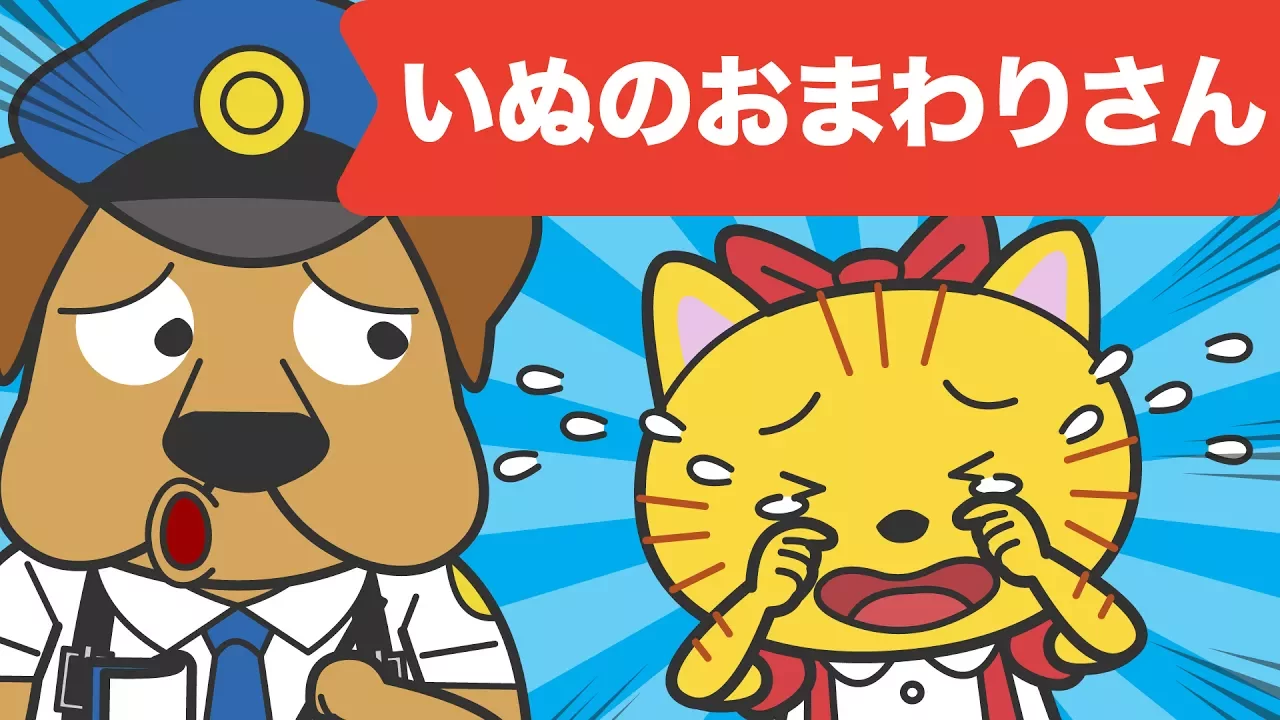
Dog PolicemanSakushi: Satō Yoshimi / Sakkyoku: Ōnaka Megumi

This nursery rhyme portrays the interaction between a lost kitten and a police-dog who worries about it.
It’s a song often performed on NHK’s “Okaasan to Issho.” The appeal lies in Yoshimi Sato’s friendly wording and Megumi Ohnaka’s rhythmic melody.
Since its release in September 1960, it has been sung across generations.
We recommend singing it with your child while imitating animal sounds.
It’s also popular in daycare and kindergarten, making it perfect for parent–child communication.
Through this piece, why not feel the importance of kindness and helping one another?
A Little Bear in the RainSakushi: Tsurumi Masao / Sakkyoku: Yuyama Akira

This piece depicts a bear cub playing by a brook on a rainy day.
Its gentle, all-hiragana lyrics and heartwarming melody spark children’s imaginations.
First broadcast in 1962 on NHK’s “Uta no Ehon,” it has continued to be loved by many.
In 2007, it was selected for the “100 Best Japanese Songs.” Akira Yuyama’s delicate composition and Masao Tsurumi’s warm poetry blend beautifully, vividly portraying a rainy-day scene.
Ideal as a communication tool for parents and children, it’s also enjoyable with grandparents.
It is truly a classic Japanese children’s song passed down across generations.
Ice Cream SongSakushi: Satō Yoshimi / Sakkyoku: Hattori Kōichi

The person who wrote the lyrics to the children’s song “The Policeman Dog” is Yoshimi Sato—the same person who wrote the lyrics to this song, “The Ice Cream Song.” Mr.
Sato is also well known as a children’s story author who received the Sankei Children’s Publishing Culture Award and the Akai Tori Literary Award.
The lyrics, which say, “Ice cream that anyone can eat now couldn’t be eaten even by princes or princesses in the old days,” are simple and approachable.
The onomatopoeia that expresses the coldness and sweetness is fun, and the slow, gentle melody naturally gets your body keeping time.
It’s a highly recommended song that’s easy to sing!
butterflySakushi: Nomura Akio / Sakkyoku: Supein min’yō

As a spring children’s song, “Butterflies” is one you just can’t leave out—virtually everyone knows it.
Like many nursery rhymes, it’s actually a foreign song that later received Japanese lyrics.
The original is the German song “Little Hans,” which depicts a young boy setting out on a journey.
While the first verse is the most famous, there are actually four verses: sparrows appear in the second, dragonflies in the third, and swallows in the fourth.
It’s the kind of tune that makes you feel like spring the moment you hum it.

dragonfly glassesSakushi: Nukaga Seishi / Sakkyoku: Hirai Kōzaburō

This children’s song, which sings about a dragonfly’s cute eyeglasses, is a charming tune that sparks kids’ imaginations.
The very idea of a dragonfly wearing glasses conjures up an adorable scene.
You can sing while imagining what kind of glasses the dragonflies soaring through the sky might wear—light blue ones, red ones, even glittering ones.
First broadcast on NHK Radio in the summer of 1949, this song is still loved by many people today.
How about feeling the autumn breeze, searching for dragonflies with your child, and humming this song together?