


When welcoming a new year, how about expressing your resolutions with four-character idioms? Traditional Japanese yoji-jukugo are full of words that powerfully convey determination and hopes.
From upbeat phrases to start the year to expressions that value your individuality, exploring various idioms may lead to new discoveries.
Savor their sound and meaning as you search for the four-character idiom that will guide you throughout the year.
And together with your family or friends, try creating a heartwarming moment by sharing and discussing each person’s aspirations!
- [Kakizome] Four-character idioms fit for the New Year: Introducing words that resonate with the heart and their meanings
- For Elementary School Students: Four-Character Idioms You Can Use for New Year’s Resolutions — How to Set Cool Goals!
- [Elementary School Students] Perfect for Kakizome! A Collection of Four-Character Idiom Ideas
- General: Four-character idioms that encourage determination—powerful, heart-stirring words
- Become positive with four-character idioms that resonate with the heart! Common yet deeply meaningful words.
- Four-character idioms that help you achieve goals! Phrases you can use in everyday situations
- Recommended for elementary school class goals! A collection of impactful ideas using four-character idioms
- Strive toward your goals! Four-character idiom ideas that resonate with elementary school students
- Four-character idiom slogans for groups! Words that convey a powerful message
- Perfect for elementary school slogans! A collection of four-character idiom ideas you'll want to use
- [For Elementary Students] A Collection of Beautiful Four-Character Idioms to Know
- Four-character idioms wishing happiness: a collection of heartwarming expressions for everyday use
- [Four-Character Idioms] Impressive and Cool Sound! A Collection of Famous Quotes Worth Knowing as General Knowledge
Four-character idioms perfect for New Year’s resolutions! A collection of motivating phrases (1–10)
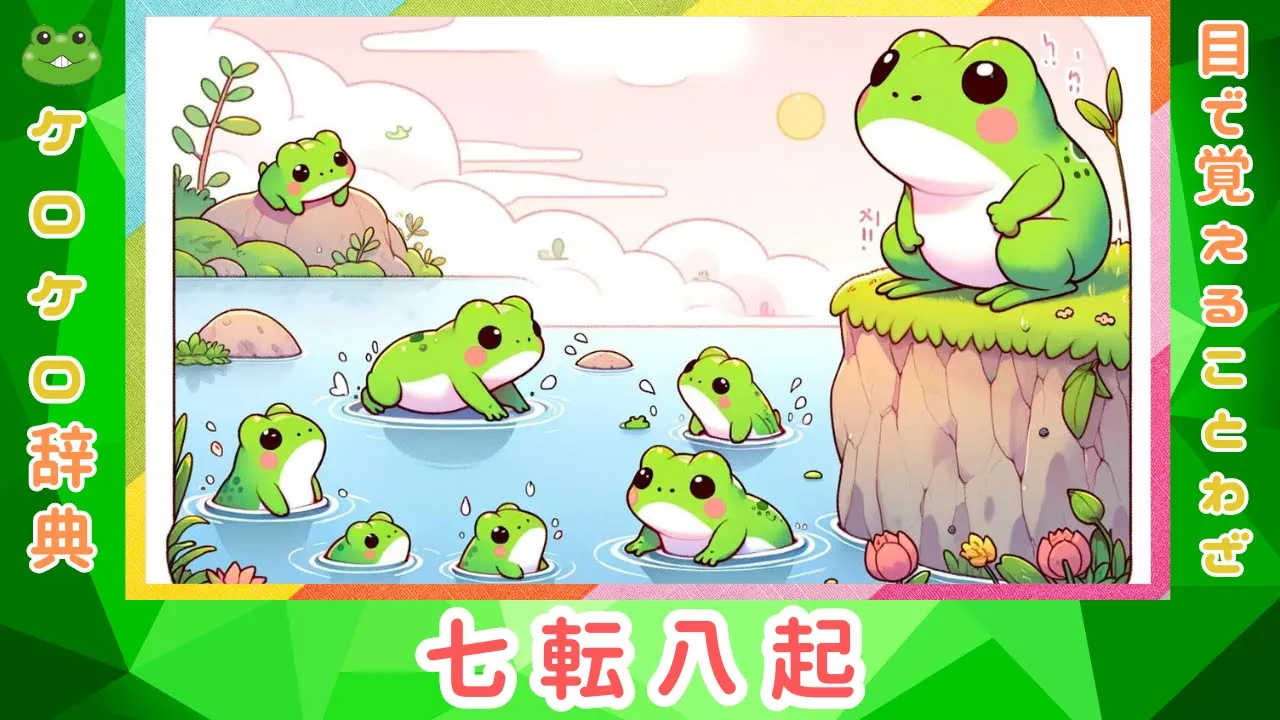
Fall down seven times, get up eight.

When facing a challenge, many people keep this phrase close to their hearts, don’t they? As the kanji “七転八起” suggests, it means getting back up no matter how many times you fall.
In other words, even if you fail again and again, you don’t give up—you keep moving forward until you see it through.
It’s easy to think you’re done for after a failure, but it’s precisely because you fail that you can reflect, avoid the same mistake next time, and move toward success.
In this new year, make this phrase your resolution and reach for success with a strong heart!

Once-in-a-lifetime encounter

「一期一会」(いちごいちえ)という四字熟語は、英語で “a once-in-a-lifetime encounter” を意味します。茶道に由来し、同じ集まりは二度と繰り返されないという価値観から、参加者同士が互いに最大限の誠意をもって接すべきだという心構えを育みます。
I think this is a wonderful philosophy, so why not make it your New Year’s resolution? By seeing every meeting with others and every spark for new work as a one-time opportunity, you’ll be inclined to respond more thoughtfully.
Sincerity toward others goes around and, I’m sure, will ultimately lead to your own happiness as well.
Actions speak louder than words.

“Silent action” (fugen-jikkō) means refraining from unnecessary words and simply carrying out what needs to be done when taking action.
It is said to be a term Confucius used to describe a virtuous person.
A similar phrase is “speaking and acting” (yūgen-jikkō), which is a play on fugen-jikkō and carries the nuance of taking responsibility for one’s words.
If you find it hard to put what you should do into action, why not adopt this phrase as your resolution? It might be a good opportunity to correct a self that has grown accustomed to not doing things.
just cause

Taigi-meibun refers to the justification or grounds for taking an action.
It’s fine when something can be completed by yourself, but when your words and actions affect those around you, you need a clear, convincing reason.
By making this word your New Year’s resolution, it may prompt you to question the legitimacy of your actions when you’re about to act impulsively or emotionally.
Before you end up regretting it—“I shouldn’t have done that…”—adopt this word as your resolution and take a fresh look at your words and actions.
By aiming to speak with legitimacy, you can be more confident when expressing your opinions, and you may also earn greater trust from those around you.
Carelessness is your worst enemy.

You could see success right in front of you, let your guard down, and ended up failing… lost the match… Some of you may have experienced something like that.
It’s understandable—staying tense for too long wears people out—but for the person involved, it becomes a bitter memory and a deeply frustrating experience.
At times like that, make the four-character idiom “yudan taiteki” (Letting your guard down is your worst enemy) your New Year’s resolution.
If you keep this phrase in mind, it will come back to you in those moments when your focus slips and help you tighten your resolve.
calm and composed

What were your reflections on last year? If asked that, everyone would probably recall various mistakes.
Among them, there may be experiences where you think, “If only I had stayed calm and taken my time, I wouldn’t have failed.” With that in mind, why not set your resolution this year as taizen-jijaku—a state of being calm and unshaken? Taizen-jijaku refers to maintaining a composed mind and never losing your cool.
If you can make taizen-jijaku your ally, you’ll be able to judge things calmly with a broad perspective, and your mistakes might decrease dramatically.
indomitable; unyielding

Even when you set goals, if you fail, you quickly get discouraged and lose motivation…
これに苦労している人には、次の四字熟語がおすすめです:不撓不屈(Futo Fuku)。
It means seeing things through without bending your resolve, even when faced with painful and difficult circumstances.
It’s perfect for New Year’s resolutions and conveys a strong will to carve your own path in life.
When you feel like you’re about to be defeated or lose confidence, try recalling this phrase.
It may help you remember the person you want to become and rekindle the strength to move forward.