

Chihiro Onitsuka's classic and popular songs

Chihiro Onitsuka debuted in 2000 and broke through that same year with her song “Gekkou” (Moonlight).
Her slightly husky yet clear high notes are incredibly captivating.
Another appeal of her music is the emphasis placed on lyrics.
This is one of her artistic commitments: when creating songs, she reportedly writes the poem first and then composes the music.
I’ve picked out everything from her signature tracks to hidden gems, so please take your time and give them a careful listen.
- Chihiro Onitsuka Love Songs and Popular Tracks Ranking [2026]
- Chihiro Onitsuka’s Most Popular Songs Ranking [2026]
- Chihiro Onitsuka Karaoke Popular Song Rankings [2026]
- Hikaru Utada’s famous and popular songs
- [Masterpieces Singing the Full Moon] Carefully Selected Popular and Classic Songs Related to the Moon
- [Moon Songs Special] Famous songs about the moon. Songs you’ll want to listen to under a full moon or in the moonlight.
- A masterpiece by Yoko Kanno. Recommended songs.
- 2000s Japanese Hits | Unforgettable Once You Hear Them! Exquisite Masterpieces
- Masterpieces by LUNA SEA: songs with profound allure that even connoisseurs admire
- Debut songs by Japanese female artists from the 2000s
- Kobukuro’s classic and popular songs
- CHIHIRO’s Love Songs: Popular Song Ranking [2026]
- Ken Hirai's classic and popular songs
Chihiro Onitsuka’s classic and popular songs (1–10)
infectionOnitsuka Chihiro

This is the fifth single, released in 2001.
It was also used as the theme song for the drama “Hyoten 2001.” The sound, built around piano and strings, and the vocals that evoke inner suffering are striking.
It’s a song that seems to portray the weaker side of human nature: the struggle against one’s own growing weakness, a heart gradually falling apart, and the self-reproach that follows.
As it moves toward the end, both the sound and the vocals grow more intense, conveying emotions that can no longer be contained, which resonates deeply.

Heat hazeOnitsuka Chihiro

It’s a single released in 2009.
The overall tempo is relaxed, yet within it there’s a powerful strength that conveys the conviction embedded in the vocals—an epic rock ballad.
With the song’s theme being the beauty of Japan, the inclusion of seasonal imagery in the lyrics is particularly striking.
It’s a piece that evokes an intense emotion toward someone that cannot be discarded, and by layering it with depictions of the four seasons, it seems to express a feeling that persists throughout the year—so fervent it borders on frightening.
signOnitsuka Chihiro

Among Onitsuka’s early singles, this one stands out for its especially pop, relatively bright melody and its light, breezy band ensemble that lingers in the ear.
It was also used in commercials for the J-T08 and J-T09 phones—models sold by the mobile carrier then known as J-PHONE (now SoftBank) and developed by Toshiba.
Take note as well of Onitsuka’s distinctive rhetoric in describing a mobile phone with the word “blink.” If you try to grasp Onitsuka only through the image commonly circulated in the public eye, many may carry the preconception that she’s a straightforward, impassioned type who sings of raw emotion.
I’d like people to recognize anew that, as demonstrated by “Sign,” she is a singer-songwriter with the talent to distill a small love story—depicting a boy’s pure feelings—into lyrics and express it as a highly popular pop song.

Chihiro Onitsuka’s Best and Popular Songs (11–20)
CageOnitsuka Chihiro

This is their third single, released in 2000.
The lyrics are striking for their portrayal of unstable emotions: the intense anxiety that strikes when you’re alone, and the way you cling to good memories from the past as if to fill a missing piece in your heart.
The up-tempo sound, featuring a light, airy piano tone, is also memorable.
In contrast to the dark mood of the lyrics, it seems to express a restless urge to escape from the present place and emotions that waver without settling.
fireflyOnitsuka Chihiro

It’s a single released in 2008.
It was also used as the theme song for the film “The Last Game: The Final Waseda–Keio Match.” The “firefly” in the title doesn’t signify a season, but is used as a symbol of transience.
It expresses the sadness of precious moments passing in an instant and the wish for them to last forever by likening those feelings to the brief glow of a firefly.
Precisely because moments pass so quickly, the song, imbued with gentleness and warmth, makes you want to cherish the here and now.
End of the worldOnitsuka Chihiro

Released in March 2019 as a digital-only single, End of the world was written as the theme song for the drama Pornographer: Indigo no Kibun, based on a popular boys’ love manga.
The moment the melancholic piano and Onitsuka’s vocals begin, you’re already immersed in the world of Chihiro Onitsuka.
It’s not a dazzling love story; the suffering and pain—indispensable elements of her universe—and even the phrase “end of the world” are quintessentially her.
But it should also be emphasized that the song touches on gentle feelings, like gratitude toward a cherished person, and evokes a warm sense of wonder.
Her inexhaustible, overwhelming individuality and talent are not the sort of things that could ever be harmed by gossip or superficial images.
An unfinished letterOnitsuka Chihiro
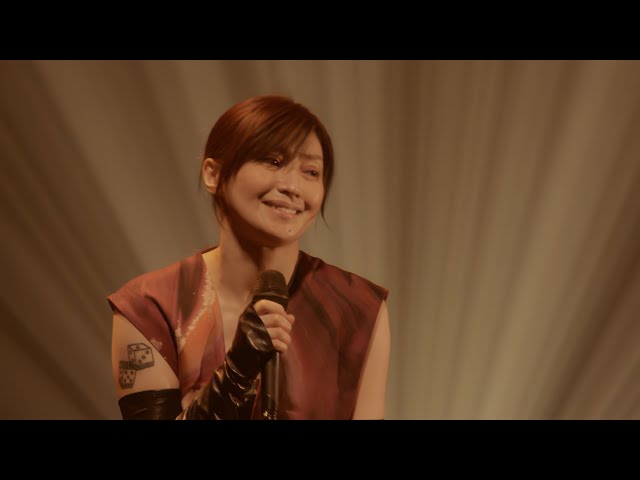
This is a digital-only single by Chihiro Onitsuka, released in June 2020.
It’s positioned as a recut single from the best-of album REQUIEM AND SILENCE, which was released in February of the same year to commemorate the 20th anniversary of her debut, and it’s a superb ballad that lets you fully savor Onitsuka’s unchanging individuality as a singer-songwriter since her debut.
The sound arrangement by keyboardist Masayuki Sakamoto—who serves as bandmaster for major names like Chihiro Onitsuka and Hideaki Tokunaga—is also outstanding.
Onitsuka herself has said it’s “the first song I’ve ever sung about myself,” and compared with the lyrics of her early masterpieces, which often carried a somewhat detached, objective gaze typical of an artist, the candid fragments of memory and the messages that evoke hope feel like words only she could write upon reaching her forties.
At the same time, while she uses the word for “self,” it also seems as though she deliberately avoids the first-person pronoun “I,” which inevitably makes one imagine a kind of karmic burden inherent to being a songwriter.