

[Classical] Masterpieces of oratorios. Recommended classical music.

The majestic harmonies resound, and the grand musical form known as the oratorio expresses Biblical stories through music.
Its history goes back to the Baroque era, and it has long been cherished as the pinnacle of sacred music.
Today, oratorios are performed not only in churches but also in concert halls, loved as a vital genre of classical music.
The true allure of the oratorio lies in the overwhelming richness and power created by the interweaving of chorus and orchestra.
It opens up a musical world distinct from opera.
In this article, we introduce masterful oratorios that have left their mark on the history of classical music.
- [Chorale] Masterpieces of chorales. Recommended popular pieces.
- [Tearjerker] Songs that make your heart tremble with tears & moving tracks with lyrics that touch the soul
- [2026] The Beautiful World of Ambient: A Curated Collection of Must-Listen Masterpieces
- [Arpeggio] Beautiful masterpieces of Western music. Exquisite guitar sounds.
- The magnificent world of vocal artistry: a special feature on popular vocal works from opera to art songs.
- 【2026】The State of World Music Now: Introducing Masterpieces to Enjoy Diverse Musical Cultures
- A cappella masterpieces: Recommended songs where beautiful harmonies shine (Western and Japanese music)
- Classic salsa songs. Recommended popular tracks.
- [Celtic Music] Masterpieces of Celtic music. Recommended Irish music
- [Hymns] Famous hymns and sacred songs. Recommended hymns and sacred songs.
- [2026] Let's Sing at the Chorus Competition! A Roundup of Recommended Western Songs
- Gospel singers of the world. Masterpieces of gospel music, recommended popular songs.
- [For Beginners] The Epic World of Symphonic Metal: A Collection of Popular and Classic Songs
Classics: Masterpieces of Oratorio — Recommended Classical Music (11–20)
The Legend of Saint ElizabethFranz Liszt

Franz Liszt is famous as a wizard of the piano, but did you know he also composed a grand sacred work themed on a saint from his homeland, Hungary? This piece is an oratorio depicting the compassionate life of Princess Elisabeth, who married into the Landgraves of Thuringia.
In fact, the sweeping conception was inspired by a cycle of frescoes in Wartburg Castle.
A prayer motif symbolizing the saint recurs throughout the work, lending the narrative profound spirituality and a strong sense of unity—truly wonderful.
Premiered in August 1865 under Liszt’s own baton, the work can be heard on recordings such as the Hungaroton release conducted by János Ferencsik.
It’s highly recommended when you want to immerse yourself in a moving sound world of majestic chorus and orchestra—quite different from opera.
Samson HWV 57 ‘Overture’Georg Friedrich Händel

Georg Friedrich Handel, a leading figure of the late Baroque.
This piece opens the overture to the oratorio Samson, which Handel undertook immediately after completing the famous Messiah and premiered in February 1743.
While the oratorio deals with the tragedy of a hero, this work does not depict the story directly; rather, it heightens anticipation for the grand drama to come.
Its appeal lies in the brilliant, resounding brass, whose powerful sonorities suggest the hero’s dignity and the sanctity of the tale, instantly drawing listeners in.
Known also through recordings conducted by Nikolaus Harnoncourt, this piece is perfect as an introduction before focusing on a task, or whenever you want to immerse yourself in the expansive world of classical music.
Christmas OratorioHilarion (Alfeyev)
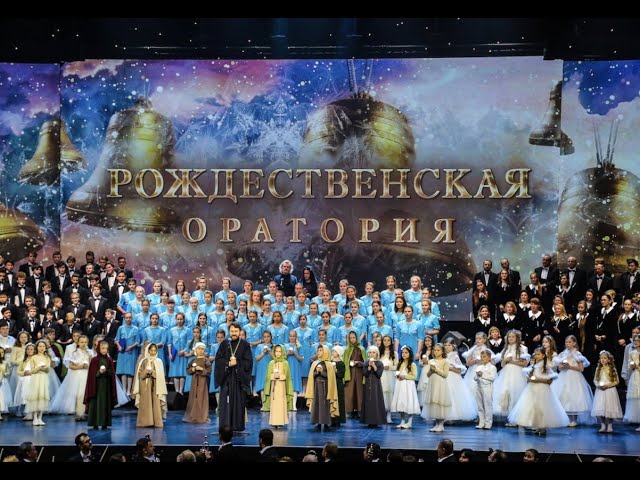
This is a work by Hilarion Alfeyev, a bishop of the Russian Orthodox Church who is also active as a theologian and composer.
The piece is a grand oratorio that portrays the story of Christ’s Nativity under the theme “from darkness to light,” featuring an impressive blend of the Orthodox Church’s solemn choral tradition and a Western narrative musical style.
The harmony woven by a boys’ choir symbolizing the voices of angels and a mixed choir representing people’s prayers deeply stirs the listener’s heart.
The work received its world premiere in Washington, D.C., in December 2007, and parts of it are included on the album “Stabat Mater / Songs of Ascent / Christmas Oratorio.” It is a perfect choice for those who wish to enjoy a sacred, serene atmosphere during the Christmas season, rather than something lively.
Easter OratorioJ.S.Bach

A resplendent fanfare announces the dawn of resurrection in this festive oratorio by Johann Sebastian Bach.
Its great appeal lies in the magnificent instrumental writing—featuring trumpets and timpani—and the dramatic dialogues among the four soloists who portray the characters.
The music vividly depicts the disciples’ quickened steps as they hurry to the Lord’s tomb and the subtle shift of their hearts from astonishment to conviction.
Premiered on Easter Day in April 1725, the work also has the intriguing background of having originally been a different celebratory cantata.
It is a masterpiece perfectly suited for immersing oneself in a world of hope and joy, enveloped in the majestic sonorities of orchestra and voices.
Elias (Elia)Felix Mendelssohn

An oratorio depicting the life of Elijah, a prophet from the Old Testament, and one of the signature works of German composer Felix Mendelssohn.
Premiered in Birmingham, England, in August 1846, it captivated an audience of more than 2,000.
Centered on the themes of God’s power and human faith, it portrays Elijah’s suffering and hope with dramatic intensity.
Its rich harmonies for chorus, soloists, and orchestra leave a deep impression on listeners.
Seamlessly blending Romantic emotional expression with Baroque tradition, this masterpiece is recommended for those new to classical music and for anyone seeking music with a moving, narrative quality.
Christmas OratorioJ.S.Bach

This is a representative oratorio by composer Johann Sebastian Bach, known as the Father of Music.
As the title suggests, it was written in 1734 to be performed in churches during the Christmas season.
Strictly speaking, it is closer in form to a cantata than an oratorio, but it is called an oratorio because the singers and chorus take on the roles of biblical characters.
It remains a beloved masterpiece frequently performed at Christmas.
It is also recommended as an introductory oratorio, offering a sense of the Baroque era and the religious views of the time.
[Classical] Masterpieces of Oratorio. Recommended Classical Music (21–30)
Saint LudmilaAntonín Dvořák

It is an oratorio by the Czech composer Antonín Dvořák, famous for his Symphony No.
9 “From the New World.” Although it is rarely performed, Dvořák composed many sacred works—most notably the well-known Stabat Mater—and this piece is one of them.
It is based on the legend of Saint Ludmila, a tale long told in the Czech lands; Ludmila is said to have been a real person who lived in the 9th century.
The musical character is quintessentially Dvořák, with similarities to the middle section of the fourth movement of the New World Symphony and to the Slavonic Dances.
It is a hidden masterpiece from Dvořák’s mature period, when he wrote works such as the Slavonic Dances.