

Easy-to-sing songs by Yutaka Ozaki. Songs you want to belt out at karaoke.


Have you ever wanted to sing Yutaka Ozaki’s songs at karaoke but hesitated because they seem high in key? In fact, the vocal range varies from song to song, and even well-known tracks like “Sotsugyo” can be sung comfortably once you get the hang of them.
In this article, we’ve selected songs by Yutaka Ozaki that are relatively lower in key or have easy-to-follow melodies, making them easier to sing.
Use this as a guide when choosing your next karaoke setlist!
- Karaoke Ranking of Popular Songs by Yutaka Ozaki [2026]
- [Even If You're Tone-Deaf, It's Okay!] Easy-to-Sing Karaoke Songs and Practice Tracks
- Karaoke songs recommended for men with low voices or who are good at singing in a low register
- Even karaoke beginners can relax! Easy-to-sing songs for men
- Karaoke songs where even men with low voices can aim for high scores
- [Men in Their 50s, Gather Up!] Classic Karaoke Crowd-Pleasers & Easy-to-Sing Hits
- Karaoke songs that are easy to sing and recommended for men of the Yutori generation
- Recommended Kenshi Yonezu songs that are easy to sing at karaoke
- A collection of easy-to-sing Kobukuro songs: tracks that even those who aren’t confident singers can try
- Now karaoke isn’t scary! Easy-to-sing songs recommended for the Yutori generation
- Tsuyoshi Nagabuchi’s easy-to-sing songs: Recommended tracks for karaoke
- A must-see for Gen Z men! Easy-to-sing songs by male artists for karaoke
- [Enka] Songs That Are Easy to Sing Even for the Tone-Deaf [Male Singer Edition]
Singable songs by Yutaka Ozaki. Songs you want to belt out at karaoke (1–10)
COOKIENEW!Ozaki Yutaka

A staple of live shows characterized by vocals and a band sound full of energy that are so typical of Yutaka Ozaki, it was performed at the concert held at Yoyogi National Gymnasium (Olympic Pool No.
1) on October 25, 1991.
The song itself is on the longer side at 6 minutes 31 seconds, with a relaxed tempo that makes it easy to sing along with the rhythm.
The melody line is very simple, and the chorus really sticks in your head.
The rhythm is steady throughout, so you can keep the same groove from the start.
Try enjoying it while moving with the beat as you sing.

existenceNEW!Ozaki Yutaka

It’s a classic song from the 1985 second album “Kaikisen” that questions the importance of accepting yourself amid inner conflict and facing challenges with love and sincerity.
The lyrics encourage confronting the city’s shadows and pain, reexamining your true self, and finding the strength to make a fresh start.
The pitch leaps sharply from the chorus, which may be tough for some singers.
You’ll need a solid breath before hitting the high notes; after taking in plenty of air, let your voice ride that recoil and it will come out smoothly.
Aim your voice as if projecting into the distance.
Take care not to strain too much.
The City Where Love Has VanishedNEW!Ozaki Yutaka

It’s a rock tune included on the debut album “Seventeen’s Map,” released on December 1, 1983.
It’s a classic filled with cries of frustration at the contradictions and absurdities of the world and the powerlessness felt as a student, expressing inner conflict and pure desire.
The overall vocal range is D3–B4, and it features the passionate singing style typical of Ozaki.
If you push too hard, you may lose your voice even within an otherwise comfortable range.
Until you’re used to it, avoid using your throat and focus on resonating in your chest.
Even just placing your hand on your chest can help you feel the resonance and make your singing sound fuller.
Try singing with the sensation of projecting your voice strongly toward your chest.
Singable songs by Yutaka Ozaki. Songs you’ll want to belt out at karaoke (11–20)
Stained BondsNEW!Ozaki Yutaka
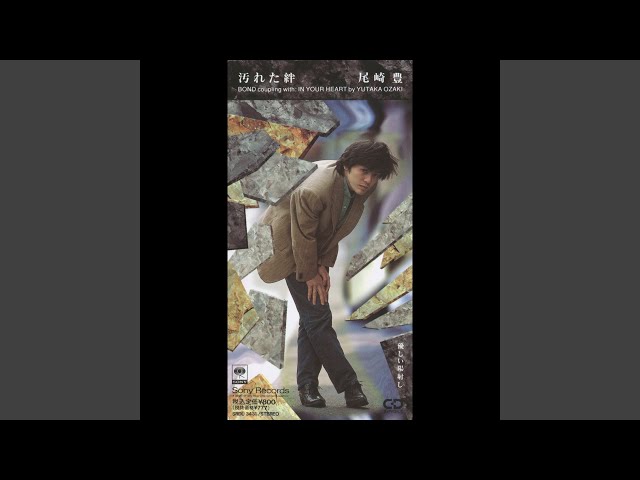
This was Yutaka Ozaki’s final single released during his lifetime, featuring his early-period arranger Akira Nishimoto returning after about four years, resulting in a bright sound that aims to revisit his roots.
While set against a backdrop of betrayal, the lyrics ultimately affirm the beautiful bonds of the past.
The structure raises the vocal range from the A verse to the B verse and then the chorus, building momentum so you can sing each section solidly.
For the chorus, it seems best to sing with a bold, confident mindset—really let it out so your voice projects well.
In the calmer parts around the three-minute mark, try placing your voice forward to avoid sounding too muffled.
Give it a try while using expressive gestures as you sing.
street tree(s)NEW!Ozaki Yutaka

This is a ballad-style song that portrays human anxiety, disappointment, and fragility against a backdrop of the city’s cold wind and sky, and the street trees that are part of everyday life.
Released in September 1988 as the title track of the 4th album, it’s a masterpiece created after a stay in New York.
Unlike the passionate teenage trilogy, it serves as the core of an album characterized by quiet, profound emotional expression.
The accompaniment shifts from piano to orchestra, and Ozaki’s passionate vocals make it an easy listen.
With an overall vocal range of D#3 to B4, it should be comfortable to sing as long as you don’t overthink it.
Take solid breaths at each phrase and aim to sing each one carefully; if you project your voice with that mindset, it should resonate well.
For me to be myselfOzaki Yutaka

It’s a song that conveys a powerful determination to live true to oneself and to keep moving forward.
Included on the 1983 album “Seventeen’s Map,” it has remained beloved over the years, even being chosen as the theme song for the 1997 drama “Boku ga Boku de Aru Tame ni.” The refreshing sound paired with the passionate vocals is striking, evoking positive feelings about the future.
While the emotional delivery in the chorus may seem challenging, the melody is fundamentally straightforward, so once you get a solid grasp of the rhythm, it should be quite singable.

SherryOzaki Yutaka

It’s a song that looks back on the painful path I’ve walked while contemplating an uncertain future.
It’s included on the album Kaikisen, released in 1985.
It’s said to be a song that frankly portrays the weakness in Yutaka Ozaki’s own heart as he felt it.
The explosive, emotional vocals over a simple acoustic guitar sound make it a deeply moving piece.
While the rapid-fire sections and bursts of emotion may seem challenging, the melody is basically simple, so I think the pitches are relatively easy to follow.