

Beautiful Melodies: A Collection of Masterpieces and Moving Piano Songs

If you love the sound of the piano, this is for you!
In this article, we’ll introduce moving songs featuring the piano.
The piano is said to be the most versatile instrument, capable of covering everything from low to high registers all on its own.
Because producing sound on the piano is simpler compared to other instruments, its range of expression is very broad—you could say it’s an instrument that clearly reveals the performer’s unique world.
We’ll showcase wonderful masterpieces in rock and pop that make use of the piano!
We’ve carefully curated these selections, so please enjoy!
- Poignant and beautiful! A collection of recommended piano pieces
- [Intermediate Level] Cool Piano Pieces You Can Play [Great for Recitals Too]
- [Classical Piano Masterpieces] A carefully selected collection of moving pieces that will bring you to tears
- A gentle song. A classic that calms the heart. A song that makes you feel kind.
- Today's Piano: Masterpieces and Popular Pieces Woven with Delicate Tones
- [Classical] Introducing Recommended Moving/Touching Pieces
- [Piano × J-POP] Tearjerker! A Selection of Moving/Touching Songs
- [For Adults] Recommended for Piano Recitals! A Curated Selection of Impressively Sounding Masterpieces
- Songs that play during moving scenes. A collection of classic tracks that evoke deep emotion.
- [Classic and Contemporary Hits] Emotionally Stirring, Heart-Touching Songs
- J-POP to Play on Piano | A Curated Selection of Beautiful, Soul-Cleansing Ballads
- [Intermediate Level] A curated selection of piano masterpieces featuring strikingly brilliant melodies!
- [For when you want to cry or feel sad] Tear-jerking masterpieces that make you cry when you listen
[Beautiful Melodies] A Collection of Masterpieces and Moving Piano Songs (31–40)
Piano Sonata No. 8 “Pathétique,” Second MovementLudwig van Beethoven
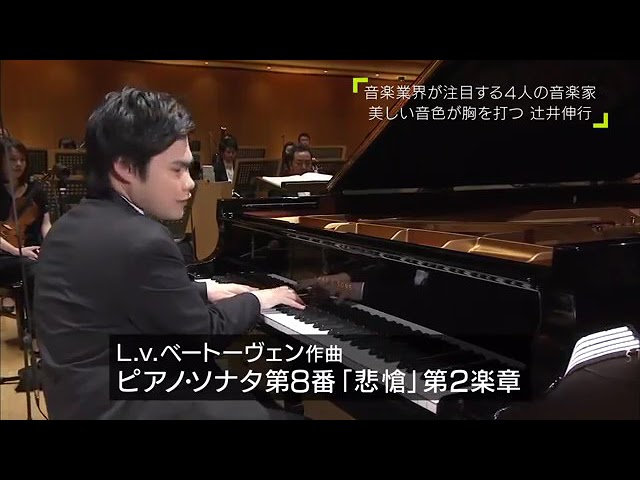
Beethoven’s Piano Sonata No.
8 “Pathétique” is a defining work from his early piano compositions.
Among its movements, the second is often said to be one of the most beautiful melodies Beethoven ever wrote, and it has been used frequently in films and television dramas.
While the melody is simple and the range not particularly wide, the accompanying parts are sonically rich, so the melody can easily get buried unless you listen carefully and balance the voices during performance.
Aim to play gently, being mindful of the gracefully flowing, soothing melody that warmly envelops the listener, as well as the weighty chords that support it.

Merry Christmas Mr. LawrenceSakamoto Ryuichi

A masterpiece that brilliantly fuses Eastern and Western musical elements, this film score was created by Ryuichi Sakamoto in 1983 and won the BAFTA Award for Best Original Music.
Its graceful pentatonic melody is interwoven with the delicate timbres of synthesizer and glass harp, bringing a gentle sense of expansiveness to the heart.
Re-arranged as a solo piano album titled “Coda,” the work also received high acclaim worldwide as the soundtrack to the film “Merry Christmas, Mr.
Lawrence.” Cherished by many artists, including Hikaru Utada and Sarah Brightman, this gem continues to offer profound emotion—an ideal, soothing background for quiet nights or moments when you wish to calm your mind.
Amazing GraceSakkyokusha fumei

Amazing Grace is known for its deeply moving, beautiful melody.
Many people likely remember Minako Honda’s crystal-clear voice singing it.
With a title meaning “the wonderful grace of God,” the song is originally a hymn with lyrics by the English clergyman John Newton.
In the United States, it is cherished as a “second national anthem,” and in Japan it is widely used in films and television dramas.
Because it consists of a simple 16-bar melody repeated, aim to perform it expressively by varying dynamics, phrasing, and arrangement.
energy flowSakamoto Ryuichi

Energy Flow, by Ryuichi Sakamoto—one of Japan’s most celebrated composers—was reportedly completed in just five minutes.
To finish a piece this beautiful, combining poignancy and grace, in mere minutes can only be called genius.
There’s even an anecdote that Sakamoto himself could only give a wry smile at the song’s unexpected mega-hit status.
With its relaxed tempo and relatively few notes, it’s approachable for beginner to intermediate players.
If you can clearly convey the shifts in musical character, you’ll achieve a performance with greater breadth and impact.
In conclusion
Up to this point, I think we’ve covered many moving songs with beautiful piano. In addition to classical piano pieces, we also introduced selections from rock and pop. Great songs will continue to be born and shared with the world, so we’ll keep updating this article from time to time! Thanks for your support!