

[Beginner] Recommended Piano Pieces to Play at a Recital


A big event that everyone learning piano experiences is… the recital! Practicing to perform not only for family and friends but also for a wider audience helps keep up the motivation to continue playing piano.
Moreover, the experience of standing on stage alone and performing all the way through is sure to build great confidence.
To make such a recital truly rewarding, choosing the right pieces is key! Of course, developing performance technique is important, but since it’s a valuable chance to play on stage, you’ll want to select pieces that both the performer and the audience can enjoy together.
In this article, we’ll introduce famous pieces that are fun for both adults and children to play—not only classical works, but also popular music and film music.
We hope this helps you discover candidates for your next recital program.
- [For Elementary School Students] Brilliant, Showy Masterpieces That Sound Impressive at Piano Recitals
- [Congratulations on Your Recital Debut] Recommended Pieces for Your First Piano Recital
- Piano Masterpieces: Surprisingly Easy Despite Sounding Difficult!? A Curated Selection Perfect for Recitals
- [Piano Pieces] Easy for Children to Play! A Roundup of Simple Classical Works
- For Beginners: Easy to Play and Sounds Impressive! Pieces That Shine at Piano Recitals
- [Piano Recital] Recommended for Boys! A Curated Selection of Cool, Impressive, and Popular Pieces
- [For Piano Recitals] Simple yet Cool Classical Pieces
- [Beginner] Recommended for adult piano beginners! Beautiful & stylish piano pieces
- [Beginner] Also great for piano recitals! Classical pieces that look cool when you can play them
- Recommended for piano beginners! 10 sheet music picks that adults can enjoy too
- Disney Classics on Piano: A Curated Selection of Easy Pieces, Perfect for Recitals
- Beginner to Intermediate: Chopin pieces with relatively low difficulty. Recommended works by Chopin.
- [For 6-year-olds] A curated selection of standout pieces for piano recitals!
[Beginner Level] Recommended Piano Pieces to Play at Recitals (21–30)
The Blue DanubeJohann Strauss II

A masterpiece by Johann Strauss II, the quintessential Viennese composer.
Its brilliant and elegant melody captivates listeners’ hearts.
Expressing the beauty of the Danube and a love for Vienna, the work premiered in Vienna in February 1867 and went on to achieve great success at the Paris Exposition later that year.
Its rich sonorities and approachable melody are sure to shine on any recital stage.
It’s a piece that both performers and audiences can enjoy.
As a work that allows piano learners to easily feel a sense of accomplishment, why not give it a try?
Piano Pieces for Children ‘Rhythm of the Rainbow’ 1. The Dandelion Took FlightHirayoshi Takeshu

Takashi Hiraoyoshi, a Japanese composer who has created numerous masterpieces including choral and solo works for children, is widely celebrated.
“Rhythm of the Rainbow: 1.
The Dandelion Took Flight” from his Piano Pieces for Children is one of his signature works and is frequently performed at piano recitals.
This piece features a distinctive rhythm that incorporates rests, making it perfect for developing a strong sense of rhythm.
It’s an ideal choice for highly motivated children who want to make a strong impression at their very first recital.

[Beginner Level] Recommended Piano Pieces to Play at Recitals (31–40)
ParadeMaurice Ravel
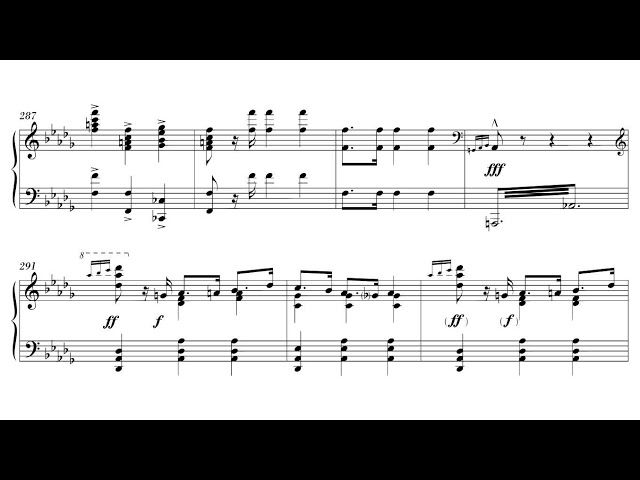
A piece whose powerful, dramatic sound stirs the listener’s heart, as if heralding the beginning of a grand tale.
It is a work by Toshio Horiuchi, who teaches in Hiroshima Prefecture and has composed numerous band pieces.
From the delicate interplay of sounds in the quiet sections to the breathtaking build toward a climax where the full ensemble charges forward as one, the piece offers a deeply immersive experience—like living through the prologue of a legend in music.
Composed in 2006 as a set piece for the All Japan Band Competition, it is featured in the album “Reference Performances of Set Pieces for the All Japan Band Competition 2005‑2008.” Demanding not only individual technique but the expressive power of the entire band, this masterpiece is one you’ll want to perform when you and your ensemble wish to weave a single, sweeping story together.
Variations on ‘Twinkle, Twinkle, Little Star’Wolfgang Amadeus Mozart

A genius composer who began composing at the age of five and left behind more than 800 works, Wolfgang Amadeus Mozart.
This piece is a set of variations composed in 1778, based on a popular French song.
You can enjoy how the familiar melody transforms into arrangements that require advanced technique.
It starts simply, and the difficulty increases toward the latter half, with the left hand becoming more active, among other changes.
For piano students, it is a wonderful piece through which they can truly feel their technical progress.
Since the final variations demand a high level of technique, it is also recommended to select and perform the more approachable variations.
March, BWV Anh. 122Carl Philipp Emanuel Bach

Carl Philipp Emanuel Bach, a composer who bridged the Baroque and Classical eras.
Born in 1714, he followed a musical path under the tutelage of his father, Johann Sebastian Bach.
His works are known for their expressive melodies and emotional depth.
This piece, included in Anna Magdalena Bach’s Notebook, is a charming miniature that, while concise, exudes an elegant atmosphere.
It is approachable even for those who have just begun learning the piano and allows one to fully savor the allure of Baroque music.
CanonJohann Pachelbel

Johann Pachelbel’s Canon, known as a soothing classic, is often heard naturally by many people because it frequently appears on TV, in commercials, and as background music at weddings and graduation ceremonies.
With its steady rhythm, and since an arrangement in C major can be practiced using only the white keys, even beginners can approach it with ease.
Start by practicing slowly so that the melody line connects smoothly, and then gradually challenge yourself to add natural dynamics to express the piece’s inherent elegance.

springSamuel Maykapar

Spring by Samuil Maykapar, a Ukrainian-born composer and pianist, is often selected for recitals and as a required piece in competitions.
It is a gently paced work that evokes the calm arrival of spring.
The middle section takes on a somewhat livelier character, making it a piece that allows for contrast even within a short span.
Aim to play smoothly with legato to preserve a courtly elegance, keep the accompaniment as soft as possible, and strive for a tender tone throughout.