

For Beginners: Easy to Play and Sounds Impressive! Pieces That Shine at Piano Recitals


Are you looking for pieces that are easy to play yourself, yet sound cool and impressive?
For recitals that take place soon after you start learning piano, it’s important to choose pieces that are manageable to play while still sounding brilliant and showy.
Especially for children, you’ll want to prioritize their preferences while also selecting pieces and sheet music that suit their hand span and other physical considerations.
In this article, we’ll introduce beginner-friendly pieces that sound impressive and are recommended for recital performances—perfect for children who have just started piano or adults who are new to the instrument.
We’ll also touch on factors like range and key performance points, so please use this as a reference when choosing your recital piece.
- [For Elementary School Students] Brilliant, Showy Masterpieces That Sound Impressive at Piano Recitals
- [Piano Pieces for Young Children] Perfect for Recitals! A Curated Selection of Brilliant, Showy Favorites
- [For 6-year-olds] A curated selection of standout pieces for piano recitals!
- For 2nd Grade Elementary School Students: Must-Play Pieces for Piano Recitals! Recommended Masterpieces & Famous Songs
- [Beginner] Recommended Piano Pieces to Play at a Recital
- [Congratulations on Your Recital Debut] Recommended Pieces for Your First Piano Recital
- Piano Masterpieces: Surprisingly Easy Despite Sounding Difficult!? A Curated Selection Perfect for Recitals
- [For Piano Recitals] Simple yet Cool Classical Pieces
- [Beginner] Also great for piano recitals! Classical pieces that look cool when you can play them
- Recommended for piano beginners! 10 sheet music picks that adults can enjoy too
- Beginner to Intermediate: Chopin pieces with relatively low difficulty. Recommended works by Chopin.
- [For 5-year-olds] A curated selection of recommended pieces for a piano recital!
- For Preschoolers to Elementary School Children: Challenging Piano Pieces — A Curated Selection from Competition Repertoire
[For Beginners] Easy and Playable! Pieces That Sound Impressive at Piano Recitals (11–20)
castanetWilliam Gillock

William Gillock’s “Castanets” is distinguished by its striking opening of successive chords and its exotic character.
Not only is it varied and fun to play, but it also includes many essential elements for progressing in piano study—such as alternating the hands, controlling tempo, and passages that require finger independence—so you can build techniques that will benefit your future performances as you practice.
It’s a perfect choice if you think “standard pieces are boring” or if, precisely because it’s a recital, you want to tackle a work with a different atmosphere from the usual pieces in your textbook.

March of the DwarfsMartha Mier

This piece is from American composer Martha Mier’s collection Solo for Piano, Together at the Piano, which she wrote to help students learn fundamental piano techniques while enjoying approachable pieces.
It’s filled with the image of a “kobito” (a little goblin/dwarf) that is cute yet slightly mysterious.
Use the accents in the right-hand melody to convey the kobito’s mischievousness.
In the left hand, play the staccatos evenly and be careful not to make them too heavy.

Burgmüller 25 Easy and Progressive Studies, Op. 100 No. 15 “Ballade”Johann Burgmüller

This is an elegant piece that exudes a mysterious atmosphere from the opening.
Its compelling structure—rich in narrative thanks to the contrast between C minor and C major—captivates the listener as it shifts from a tense first section to a serene middle passage.
The scene woven by the right hand’s repeated notes and the left hand’s flowing patterns evokes the image of a solitary traveler journeying through a forest.
Johann Burgmüller balances expressive richness with technical elements to great effect.
This work is recommended for those interested in pieces with a strong narrative quality or who enjoy dramatic expression.
Published in Paris in 1851, it continues to be cherished by many performers today.
Serenade of the BuglerFritz Spindler

This piece captivates with a vibrant, resonant trumpet-like timbre.
Although it is a serenade in triple meter, it brims with a lively and lighthearted atmosphere.
The melody, woven from repeated notes and sprightly rhythms, creates a bright, dazzling character that sets listeners’ hearts dancing.
While the performance calls for finger independence and a keen sense of rhythm, it remains approachable without feeling technically daunting.
Its beautifully ringing staccato and trumpet-evoking lines make it an outstanding choice for recital repertoire.
Highly recommended for those who wish to evoke an elegant world of serenade or enchant audiences with a spirited, life-filled performance.
Burgmüller 25 Etudes Op. 100 No. 25 “La Chevaleresque” (Lady’s Riding)Johann Burgmüller

The piece that serves as the finale to Burgmüller’s celebrated 25 Etudes, No.
25 “La Chevaleresque” (Gallop), from 25 Etudes Op.
100.
Alongside works like “Arabesque,” “La Petite Fleur,” and “The Angel’s Voice,” it is known as one of Burgmüller’s relatively easy pieces.
The key point of this work is that it’s packed with techniques beginners should master.
It spans a wide keyboard range and includes chords and a fairly quick right-hand part.
It’s an ideal piece for building a child’s foundational skills.

Burgmüller 25 Études Op. 100 No. 11 “The Wagtail”Johann Burgmüller

This piece in 2/4 time is characterized by a light, charming melody reminiscent of a little bird.
A rhythmic motif of “ta-ta-tan,” effectively using staccato and sixteenth notes, vividly evokes birdsong and adorable movements.
Published in Paris in 1851, the work lasts only about 30 seconds, yet captivates with a beautiful melody woven from right-hand scales and left-hand accompaniment.
By focusing on supple wrist motion and precise fingertip control, you can bring out the piece’s elegance even more.
Even beginners will find it enjoyable to tackle thanks to its lively rhythm and friendly, accessible melody.
[For Beginners] Gentle & Easy to Play! Pieces That Sound Impressive at Piano Recitals (21–30)
ParadeMaurice Ravel
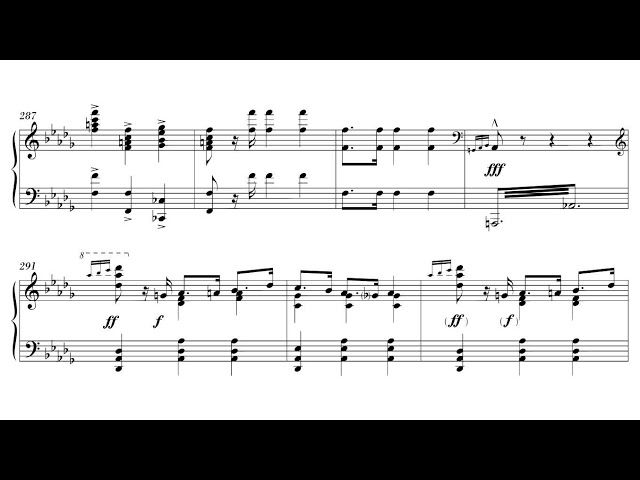
A piece whose powerful, dramatic sound stirs the listener’s heart, as if heralding the beginning of a grand tale.
It is a work by Toshio Horiuchi, who teaches in Hiroshima Prefecture and has composed numerous band pieces.
From the delicate interplay of sounds in the quiet sections to the breathtaking build toward a climax where the full ensemble charges forward as one, the piece offers a deeply immersive experience—like living through the prologue of a legend in music.
Composed in 2006 as a set piece for the All Japan Band Competition, it is featured in the album “Reference Performances of Set Pieces for the All Japan Band Competition 2005‑2008.” Demanding not only individual technique but the expressive power of the entire band, this masterpiece is one you’ll want to perform when you and your ensemble wish to weave a single, sweeping story together.