

For Beginners: Easy to Play and Sounds Impressive! Pieces That Shine at Piano Recitals


Are you looking for pieces that are easy to play yourself, yet sound cool and impressive?
For recitals that take place soon after you start learning piano, it’s important to choose pieces that are manageable to play while still sounding brilliant and showy.
Especially for children, you’ll want to prioritize their preferences while also selecting pieces and sheet music that suit their hand span and other physical considerations.
In this article, we’ll introduce beginner-friendly pieces that sound impressive and are recommended for recital performances—perfect for children who have just started piano or adults who are new to the instrument.
We’ll also touch on factors like range and key performance points, so please use this as a reference when choosing your recital piece.
- [For Elementary School Students] Brilliant, Showy Masterpieces That Sound Impressive at Piano Recitals
- [Piano Pieces for Young Children] Perfect for Recitals! A Curated Selection of Brilliant, Showy Favorites
- [For 6-year-olds] A curated selection of standout pieces for piano recitals!
- For 2nd Grade Elementary School Students: Must-Play Pieces for Piano Recitals! Recommended Masterpieces & Famous Songs
- [Beginner] Recommended Piano Pieces to Play at a Recital
- [Congratulations on Your Recital Debut] Recommended Pieces for Your First Piano Recital
- Piano Masterpieces: Surprisingly Easy Despite Sounding Difficult!? A Curated Selection Perfect for Recitals
- [For Piano Recitals] Simple yet Cool Classical Pieces
- [Beginner] Also great for piano recitals! Classical pieces that look cool when you can play them
- Recommended for piano beginners! 10 sheet music picks that adults can enjoy too
- Beginner to Intermediate: Chopin pieces with relatively low difficulty. Recommended works by Chopin.
- [For 5-year-olds] A curated selection of recommended pieces for a piano recital!
- For Preschoolers to Elementary School Children: Challenging Piano Pieces — A Curated Selection from Competition Repertoire
[For Beginners] Gentle & Easy to Play! Pieces That Sound Impressive at Piano Recitals (41–50)
GoodbyeDoitsu min’yō

The German folk song “Goodbye” is also popular in Japan.
Compared to other German folk songs that have become children’s songs, it’s somewhat on the minor side, but you hear it fairly often at piano recitals.
As for difficulty, if you aim for a proper performance, it’s around the middle of the beginner level; with a minimal rendition, it falls into the lower end of beginner.
The indicated tempo itself isn’t particularly challenging, but because the piece relies heavily on expressive nuance and dynamics, it’s recommended when you want to develop that aspect of your playing.

Album for the Young, Op. 68: No. 8 “The Brave Knight”Robert Schumann

Robert Schumann, a composer who epitomizes German Romanticism, may seem daunting—especially his piano pieces.
However, there are certainly works that are well-suited for recitals.
Known in Japanese as both “The Boisterous Knight” and “The Brave Knight,” this short piece follows a ternary (ABA) form, offering the drama of well-crafted musical development—such as modulation in the middle section—and a melody characteristic of the Romantic era.
Technically, it isn’t overly difficult, making it a very approachable choice.
Pay attention to the 6/8 meter and the continuous triplets, and aim for a powerful performance that doesn’t become too rough.

Holiday in ParisWilliam Gillock

William Gillock is an American composer who has created numerous masterpieces with song structures so simple that even children can play them.
Among his works, the one I especially recommend is Paris Holiday.
It’s so famous that it’s no exaggeration to say nearly every child who has just started piano plays it at least once.
In terms of difficulty, it’s about the level of the first half of Burgmüller.
Its beautifully charming melody is very appealing to listen to, so be sure to check it out as a reference for a recital.
Aladdin “Friend Like Me”Alan Menken

It’s a memorable number performed in the scene where Genie meets Aladdin.
With a jazzy, up-tempo feel and humor-filled lyrics, it skillfully captures Genie’s cheerful personality and limitless power.
The arrangement prominently features the brass section, making it an irresistible piece for listeners.
In July 2019, Koichi Yamadera performed it on the TV program Music Station, drawing a lot of attention.
Incorporating elements of jazz and cabaret, the song has an easy-to-follow melody and a modest vocal range, making it perfect for instrumental practice.
Among Disney’s classics, it’s a particularly upbeat, feel-good tune, recommended for fans of jazz and blues.
Hanyu no YadoInguranndo min’yō
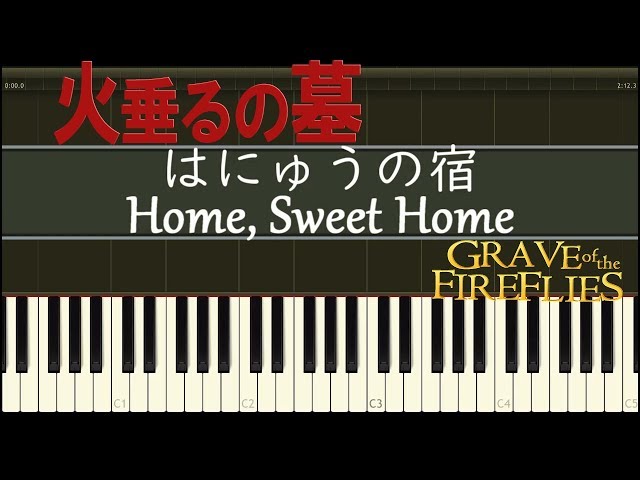

An insert song from Studio Ghibli’s film “Grave of the Fireflies,” whose gentle, faintly nostalgic melody sinks deeply into the heart.
Ever since the film’s 1988 release, many people may remember it as the music that plays in scenes symbolizing the days the brother and sister spent together.
The song’s theme—“No matter how humble the house, home is best”—is deeply intertwined with the story, softly speaking of a longing for the lost calm and a tender love for family.
Because of its relaxed tempo, playing without haste and cherishing each note leads to a beautiful resonance.
If you perform while imagining the story woven into the melody, it will surely reach the listener’s heart.
Burgmüller 25 Etudes, Op. 100 No. 25 “La chevaleresque” (The Lady’s Ride)Johann Burgmüller

A dazzling and valiant piece that concludes the 1851-published album 25 Etudes, Op.
100.
The original title of this work means “chivalry,” and true to its name, it lets you feel like the dignified yet elegant hero of a story.
The staccato passages, like a horse stepping lightly, and the scales driving toward the climax make your heart dance just by listening.
In performance, the key is whether you can express the shifting scenes through dynamics and varied touch.
It’s a piece that invites you to imagine a narrative and enjoy discovering your own unique interpretation.
Piano Sonata No. 25, Op. 79, Movement IIILudwig van Beethoven

A gem of a masterpiece, performed at an andante tempo with an elegant 9/8 rhythm.
Its gentle melody, like a swaying boat, evokes a soothing sense of being rocked by calm waves.
Though composed in 1809, its appeal has not faded, continuing to captivate many pianists.
This movement is brief at just 34 measures, yet it condenses delicate emotional expression, leaving a strong impression with its romantic and lyrical atmosphere.
Structured in ABA form, the piece fully draws out the piano’s expressive power, and its graceful melody resonates deeply.
Highly recommended for lovers of the piano, it is ideal for those who wish to spend quiet moments in contemplation with music.