

I want to start playing the piano in my twenties!It seems quite a lot of people think so.
When I looked into it, I often came across questions like, “Can I still improve if I start now?” and “Is it really impossible unless you’ve been doing it since childhood?”
One thing I can say for sure is thatIt's never too late, no matter how old you are.That’s how it is. Of course, the optimal way to improve varies by age and from person to person.
However, the most important thing is “motivation」「The feeling of wanting to play (it)That's all.
I imagine there are various things to worry about when starting the piano, but today,Age doesn’t matter when starting the piano.I would like to talk about that.
- Recommended for piano beginners! 10 sheet music picks that adults can enjoy too
- It’s so cool if you can play these on the piano! A selection of irresistibly charming masterpieces.
- Do I have to participate in the piano recital?
- [Beginner] Start Here: Classic Practice Pieces Recommended for Adult Piano Beginners
- Advantages and Disadvantages of Learning Piano on Your Own
- What is the most effective lesson frequency and duration for adult beginners attending piano classes?
- How much is the monthly fee for piano lessons? What’s the going rate?
- [Beginner] Recommended for adult piano beginners! Beautiful & stylish piano pieces
- Beginner to Intermediate: Chopin pieces with relatively low difficulty. Recommended works by Chopin.
- [Piano Etudes] Recommended for Beginners! A Curated Selection of Easy, Playable Pieces
- [For Piano Beginners] How to Practice “Für Elise”
- Things to check before practicing the piano
- Piano Masterpieces: Surprisingly Easy Despite Sounding Difficult!? A Curated Selection Perfect for Recitals
Why ask why before starting anything?
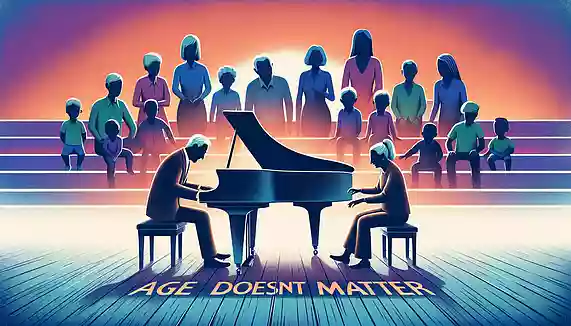
http://illustrain.com/?p=7805
「I might want to try this.」「I'm interested.」
I think it’s wonderful to take an interest in new things as an adult.
There are often people who, even before trying something, worry or ask whether they’ll be able to do it and whether it’s not too late.
Conversely, it may be that they want to avoid the feeling that “doing it was pointless.”
「Leaving it up to others (seeking confirmation) to decide whether it’s worth doing.Status"we can say."
Because I don’t want to waste time or money, I’m asking experienced people and advisors.
「So how is it really?" , "Can I really do this if I start now?"."
I'll be blunt.
「Human potential is limitless.” and “It depends on your motivation.that is to say.
If you’re already having these kinds of doubts and feeling discouraged.
I’d appreciate it if you could stay with me a little longer.
The biggest enemy isn’t age, but your own motivation.
When you try to start something after becoming an adult,I need timeIt will be.
This is because, compared to the teens when you can use your time freely, life changes dramatically in your twenties and thirties. In that context, whether you start something in your teens or in your twenties makes a difference in the value of time and in motivation.
If we focus just on motivation, factors like whether you’re playing a good instrument, studying on your own or taking lessons, and whether you have a song you want to play, and so on.The environment, of course, plays a major role as well.I think (that) ... / It seems (to me) ...
However, including those as well,It's up to you.that is to say.
Returning to the timeline of the story, especially after you get a job and start working, I think it becomes truly difficult in practice. The one thing I can say for sure is that “I can’t keep going without a goal.that is to say.
Why is this?
Even for someone who had been playing the piano since childhood,Most people can play but can’t keep it up and end up quitting.There is the fact that ...
Many things, with age, "Changes in priorities and values」「I no longer have a goal.This is the cause.
Even people who can already play, or used to be able to, realize that continuing is difficult.
In response to that, "Even though I can’t play yet, even though I haven’t even startedSomeone who says that must not be timid before even starting. If they are, it’s obvious they’ll quit and give up.
The only element that could surpass them is "Whether I really want to do itThat's all.
Therefore, even though it hasn’t even started yet,Whether it seems possibleIf you were about to ask someone else, try again.Why did you want to play the piano?called “”MotivationLet's think back on it.
Reexamine your “motivation” once more
This time, I’ve deliberately chosen not to address which digital piano you should pick or whether self-study or lessons are better.
More important than that is "your willIt will come to be.”
Making this part solid is,Important things to avoid getting discouraged when starting piano as an adultIt has come to be.
Let me tell you a bit about the reason.
To be able to play the piano
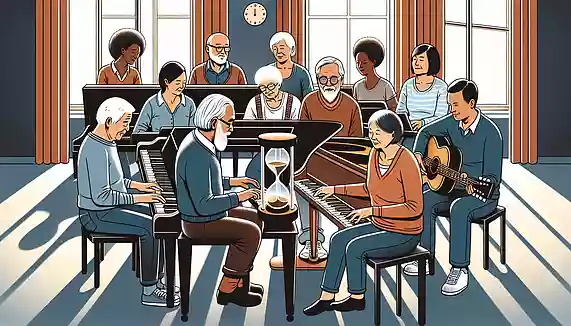
http://www.wanpug.com/illust33.html
As with anything you start, first of all...If you're not interested, you can't get started.It is.
What sparked your interest in the piano?What was it?
Depending on the person, some might say “just because,” while others may feel things like “I admire that person” or “I love that piece and absolutely want to be able to play it.” I imagine there are many different feelings behind starting the piano.
To be perfectly honest, whether you like the piano or not doesn’t matter at this point. So there’s absolutely no need to give a definitive answer when asked if you like the piano.
Because we won’t know until we try.
The one thing I can say is that playing the piano is "to play musicThat’s what it means.
In other words,Do you like music?is quite important to keep doing/continuing.
I don’t think you need to worry, since I’ve never seen anyone who hates music but wants to play the piano. However, it might still be unclear which genres of music you like.
But that's not a problem.
The important thing is "Whether (someone) wants to do itIt’s only the closing quotation mark.”
Do you like music?
Video game music, classical, jazz, pop, Western music, movie and anime songs—anything is fine.
Having music or songs you like is reassuring.
Actually,Having a favorite song is the greatest weapon for keeping at it.It will be.
When you start learning the piano, it will undoubtedly help you in various situations.
Whether you play alone or for someone else—especially when it comes to practice—you and the piece are always side by side.
When practice gets tough and things don’t go the way you want, "Whether there is a song you want to playThat serves as one indicator to help you avoid giving up.
You can probably kind of imagine it, but if you start off just kind of winging it, then when you can’t play it, it’s easy to just…I should quit after all. It’s impossible.It tends to end up like that.
Even if there isn’t a specific piece you want to play yet, I think you’ll come across songs you like as you continue learning the piano.
We’ll improve by achieving small goals along the way.Setting a provisional goal is important.It will be.
By all means, “I want to play this.I’d like you to find a song that makes you think, “This is it.”
Do you have a favorite pianist?
There are countless people who give wonderful performances—from full professionals and semi-professionals who earn money from their music to those who play as a hobby.
With video sites like YouTube and Niconico becoming more accessible, we now have more opportunities to encounter many performers. It’s a wonderful thing.
If you listen to and watch someone’s performance, and…I'm moved!If that's the case, for now, try setting a goal of aiming for or chasing after that person.
If it’s a performance by someone who moved me, I don’t think I’d ever get tired of listening to it, and I believe it would also be perfectly worthwhile as a subject of study—for example, to examine how they play.
Of course, there’s no doubt that watching various people’s performances is also a good way to learn,Decide who your hero isThat would be good.
Doing something knowing it's impossible / Doing it while aware it's unreasonable
No matter what you do,I know it’s impossible.Let's start with “”.
There are parts that seem absolutely impossible, and they come up in any field.
It's interesting because it means you'll be able to do it.
And by overcoming it many times, it leads to confidence.
In other wordsTo gain confidence, you must overcome setbacks and pain.That’s what it means.
Let's begin by accepting as a given that impossible things will happen.
Because we’re trying to do something that seems impossible, there will inevitably be things that feel unachievable.
Benefits of starting from childhood
To those who are worried about this question,Benefits of learning from childhoodI'll give a brief, rough summary.
If you “You can’t do piano unless you’ve been doing it since you were a child.If you’re picturing such a fixed image, I’ll introduce a way to resolve it, so please use it as a reference.
Control of improvement speed
When starting to play the piano from a young age,In most cases, before they become aware of themselvesIt is.
I also started at a young age, but when you’re a child you can’t control how quickly you improve. It literally comes down to things like “talent,” or “Does this child really love music?”—that kind of…It depends on the child.There is a part that is like “”.
Also, by observing each child’s habits and personality, provide lessons tailored to each of them.The way a piano teacher teaches also has a significant impact.I think so.
As long as parents don’t forcibly restrict their child with the intention of making them a professional from the very beginning, it’s basically up to the assigned pieces in the lessons—everything else is flexible.
As long as the teacher keeps receiving the monthly fee, there’s no problem, so it’s perfectly fine if things just drag on.
Unless the person themselves says they want to quit, we probably won’t tell them they should.
In other words, as long as one is learningEven if you just noodle around lazily, if you keep at it for years, you’ll be able to play to some extent.It will become (so that) ... / It comes to be ...
This is one of the advantages of early childhood.
Regarding this, "If you’re an adult, you can overturn it depending on your will and goals....so please don't worry.
For example,Master in six months what a child has been lazily doing over three years....and so on. This is something only an adult with their own will can do.
Of course, it goes without saying that motivation is necessary.
an experience story
From my experience, when I was in junior high, a friend of mine wanted to play L’Arc~en~Ciel’s song “snow drop,” and he suddenly started practicing only that song.
And it wasn’t a simple arrangement like those found in songbook anthologies; it was a stylish arrangement, like an upper-level version that comes with a CD.
After he somehow managed to master just reading sheet music, one day he found that he could play it, albeit slowly.
Of course, it wasn’t a fast tempo; it was gentle with plenty of pauses. For example, if a child started learning the piano and worked at it seriously, I think it was the kind of arrangement they could play after about four or five years.
In other words, we covered about four years in roughly half a year.
I’ll skip commenting on the fingering, missed notes, and whether the expression is appropriate since those are abstract matters, but judging from the sound alone, even as someone with experience, I honestly thought, “Wow…”
An unwavering desire to play that piece; effort; motivation
In that moment, I simply thought, what on earth were those past few years of mine for?
He was very smart and always strove for efficiency, and it was then that I realized that, depending on how you approach things, skipping grades is also possible.
Lessons for children basically involve having them play, in order, from a fundamental music book called Bayer (Beyer).
So since there’s plenty of time, you’re trying to have them take the sure/certain path, right?
However, adults can think for themselves and choose of their own free will.
You can choose the practice you need to play the songs you want, so there’s no need to go through all the practice pieces from the beginning.
therefore
「Something you've been doing since childhood = something you can’t do without spending an enormous amount of time.」
Please discard this idea.
As long as you have motivation and efficiency, there’s no problem, so I think one concern has been eliminated.
Naturally cultivated fingering and form
Another is the fingerings and playing form enforced in lessons, as well as the experience of performing in front of others at recitals.
These will also be useful when you quit once and then start playing the piano again as an adult.Sometimes the sensations from childhood remain as memories, and that can be considered an advantage compared to complete beginners.I think it is the case.This applies to sports as well.
As with the earlier example of my friend, for instance, if your finger technique is unsteady—at least in this area—those who have practiced diligently for years have the advantage compared to beginners.
However,Play what you want to play.Considering the purpose, there’s almost no problem.
Even experienced players must constantly be mindful of their form or it will deteriorate, and for many players, their form gradually becomes more or less self-taught.
If you’re worrying because you’re overthinking it, it might be because you’ve only ever seen pianists with a classical background, or because that’s become your standard. Around the world, there are many people who play with all kinds of form and still deliver moving performances.
That doesn’t mean it’s okay to be sloppy with your form. If you play the score as written, using your left and right hands properly, your form will generally be the same, so there’s no problem for normal playing.
Basically, it’s possible to make corrections even while watching performance videos of other players.
If your form isn’t proper, it’s no good = You have to take lessons = You need a lot of money.
If you find yourself clinging to this kind of thinking, try softening your thoughts a little.
If your goal is to play with proper posture, you think it looks cool, and you value that more than most people, then I recommend taking lessons, even if only for a short time.
Summary
Anyway, starting from childhood has advantages in total time, forming habits, and feeling less painful than adults.
However, I still think that if we really put our minds to it, every element can be managed somehow.
- Cover total time with goal-setting and efficiency, motivation and focus.
- Compare your fingering and form by recording your own playing (lessons are fine too).
- You can overcome the pain of practice by having a clear goal.
Honestly, I think “2” would be tough, but it won’t make much difference if you’re just playing for fun as a hobby.
In the end, what matters most is motivation.
Even if you start playing the piano in childhood, many people are forced to choose whether to join a club around the time they enter junior high school. That’s when a sense of self begins to emerge,Whether I really want to play itThis often becomes the turning point for whether to continue or to quit.
That much, the motivation differs between self-will (one’s own intention) and compulsion.
Although this overlaps with what I mentioned at the beginning, it comes down to whether you can still play the piano after regular classes and club activities. If regular classes are equivalent to a job for working adults, then adding a hobby into your daily life places a considerable burden.
If it’s a passive hobby that can be sustained simply by paying money, then there’s no problem.Like the piano, it requires agency through one’s own volition.The load differs between the two cases.
In other words,motivated” and “Continue"...and that can overturn every excuse."
It’s tough until you can play it, but the feeling you get when you start to manage it—and when you finally do—is something money can’t buy. An incredible thrill awaits.
For those who are unsure about starting the piano
If you're hesitating right now, what are you weighing on the scale?
That "How I feel right now about wanting to do itThe value of saying it is constantly changing over time. If you’re trying to start something as an adult,momentumI can’t do it without “”.
People often say it depends on what level you're aiming for, but you don't need to think about that yet.
Because, anyway, it’s “You won't know until you try.From the closing quotation mark.
If you're not sure which digital piano to buy, please refer to this article.
What’s the Best Price Range for Digital Pianos for Beginners? – The Nest of Game Music
In this article, we introduce only electronic pianos that can be recommended to beginners at a low cost (around 50,000 yen or less), along with the minimum essential knowledge needed when purchasing one.
Lastly
Age doesn't matter when it comes to starting the piano or any musical instrument.
「motivationis the most important.
Motivation = the feeling that makes you want to play your piano
Efficiency, tips for playing, whether to self-study or take lessons—those are topics for the next discussion.
I wrote “in your 20s,” but the same applies in your 30s as well—if you’re doing it as an adult by your own choice.
If you feel even a little bit like starting the piano,whether it is slowIf you were hesitating over that, please erase that image from your mind.
Please believe more in human potential.
「If you're hesitating, it's definitely proof that you want to do it.」
I hope you cherish that feeling.
One last thing—here’s the ultimate piece of advice.
If you're unsure, just try it—that's faster.
Time is finite, and life is short.
Believing that your piano life will become even better...