

[Western music] What is post-hardcore? — Summary of representative bands

If you like bands that are often introduced as emo or loud, whether Western or Japanese, you’ve probably come across the genre called “post-hardcore” at least once.
Among the bands that originated from hardcore punk, which began in the late 1970s, those who created a unique sound that didn’t fit neatly within existing hardcore came to be called “post-hardcore.” From there, derivative genres like emo-core and screamo emerged, and since the 2000s the term has been used in a broader sense—making it a very difficult genre to define.
In this article, we’ll introduce, all at once, the bands that debuted from the 1980s to the 1990s and played an important role in shaping post-hardcore.
- [Western Music] Hardcore Punk Masterpieces and Popular Songs – Beginner’s Guide
- [Western Music] A classic of 90s emocore. One album I want you to listen to first.
- Coexistence of Ferocity and Beauty: A Roundup of Japanese Screamo/Post-Hardcore Bands
- [2026] A Beginner’s Guide to Popular Overseas Turquoise-Core Bands
- Recommended Western screamo bands. Popular overseas bands.
- Nu metal masterpieces. Recommended popular songs.
- If you want to listen to Western emo music, start here! A list of overseas emo bands
- Classic hardcore punk tracks. Recommended popular songs.
- Enduring popularity! Classic emo songs in Western music
- [2026] Masterpieces of Melodic Hardcore: A roundup of popular tracks, old and new
- Classic emo masterpieces in Japanese music. Recommended popular songs.
- [2026] A roundup of popular Japanese hard rock bands, including those famous overseas
- From emotional tracks to exhilarating tunes! Heisei-era youth songs
[Western Music] What Is Post-Hardcore? — Summary of Representative Bands (11–20)
Head ColdHeroin

In the 2000s, bands labeled as “screamo” such as Thursday, The Used, Finch, and Saosin achieved commercial success and became a major movement, but the term “screamo” itself had existed since the 1990s.
Of course, it wasn’t a genre name coined by the bands themselves; it was already being used as a musical term in the media.
One pioneering band of this “screamo” sound—and an important group in post-hardcore history—is Heroin from San Diego.
They were also a flagship act in the early days of Gravity Records, a label that played a key role in San Diego’s underground scene, and despite their short run from their formation in 1989 to their breakup in 1993, the few recordings they left behind had an enormous impact on subsequent bands.
Rather than tough, aggressive screams, their sound features anguished shrieks tinged with melancholy and fragile clean passages—what you might call truly “pre-screamo.” The way their inward-looking emotion explodes makes them a pioneering presence in what would become “emotional hardcore.” Even their fast parts aren’t exactly exhilarating; there’s a persistent sense of frustration and unresolved tension that feels distinctly post-hardcore and truly compelling.
Listeners accustomed to polished screamo might find it a bit underwhelming, but if you’re interested in the history of post-hardcore or screamo, I can say without hesitation that you should definitely pick up Destination, their discography release issued after the band’s breakup.

Iron Clad LouHum

Behind the success of the bands labeled as alternative rock in the 1990s, there were quite a few groups that, while less well-known, had a major impact on the artists who followed.
Hum, the band introduced in this piece, is exactly one of those: a group whose sound served as a bridge between post-hardcore and alternative rock, the theme of this article.
Formed in Illinois in 1989 and disbanded in 2000, they raced through the tumultuous music scene of the 1990s.
Their two indie-era albums may not yet reveal the expansive soundscapes they would later showcase on a major label, but they’re interesting in how they explore a post-hardcore approach with high musical freedom—drawing from contemporaneous alternative rock while incorporating elements of shoegaze and alternative metal.
Their true potential is realized on their major-label debut, 1996’s You’d Prefer an Astronaut.
In addition to a Smashing Pumpkins-like sense of dramatic alternative rock, they introduced the sonically ambitious adventures often called space rock, carving out a sound uniquely their own.
The track Stars became a hit, making it the band’s best-selling release.
On 1998’s follow-up, Downward Is Heavenward, they fully established their distinctive sonic world, producing a masterpiece marked by enveloping, roaring guitars and sweeping song structures that masterfully employ quiet-loud dynamics.
While the hardcore elements are restrained and the music leans more toward alternative rock, Hum is a band that demonstrated another compelling possibility for post-hardcore—one you should definitely know about.
MirrorMoss Icon
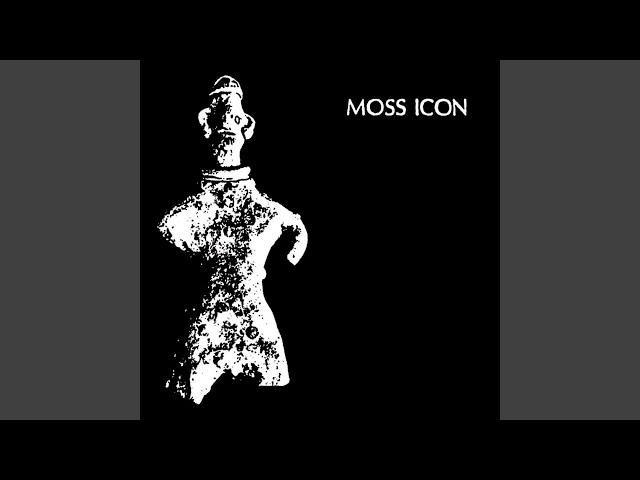
They’re a pretty niche presence, but Moss Icon—formed in Maryland, USA—is often cited as having played a crucial role in the development of post-hardcore.
Their brief activity from 1986 to 1991 isn’t unusual among the post-hardcore bands I’ve covered, but the main reason they continue to be highly regarded is that their limited, countable body of work was so original and distinctive.
They’re also known for having guitarist Tonie Joy—who was active in various bands like Born Against and The Great Unraveling—whose unconventional, knotty guitar playing functioned as a defining hallmark of Moss Icon.
In 2012, the label Temporary Residence Ltd., known for post-rock and cutting-edge electronica, released Complete Discography, which compiles Moss Icon’s recordings, so that’s a great place to start.
The sound—ranging from aggressive, hardcore-style attacks, to elements reminiscent of UK post-punk, to twisted guitar riffs that point toward post-hardcore, dynamic rhythm changes, and vocals bordering on spoken word—still feels fresh today!
For Want OfRites of Spring

Active from the early to mid-1980s during the dawn of post-hardcore, releasing just one album and one EP before disbanding, Rites of Spring are nevertheless respected as pioneering figures for subsequent emo and post-hardcore bands.
They were also indispensable to the Washington, D.C.
hardcore punk scene, with members Guy Picciotto and Brendan Canty later known for their work in Fugazi.
In a scene still dominated by raw, hard-driving hardcore punk, their songs burst with emotion, featured delicate guitar work that set them apart from simple power chords, and employed urgent rhythms—truly remarkable for the time.
They are undeniably a prototype for the emo-core and post-hardcore that flourished from the 1990s onward, a band you should definitely know if you’re tracing the genre’s history.
The discography compilation End on End is available from Dischord Records, so if you’re not particular about owning the original releases and just want to give them a listen, this is the one to pick up!
PickpocketAt The Drive-In

Formed in El Paso, Texas in 1994, At the Drive-In is one of the most prominent ’90s post-hardcore bands, widely recognized in Japan as well.
In the 2000s, they took the scene by storm with an edgy musical approach.
They’re also known for featuring Cedric Bixler and Omar Rodríguez, members of The Mars Volta—a group that reunited in 2022 after a long hiatus and released new material—and their wildly intense, unhinged performances have become the stuff of legend.
Their major-label debut, Relationship of Command, released in 2000 and produced by Ross Robinson, who at the time worked with heavyweights like Korn, Limp Bizkit, and Slipknot, garnered huge acclaim, but the band broke up shortly afterward.
They reunited in 2011, embarked on a world tour, and released new work, but later announced another hiatus.
Among the records they left in the ’90s—especially In/Casino/Out—there’s no question it stands as a masterpiece of ’90s post-hardcore.
While moving far beyond their rough early sound, their playing and production took a major leap forward: interlocking, off-kilter guitar riffs; Cedric’s high-energy vocals veering from freewheeling yelps to melodic lines; and a definitive presentation of the signature At the Drive-In sound.
If you’ve only heard Relationship of Command, be sure to check out their ’90s releases!
In conclusion
As mentioned at the beginning, post-hardcore is inherently difficult to define as a genre and can’t be summed up in a single phrase.
Still, music that embraces a variety of styles while retaining the core spirit of hardcore may be what we can truly call “post-hardcore.” I’d be delighted if this article has sparked even a little interest in where it originated and the history of post-hardcore!