

[Foreign Music] A Guide to Post-Rock: Essential Classics and a Recommended Pick

Post-rock is a music genre that expresses itself through a variety of ideas and experimental approaches, differing from the conventional methodology of rock.
The definition is quite vague and there are many subgenres, but there are plenty of bands and artists within the umbrella of post-rock who have achieved global success, and here in Japan as well, many have been influenced by post-rock’s methods.
In this article, we’ll introduce a selection of essential albums—perfect as a “start here” for Western music fans who’ve recently become interested in post-rock.
The lineup focuses mainly on albums from the 1990s to the 2000s, the peak era of post-rock, so be sure to check them out!
- [Foreign Music] A Guide to Post-Rock: Essential Classics and a Recommended Pick
- Classic post-punk hits from Western music: a roundup of popular tracks you should listen to first
- Masterpieces of progressive rock. Recommended popular songs.
- [For Beginners] Popular Post-Rock Songs in Western Music: A Curated List of Recommended Classics
- [Western Music] Start with this one! Classic and popular songs of alternative rock
- Start here first! Classic jazz-rock masterpieces. Recommended popular tracks.
- A dark psy classic | Enter the world of dark and eerie psychedelia...
- [2026] Start Here: Recommended Post-Rock Bands (Western Music) Summary
- The Greatest American Rock Band [All Time Best]
- [Western music] What is post-hardcore? — Summary of representative bands
- A collection of classic progressive rock albums: popular records you should listen to at least once.
- Classic rock masterpieces: a roundup of must-listen albums
- [Western Music] A classic of 90s emocore. One album I want you to listen to first.
[Western Music] A Guide to Post-Rock: Essential Classics and One Recommended Album (1–10)
Mogwai Fear SatanMogwai

It was Mogwai, from Glasgow, Scotland, who stunned the scene with their ferocious band ensemble that swings between extreme silence and eardrum-splitting guitar roar.
They’re hugely popular and well-known here in Japan too, and by now they’ve become a towering presence that has influenced countless bands beyond the confines of so-called post-rock.
With each release their musicality has evolved; while they’re primarily instrumental, they’ve never shied away from adventurous experimentation, sometimes incorporating vocals depending on the track.
This time, I’d like to introduce their early, towering debut masterpiece, Mogwai Young Team, where you can savor the blistering, roaring guitars that have become their trademark.
The album is also notorious for its jacket featuring a photo of Fuji Bank’s Ebisu branch, which caused controversy and led to the removal of the logo on the Japanese release.
But the brilliance of the content hasn’t faded in the least in the 2020s; in fact, anyone who listens to this record will surely agree that many subsequent bands simply wouldn’t exist without it.
Amid the slowly unfolding, dramatic compositions, the brutally intense feedback noise—drawn from hardcore influences—carries undeniable conviction, and it’s worth stressing that it’s entirely different from the dreamy, shoegaze-style walls of sound.
Give a listen to Mogwai Fear Satan, a live staple and the album’s 16-minute-plus closing epic, and you’ll be floored to realize that the members who wrote it were barely in their twenties at the time.

WindowThe Album Leaf

Distinct from the Chicago post-rock scene epitomized by Tortoise and from bands labeled post-rock that wield walls of guitars to conjure a world of quiet and loud—like Mogwai—The Album Leaf, the solo project of San Diego’s Jimmy LaValle, has earned high acclaim for a kind of post-rock that highlights delicate, electronica-like elements and gorgeous melodies.
Jimmy originally played in the post-rock-leaning band Tristeza and in The Locust—known for their unique blend of grindcore and hardcore punk elements and for live performances in insect costumes—before launching The Album Leaf as his solo project in 1998.
While initially a cult favorite, the third album, In a Safe Place—recorded in 2004 at the studio owned by none other than Sigur Rós—was widely praised.
Since then, The Album Leaf has become well known among fans of melody-forward post-rock, gaining a devoted following in Japan as well.
Centered around multi-instrumentalist Jimmy, In a Safe Place features members of Sigur Rós (excluding Jónsi) and stands as a masterpiece of lyrical post-rock, fusing Iceland’s signature cool lyricism with a distinctive tension that reflects US hardcore roots down to the finest sonic details.
The glitchy noise feels inevitable, and the tracks that include Jimmy’s delicate vocals are among the highlights—every song is outstanding!
Fire Back About Your New Baby’s SexDon Caballero

If you’ve gotten into post-rock and, in the course of your digging, stumbled upon a genre called “math rock” and wondered what on earth it is, you’re probably not alone.
Broadly speaking, it’s a genre characterized by complex rhythmic developments packed with odd time signatures, distinctive guitar phrases, and sounds sprinkled with dissonance and noise, drawing influence from ultra-virtuosic prog like King Crimson and from minimal music such as that of Steve Reich.
In fact, many commercially successful bands also incorporate math rock–derived ensemble ideas, making it a surprisingly deep well once you start exploring.
The star of this piece, Don Caballero, is one of the quintessential bands in the math rock/post-rock sphere, formed in 1991 around drummer Damon Che.
They’re also known for having Ian Williams, who later went on to form Battles, in their lineup.
Their fourth album, American Don—released before their first breakup and while they continue to be active today—features song structures that unfold with intriguing complexity around unconventional guitar riffs and hyperactive drumming.
It’s seriously cool, and the band’s taut, finely woven ensemble interplay hasn’t lost any of its edge over time.
If you’re not used to instrumental music, it may feel a bit disorienting at first, but once you latch onto the excitement of these sounds, your musical horizons are sure to expand.
[Western Music] A Guide to Post-Rock: Essential Classics and One Recommended Album (11–20)
AtlasBattles

Since the mid-2000s, when we talk about bands that truly pushed beyond rock and sent shockwaves through the scene, Battles—now a duo in the 2020s—surely come to mind.
Formed in 2003 as a formidable four-piece consisting of guitarist Ian Williams, known for his work in math rock bands like Don Caballero; drummer John Stanier, who supported the golden era of the ’90s alternative metal band Helmet; former Lynx member Dave Konopka; and Tyondai Braxton, the son of free jazz legend Anthony Braxton, they drew attention early on with EPs that already showcased a uniquely original sound unlike anything else.
They were quick to perform in Japan as well, and became a hot topic among musically adventurous listeners here.
It’s hard to sum up their stylistic range in a single phrase, but their long-awaited debut album Mirrored, released in 2007, is a classic that fuses post-rock textures with electronic music like electronica, as well as hardcore and alternative rock—blended through overwhelming musicianship and cutting-edge sensibility.
At the same time, it’s balanced with catchy hooks, making it a standout work that’s easy to recommend even to newcomers.
A French GalleasseRachel’s

Rachel’s is the band that pianist-composer Rachel Grimes—now widely acclaimed around the world as a so-called post-classical musician who even toured Japan in 2014 and hails from Kentucky, USA—used to be a member of.
Formed in 1991 around guitarist Jason Noble, formerly of the legendary mid-1990s post-hardcore band RODAN, along with Rachel and others, Rachel’s pursued a sound that deviated from traditional rock, drawing on chamber music and minimalism in the vein of Michael Nyman.
Their music is regarded as one of the roots of what later came to be called “post-classical.” While they may be less well known than other prominent post-rock bands, Rachel’s is essential listening for anyone digging deeper into the genre.
The album covered here, Selenography, is their fourth, released in 1999.
There’s no rock beat to be found—just an elegant, minimalist chamber ensemble, with the delicate timbre of the harpsichord delivering a truly moving gem.
It’s fascinating that, despite having core members from a hardcore background, they crafted such a serene sonic world; and since many post-rock musicians share similarly intense musical roots, that angle is worth paying attention to as well.
Ghost Ship in a StormJim O’Rourke

With his charming looks also making an impression, Jim O’Rourke is globally renowned as an innovative, cutting-edge musician.
He has continued to release outstanding work as a solo artist—from original albums to film soundtracks—while also participating as a member of Gastr del Sol and Sonic Youth and producing numerous artists both in Japan and abroad.
His nerdy temperament, wide-ranging musical activities, and genre-defying style make it difficult to categorize O’Rourke within any single genre.
Speaking of O’Rourke—who currently resides in Japan—within the context of post-rock, the must-mention work is undoubtedly his classic 1999 solo album Eureka.
The album, whose striking cover art by Japanese manga artist and illustrator Mimiyo Tomozawa leaves a strong impression, was his first explicitly song-oriented record.
At the same time, the peculiar pop sensibility grounded in his omnivorous musicality gave it a singular character, making it a masterpiece.
From the effortless inclusion of a Burt Bacharach cover, to its truly bucolic melodic sense, to an almost obsessive attention to every note, O’Rourke’s brand of pop—tinged with a certain dark humor that matches the cover’s image—is something I hope younger music fans will (re)discover now that we’re well into the 2020s.
Svefn-g-englarSigur Rós
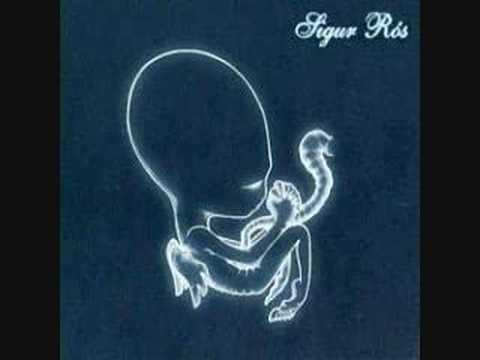
A track released in 1999 by the Icelandic post-rock band Sigur Rós.
It was used as the title track of their first EP released outside their home country.
It has been featured in films such as Vanilla Sky and Café de Flore.