

[Poulenc’s Piano Works] A Curated Selection of Masterpieces by a Composer of Esprit

Francis Poulenc, a composer born in France in 1899, was largely self-taught in music, including composition and performance.
Known as a “composer of esprit” for his preference for sophisticated, urbane works imbued with humor and irony, he left a wide-ranging body of music over his 64-year life, including solo piano pieces, piano concertos, songs, chamber music, operas, and ballets.
In this article, we introduce works for solo piano by Poulenc—pieces that embody his unique worldview, which he upheld without chasing the trends of his time.
- [Fauré] Lower Difficulty! Recommended Piano Pieces by a Master of French Music
- Chabrier’s Piano Pieces: Gemlike Masterworks Forged by the Esprit of French Music
- [Couperin’s Piano Works] Introducing Masterpieces Left by a Renowned Keyboard Virtuoso of the Baroque Era
- Séverac’s Piano Pieces: Masterworks by the Genius Composer Recognized by Debussy
- Dutilleux’s Piano Works: Masterpieces by a Leading French Composer of the Late 20th Century
- [Classical Music] All pieces under 3 minutes! A collection of short and cool piano pieces
- [Grieg’s Piano Pieces] Beautiful works by a composer who loved Norway
- Scriabin’s Piano Works: Selected Masterpieces by a Pioneer of Modern Music
- [Contemporary Pieces] A curated selection of classical works that captivate with the piano’s mysterious resonance!
- [Lower Difficulty] Recommended Piano Pieces by Franz Liszt [Intermediate]
- Piano Pieces by Lully: Masterworks by a Composer Favored by the King of France
- Piano Pieces by Ibert: Gem-like Masterworks by a 20th-Century French Composer
- [Mompou’s Piano Pieces] Introducing soothing masterpieces by a shy composer
[Poulenc’s Piano Works] A Curated Selection of Masterpieces by a Composer of Esprit (1–10)
Three Perpetual Motions FP.14a No. 3Francis Poulenc

Among the works of Francis Poulenc, a French composer active from the late 19th century to the first half of the 20th, the Three Movements Perpetuels is especially popular.
This charming set, full of the light, urbane wit characteristic of Poulenc—who was largely self-taught—displays a breezy, sophisticated flair.
In particular, the third piece, Alerte, stands out for its irregular rhythms and a buoyant tempo that propels the music from start to finish.
It is a piano work brimming with the youthful brilliance of the young Poulenc.
15 Improvisations, FP 63 No. 1Francis Poulenc

Francis Poulenc, the composer and pianist who made significant contributions to twentieth-century French music, wrote the Fifteen Improvisations.
Among them, No.
1 is particularly noteworthy, vividly reflecting the composer’s rich musicality and distinctive personality.
With a charming atmosphere that evokes a fairy cheerfully twirling on tiptoe and a dazzling display of virtuosity, the piece beautifully balances wit and brilliance, encapsulating Poulenc’s inimitable esprit.
It is also an ambitious work that seeks to fuse the traditional forms of classical music with new modes of modern expression, offering a glimpse into the composer’s profound artistry.
Melancholy FP.105Francis Poulenc

Francis Poulenc, a French composer known for his intellectual style imbued with humor and irony, was a gifted musician.
His multifaceted musical personality—once described as “a monk and a rascal living under the same roof”—is vividly reflected in his 1940 piano miniature, Melancholy.
The harmonies born from his delicate, emotionally rich touch seem to convey the complex feelings he harbored in wartime France.
It is a piece that offers a glimpse into Poulenc’s inner world, and one I highly recommend to anyone studying the piano.
[Poulenc’s Piano Pieces] A curated selection of masterpieces by the composer of esprit (11–20)
French Suite, FP 80: No. 1, “Branle de Bourgogne”Francis Poulenc

While Francis Poulenc is known for his stylish works infused with esprit, he also left many pieces that possess delicate, beautiful lyricism.
His French Suite can be seen as an homage to the French lands and history he loved, a work in which classical tradition and modern sensibility are superbly fused.
In particular, the first movement, “Bransle of Burgundy,” is striking for its lively rhythms and cheerful melodies inspired by the region’s folk music.
It also conveys Poulenc’s characteristic humor, making it a highly recommended piece for those who want to savor the charm of his music.
8 Nocturnes, FP 56 No. 1Francis Poulenc
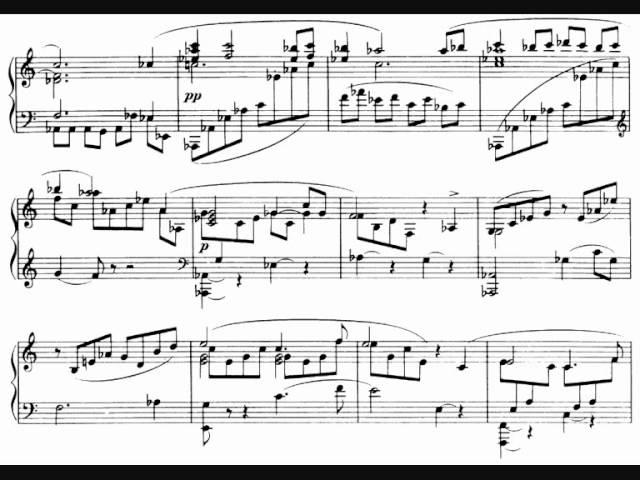
Francis Poulenc, a French satirist and the very embodiment of esprit, created the Eight Nocturnes.
This gem, packed with lyricism reminiscent of Chopin and a distinctly French elegance, is especially notable for No.
1, whose delicate yet striking melody is irresistibly appealing.
The nuances that evoke a quiet night can only be fully realized by a pianist who possesses both technique and deep sensitivity.
Through these nocturnes, you can savor the very essence of French modern music.
Experience Poulenc’s flair, which draws inspiration from the Romantic era while asserting a uniquely twentieth-century character.
A Stroll, No. 1: On FootFrancis Poulenc

Francis Poulenc, who was self-taught in music and went on to become known as an accomplished pianist after working as a member of the young composers’ group “Les Six,” composed the set of short pieces Promenades in 1921.
Its first piece, À pied (“On Foot”), is notable for a character that depicts the leisurely enjoyment of cityscapes at an easy walking pace.
Focusing on the most elementary means of travel—walking—this work was intended to offer performers a relaxed atmosphere, and it can be regarded as a masterpiece reflecting the distinctly urban style characteristic of the Parisian Poulenc.
Intermezzi No. 1, FP 71Francis Poulenc

Francis Poulenc, one of the defining French composers of the 20th century.
Composed in 1934, his Three Intermezzi, FP 71, is a masterpiece that vividly reflects his individuality.
The first piece, which begins at a rapid tempo, is striking for its opening chords, the crisp clashes between two voices, and the sometimes lyrical, sometimes quirky shifts in tonality.
It’s a work that conveys Poulenc’s virtuosity and his deep understanding of piano music.