

Piano Pieces by Lully: Masterworks by a Composer Favored by the King of France

Jean-Baptiste Lully was a Baroque-era composer who wielded immense influence as the court musician to Louis XIV in the Kingdom of France, which once existed in Europe.
Though often described as lacking in humanity and notorious for his capricious behavior that earned him many enemies, he nevertheless left behind works across every genre—ballet, comédie-ballet, opera, and sacred music—making full use of his musical genius.
In this article, we have carefully selected and introduced works by Lully that are still beloved today in performances on the piano—a instrument that did not exist at the time they were composed.
[Lully’s Piano Pieces] Masterworks by a Royally Favored French Musician (1–10)
March for the Ceremony of the Turks, from the comédie-ballet “Le Bourgeois gentilhomme”Jean-Baptiste Lully

In the 17th century, Jean-Baptiste Lully, a French composer who served at the court of the Sun King Louis XIV, made major contributions to opera and ballet music as a master of the Baroque era.
This piece, included in the comédie-ballet Le Bourgeois Gentilhomme that Lully composed, is written as a Turkish-style march, reflecting the exotic taste of the time.
Its lively rhythms and brilliant sonorities are distinctive, drawing listeners instantly into the world of the story.
In addition to the original orchestral version, piano arrangements are also frequently featured in concert programs.
Gigue in E minorJean-Baptiste Lully

Jean-Baptiste Lully, a composer favored by Louis XIV at the court of the Kingdom of France, was born in Italy yet had a profound impact on the development of French Baroque music.
The Gigue in E minor is an instrumental work composed as part of operas and ballets performed at court.
Its lilting 12/8 rhythm is striking, vividly reflecting the atmosphere of court music that combines elegance and splendor.
This piece, which allows one to savor the refined beauty of Baroque music, is highly recommended for piano students to play.
suiteJean-Baptiste Lully

Jean-Baptiste Lully, a master of French Baroque music, thrived at the court of Louis XIV as a composer of ballets and dance music.
Many of his works take the form of suites, reflecting the styles of social dances of the time.
In Lully’s suites, dances such as the Allemande and Courante unfold one after another over elegant melodies and rhythms, embodying the very essence of glittering Baroque music.
With melodies that feel somehow familiar and an abundance of the court’s luxurious atmosphere, his works are perfect both as an introduction to Baroque music and as pieces for piano performance.
Gavotte and RondoJean-Baptiste Lully
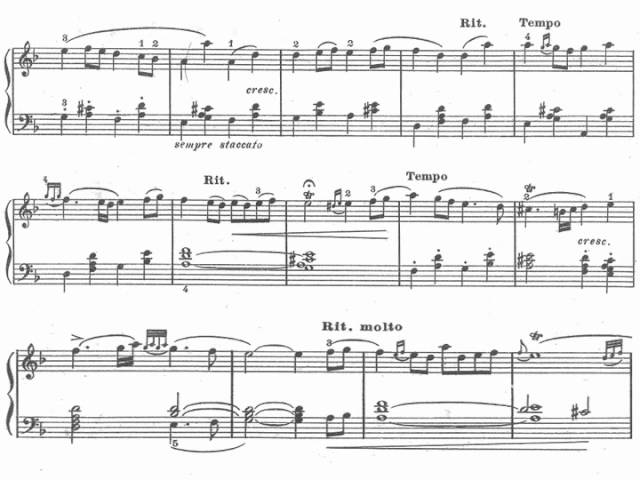
Jean-Baptiste Lully, whose talents were adored by King Louis XIV of France, is one of the composers who led Baroque music.
Among his works, the especially popular Gavotte and Rondeau is a sparkling dance piece that graced court balls.
Marked by elegant, supple melodies, it draws listeners into a refined atmosphere.
Today, this piece is often arranged for piano, moving away from its original instrumentation.
The difficulty is not very high, making it ideal as an introduction to Baroque music.
Cherish the dance-like rhythmic character and aim for a performance with poise and dignity.
Allemande in E minorJean-Baptiste Lully

Jean-Baptiste Lully is a composer who epitomizes French Baroque music and is also famous as a court musician who served Louis XIV.
Many of the dances he left behind seem to capture the court’s splendor in sound.
The “Allemande” is one of the dance forms that swept across Europe at the time, notable for its elegant yet rhythmic character.
Immerse yourself in its glittering soundscape, which vividly evokes Lully’s dominance at court.
You’ll surely feel as if you were in the Palace of Versailles yourself!
Coolant in E-flat minorJean-Baptiste Lully

Jean-Baptiste Lully, who served as music director under King Louis XIV of France, was an Italian-born composer who nonetheless brought innovation to the French musical scene of the Baroque era.
Among his works, the dance music composed for the court’s splendid festivities—such as courantes and gavottes—is particularly famous.
The Courante in E minor can be regarded as a fine example of a Baroque dance that reflects Lully’s characteristic style.
With its intricately interwoven melodies and rhythms evoking the refined atmosphere of the royal court, this piece is highly recommended for those who wish to experience the world of Baroque music on the piano.
Minuet in D major by RondoJean-Baptiste Lully

Jean-Baptiste Lully, who rose to prominence as the court musician of King Louis XIV of France, was a Baroque-era composer renowned for his elegant, rhythmical dance music.
“Minuet in D Major (Rondeau)” is a highly popular piece brimming with his refined melodic beauty and brilliance.
Its hallmark is a lightly looping theme that vividly evokes the graceful atmosphere of the French court.
The intertwining melodies set against Lully’s characteristically weighty bass line make you feel as if you’re watching dancers before your eyes.
It’s a recommended piece not only for those already familiar with classical music but also as an introduction to Baroque music.