

Baroque Music on the Piano: A Curated Selection of Masterpieces Perfect for Recitals and Concerts

The Baroque era saw the flourishing of great composers such as Johann Sebastian Bach, known as the “Father of Music,” and George Frideric Handel, famed as the composer of Messiah.
Music born in Europe from the early 17th century to the mid-18th century is called “Baroque music,” and it continues to captivate people with its refined melodies and formal beauty.
In this article, we’ve selected famous pieces from the Baroque repertoire that are frequently performed on the piano.
We’ll introduce a wealth of works originally written for the keyboard instruments of the time!
Baroque Music on the Piano | A Curated Selection of Masterpieces Recommended for Recitals and Concerts (1–10)
Sonata in B minor, K. 27, L. 449Domenico Scarlatti

Domenico Scarlatti, born in Italy in 1685 and the composer of more than 550 keyboard sonatas, made his mark across Europe as a court musician and composer, earning renown for his innovative and brilliant keyboard works.
His Sonata in B minor, K.27 L.449, is a masterpiece that superbly showcases Scarlatti’s wide expressive range and virtuosic compositional technique.
Interweaving rhythmic vitality with delicate emotional nuance, it captivates listeners without fail.
Through this piece—an embodiment of the very essence of Baroque music—why not savor Scarlatti’s timeless innovation and expressive power?
Minuet BWV Anh. 114Christian Petzold

One of the representative works by the German composer Christian Petzold, who was active from the early 17th century to the mid-18th century, is the piece long attributed to Johann Sebastian Bach, “Minuet BWV Anh.
114,” commonly known as the “Minuet in G major.” Its elegant and refined melody evokes the image of a dance, with delicate steps set to a triple meter.
This famous piece, which allows listeners to savor the grace and splendor of Baroque music, is also a popular choice for piano recitals.
tambourineJean-Philippe Rameau

Jean-Philippe Rameau, a composer who helped shape the development of French music in the early 18th century and earned high acclaim for his operas and keyboard works.
Tambourin is one of Rameau’s most popular keyboard pieces, distinguished by its unique rhythms and melodies.
Its dance-like tempo and brilliant sonorities make you feel as if you’ve been invited to a court ball.
Elegant yet imbued with refinement, it’s a perennial favorite at piano recitals.
Why not add this piece—perfect for savoring the charm of Baroque music—to your repertoire?
The Lucky BlacksmithGeorg Friedrich Händel

Georg Friedrich Handel, one of the greatest composers of the Baroque era, created operas, oratorios, and instrumental works.
Among his many masterpieces, the Air and Variations, known as the final movement of his keyboard Suite HWV 430 and affectionately called “The Harmonious Blacksmith,” is an especially popular piece.
This work, notable for its rounded, beautiful theme, reveals a variety of expressions across five variations.
The brilliant interplay between the right and left hands recalls the character of Handel’s operatic writing.
Graced with an air of refinement, this celebrated work is highly recommended for recitals and concerts.
Invention No. 1, BWV 772 in C majorJ.S.Bach

Johann Sebastian Bach, who grew up in a musical family, enriched the German traditional style while establishing his own distinctive voice by incorporating Italian and French musical idioms.
Among his works, one of the most famous is the Inventions and Sinfonias, composed for music education.
This collection consists of two-part inventions as practice pieces, characterized by a bright and energetic tone.
Bach employs contrapuntal techniques to weave complex musical textures from simple themes.
Striking a balance between technical execution and musical expression, this work is ideal for nurturing creativity in all piano learners, from beginners to advanced players.
Goldberg VariationsJ.S.Bach
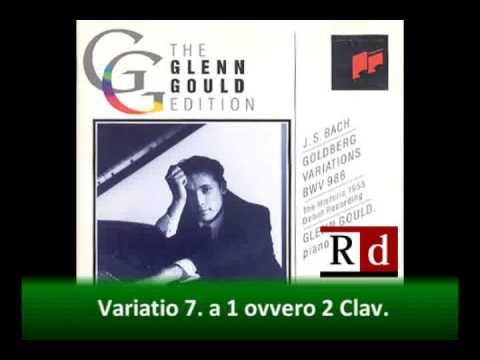
Among Johann Sebastian Bach’s works, the Goldberg Variations is known as a monumental piece for keyboard.
Built on a single aria followed by 30 variations, it showcases Bach’s boundless musical creativity and exceptional craftsmanship.
The structure of the variations is grounded in mathematical principles, reflecting Bach’s keen intellectual curiosity.
Though it is a technically demanding work that tests a performer’s skill, it is highly recommended for those who wish to study classical music in earnest or experience the profound depth of Bach’s art.
cuckooLouis-Claude Daquin

Louis-Claude Daquin, an organist and composer who showed musical talent from childhood and was active at the Parisian court and at Notre-Dame Cathedral, was a composer of the French Baroque period.
His representative work “Le Coucou” (The Cuckoo) is a captivating piece with inventive melodies and rhythms, brilliantly evoking the call of a cuckoo as if blending into nature.
Noted for its lightness achieved through delicate touch and skillful articulation, this piece is perfect for moments when you want to be soothed by elegant tones or feel a longing for nature.