

![[Easier Level] Ravel’s Piano Pieces | A curated selection of easier works you can play smoothly!](https://i.ytimg.com/vi_webp/U_gKd_lqi20/maxresdefault.webp)
[Easier Level] Ravel’s Piano Pieces | A curated selection of easier works you can play smoothly!


Maurice Ravel was a French composer who produced works across a wide range of genres, including solo piano pieces, piano concertos, operas, ballet music, and chamber music.
Known as an “Impressionist” composer who emphasized mood and atmosphere over dramatic elements, he is widely loved for his delicate and graceful style, as if translating a painting into music.
In this article, we introduce piano works by Ravel that are relatively accessible and easier to approach.
Ravel’s pieces are perfect for those who want to refine their delicate touch and expressive nuance.
By all means, start by trying the pieces that speak to your heart.
[Beginner-friendly] Ravel’s Piano Pieces | Carefully selected works that are relatively easy and quick to pick up! (1–10)
Sonatine in F-sharp minor, M. 40: II. MenuetMaurice Ravel

Sonatine M.40 was written for a composition competition hosted by a certain magazine.
The work was later dedicated to a pair of Polish brothers whom Maurice Ravel was fond of.
Following the first movement, composed in sonatina form, the second movement is a beautiful piece whose delicate, faintly colored melodies evoke a range of emotions—yearning, loneliness, joy, and more.
The key to performance is to play with ease while avoiding brusqueness, paying close attention to the score’s subtle expressive markings.

Sonatine in F-sharp minor, M. 40 — I. ModeratoMaurice Ravel

Among Maurice Ravel’s works, many reveal his affinity for Baroque and Classical-era music, and this Sonatine is one piece that clearly reflects his devotion to classical forms.
The first movement adheres to the sonatina form while highlighting Ravel’s characteristically pictorial, beautiful melodies.
If you’ve practiced pieces from a Sonatina Album, you’ll likely notice moments where you think, “This color would never appear in a true Classical work!” Performing with a delicate touch is not easy, but if you play while sensing the differences between eras, your interest in Ravel’s music will grow even deeper.
Minuet on the Name of HaydnMaurice Ravel

Minuet on the Name of Haydn was composed in 1909, the centenary of Franz Joseph Haydn’s death, as part of a commemorative issue of a Parisian music journal.
Maurice Ravel—together with Paul Dukas, known for his symphonic scherzo The Sorcerer’s Apprentice, and others—was selected as one of five composers to contribute to the issue.
The phrase “on the name of Haydn” does not mean the piece imitates Haydn’s style; rather, Haydn’s name is transliterated into musical notes and used as the work’s motif.
Lasting just under two minutes, it is a relatively accessible piece in which one can savor Ravel’s characteristically unique sonorities.
Pavane of the Sleeping Beauty, from the suite Ma mère l’Oye (Mother Goose), No. 1Maurice Ravel

Ma mère l’Oye is a piano duet suite composed on the basis of traditional English nursery rhymes and is one of the best-known works in the duet repertoire.
Maurice Ravel created an orchestral suite from this piece as well, and because of its great popularity, solo piano arrangements—though not by the composer himself—have also been published.
The first movement, Pavane of the Sleeping Beauty, is an appealing piece with a calm, flowing, and peaceful atmosphere.
It’s also recommended to listen to the duet and orchestral versions to broaden your image before practicing.
Pavane for a Dead QueenMaurice Ravel

When asked about Maurice Ravel’s masterpieces for piano, many people likely think of Pavane for a Dead Princess.
This work, by Ravel—the composer whose avant-garde musicality greatly influenced contemporary music—is one of his finest.
While he did not clearly express his evaluation of the piece during his lifetime, in his later years he spoke of the special feelings he had for it.
It isn’t exactly easy to sight-read or toss off effortlessly, but as a signature work that represents Ravel, it’s a piece you’ll want to practice thoroughly until you can play it smoothly and add it to your repertoire.

Suite ‘Miroirs’ No. 4 – Alborada del graciosoMaurice Ravel
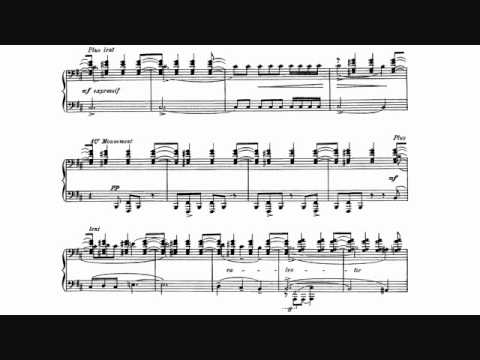
The suite Miroirs, dedicated to the members of the artist group Les Apaches.
Its fourth piece is set in a Spanish morning, a varied work that conjures the image of a jester.
Dry, guitar-like rhythms intersect with passionate melodies, brilliantly portraying the jester’s cheerfulness and the melancholy hidden beneath it.
The piece was later orchestrated and reportedly used in a ballet staged in London in 1919.
Though by no means easy, it is dotted with moments where lyrical singing emerges amid virtuosic passages.
It’s perfect for those who wish to immerse themselves in the richly expressive world of Spanish music or broaden their expressive range through technique.
Emphasize the contrast between the fiery sections and the plaintive middle part, and perform as if telling a story.
Minuet in C-sharp minorMaurice Ravel

This is a very short piece, about one minute long, said to have been written around 1904 as a practice assignment for a close composer friend.
Within the classical minuet form, it carries Ravel’s characteristic refined sonorities and a subtly introspective mood.
Rather than dazzling display, the piece conveys restrained elegance—melancholy and beautiful, as if translating delicate, hidden emotions directly into sound.
It’s perfect for anyone who wants an easy introduction to Ravel’s unique aesthetic sensibility.
Because its structure is concise and free of unnecessary ornamentation, the key is to play each note with care while picturing the steps of an elegant dance.
Aim to express the nuances of the heart within its soft, subdued atmosphere.