

[Easier Level] Ravel’s Piano Pieces | A curated selection of easier works you can play smoothly!


Maurice Ravel was a French composer who produced works across a wide range of genres, including solo piano pieces, piano concertos, operas, ballet music, and chamber music.
Known as an “Impressionist” composer who emphasized mood and atmosphere over dramatic elements, he is widely loved for his delicate and graceful style, as if translating a painting into music.
In this article, we introduce piano works by Ravel that are relatively accessible and easier to approach.
Ravel’s pieces are perfect for those who want to refine their delicate touch and expressive nuance.
By all means, start by trying the pieces that speak to your heart.
- Piano Masterpieces: Surprisingly Easy Despite Sounding Difficult!? A Curated Selection Perfect for Recitals
- Lower difficulty: Not as hard as it sounds!? Debussy’s piano pieces
- [Beginner-Friendly] Rachmaninoff’s Piano Pieces | A Curated Selection of Accessible Works!
- [Fauré] Lower Difficulty! Recommended Piano Pieces by a Master of French Music
- [Intermediate Level] A curated selection of piano masterpieces featuring strikingly brilliant melodies!
- [Impressionism] A Curated Selection of Colorful Piano Masterpieces — Debussy & Ravel
- [For Adults] Recommended for Piano Recitals! A Curated Selection of Impressively Sounding Masterpieces
- [For Advanced Players] A Curated Selection of Classical Masterpieces to Tackle at Piano Recitals
- Brahms Piano Pieces | A Curated Selection of Easier, Beginner-Friendly Works
- Beginner-friendly: Easily playable Mendelssohn piano pieces. Recommended piano works.
- [For Intermediate Players] Challenge Yourself! Recommended Masterpieces That Shine at Piano Recitals
- Masterpieces of classical piano that are too beautiful for words. A gathering of delicate tones that cleanse the soul.
- [Classical Music] All pieces under 3 minutes! A collection of short and cool piano pieces
[Beginner-friendly] Ravel’s Piano Pieces | Carefully selected works that are relatively easy and quick to pick up! (1–10)
ParadeMaurice Ravel
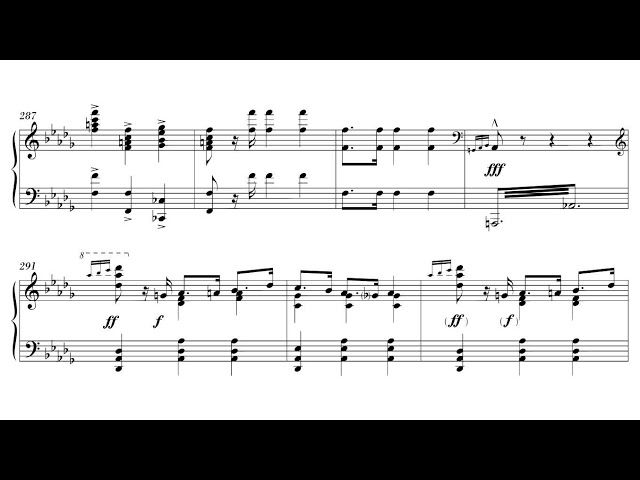
A piece whose powerful, dramatic sound stirs the listener’s heart, as if heralding the beginning of a grand tale.
It is a work by Toshio Horiuchi, who teaches in Hiroshima Prefecture and has composed numerous band pieces.
From the delicate interplay of sounds in the quiet sections to the breathtaking build toward a climax where the full ensemble charges forward as one, the piece offers a deeply immersive experience—like living through the prologue of a legend in music.
Composed in 2006 as a set piece for the All Japan Band Competition, it is featured in the album “Reference Performances of Set Pieces for the All Japan Band Competition 2005‑2008.” Demanding not only individual technique but the expressive power of the entire band, this masterpiece is one you’ll want to perform when you and your ensemble wish to weave a single, sweeping story together.
Noble and Sentimental Waltzes: No. 3 Waltz, Modéré in G majorMaurice Ravel

Maurice Ravel’s suite Valses nobles et sentimentales, modeled after Schubert’s waltzes, was introduced to the world in 1911 as a piano work and staged the following year as ballet music.
Of the eight pieces that make up the suite, the third waltz is a beautiful number in which a faintly wistful expression emerges from within a calm and orderly surface.
In this work, the two spirits of “nobility” and “sentiment” are expressed in exquisite balance.
Its slightly intricate, transparent harmonies carried by a flowing triple meter evoke the subtle play of pale light and shadow in the heart.
Rather than flaunting virtuosity, the key is to carefully draw out the fine nuances embedded in the score.
Aim for an elegant atmosphere by playing with a rounded, gentle tone free of harsh edges.
Suite ‘Miroirs’ No. 2 – Sad BirdsMaurice Ravel

The five-piece suite Miroirs, dedicated to pianist Ricardo Viñes—a fellow artist—includes this work as its second piece, first performed by Viñes in January 1906.
Maurice Ravel based it on the scene of “birds lost in a dark forest on a hot summer day,” drawing listeners into a fantastical world where plaintive birdsong resonates through the silence.
This piece is perfect for those who want to explore a wide palette of timbres with a delicate touch.
It also offers valuable practice in richly evoking imagery by artfully controlling resonance with the pedal, so take your time engaging with Ravel’s painterly music.
[Lower Difficulty] Ravel’s Piano Pieces | A curated selection of easier works you can breeze through! (11–20)
Noble and Sentimental Waltzes, Waltz No. 5, Presque lent in E majorMaurice Ravel

It is a particularly introspective piece from the suite Valses nobles et sentimentales.
There is an anecdote that at its premiere in May 1911—an anonymous concert of new works—many critics nevertheless recognized the composer as Maurice Ravel.
Marked “avec une émotion intime” (“with intimate feeling”), the music is suffused with a very private atmosphere, like a whispered inner dialogue.
Its melody, ebbing and flowing like waves, feels like a sigh, like a secret longing, quietly drawing close to the listener’s heart.
It is perfect for those who wish to deepen their delicate touch and expressive nuance.
Cherish its sentimental, beautiful world, and play with rounded, gentle tones, carefully and tenderly.
Grotesque SerenadeMaurice Ravel

Composed around 1893 when Maurice Ravel was about 18, this is a highly distinctive and passionate work.
According to an anecdote, Ravel later added the word “grotesque” to its title; as the name suggests, its rough, provocative sonorities are interwoven with startlingly sweet melodies.
The piece’s appeal lies in its vivid contrast with the emotional central section, making it feel like listening to an awkward yet single-minded declaration of love.
It’s perfect for those who want to experience a bold, youthfully daring side of Ravel that differs from his refined image.
For performers, a key point is to draw a dramatic distinction between the fierce and the sweet elements.
BoleroMaurice Ravel

Maurice Ravel, one of the great French composers representing the 1900s, continues to influence many artists today with his modern approach to music.
Among Ravel’s works, Boléro is particularly accessible and easy to play.
Because it’s frequently used in commercials and TV programs, most people have probably heard it at least once.
Once you get used to the left-hand accompaniment, it becomes easy to perform, so it’s a recommended Ravel piece to pick up and play.

Noble and Sentimental Waltzes, No. 4, Assez animé (fairly lively)Maurice Ravel
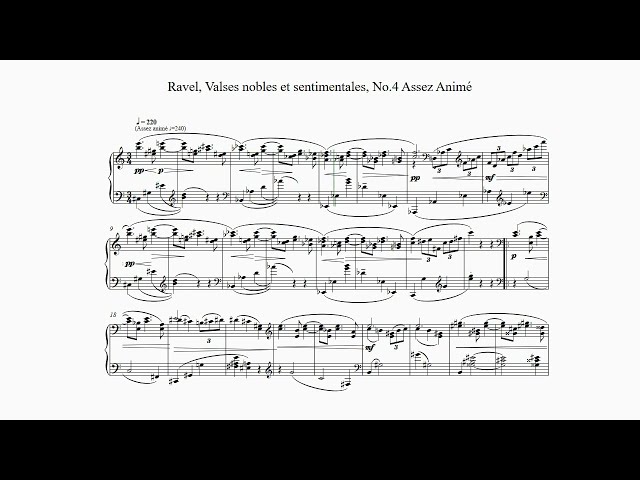
Maurice Ravel’s suite Valses nobles et sentimentales, written in homage to Schubert, contains many captivating pieces that blend traditional waltz idioms with a modern sensibility, and this particular number stands out for its verve and wit.
At the premiere in May 1911, the composer’s name was withheld, and there’s a charming anecdote that the audience tried to guess the author.
The orchestral version was staged as the ballet Adélaïde, ou le langage des fleurs, depicting the romantic intrigues of 1820s Paris.
If you imagine the give-and-take of love conveyed through the language of flowers, you’ll sense that “this sonority is more than merely elegant.” The key is to play the dense chords with lightness through the right hand’s virtuosic motion.
It’s a work that anyone seeking expression beyond classical boundaries should experience.