

[Easier Level] Ravel’s Piano Pieces | A curated selection of easier works you can play smoothly!


Maurice Ravel was a French composer who produced works across a wide range of genres, including solo piano pieces, piano concertos, operas, ballet music, and chamber music.
Known as an “Impressionist” composer who emphasized mood and atmosphere over dramatic elements, he is widely loved for his delicate and graceful style, as if translating a painting into music.
In this article, we introduce piano works by Ravel that are relatively accessible and easier to approach.
Ravel’s pieces are perfect for those who want to refine their delicate touch and expressive nuance.
By all means, start by trying the pieces that speak to your heart.
- Piano Masterpieces: Surprisingly Easy Despite Sounding Difficult!? A Curated Selection Perfect for Recitals
- Lower difficulty: Not as hard as it sounds!? Debussy’s piano pieces
- [Beginner-Friendly] Rachmaninoff’s Piano Pieces | A Curated Selection of Accessible Works!
- [Fauré] Lower Difficulty! Recommended Piano Pieces by a Master of French Music
- [Intermediate Level] A curated selection of piano masterpieces featuring strikingly brilliant melodies!
- [Impressionism] A Curated Selection of Colorful Piano Masterpieces — Debussy & Ravel
- [For Adults] Recommended for Piano Recitals! A Curated Selection of Impressively Sounding Masterpieces
- [For Advanced Players] A Curated Selection of Classical Masterpieces to Tackle at Piano Recitals
- Brahms Piano Pieces | A Curated Selection of Easier, Beginner-Friendly Works
- Beginner-friendly: Easily playable Mendelssohn piano pieces. Recommended piano works.
- [For Intermediate Players] Challenge Yourself! Recommended Masterpieces That Shine at Piano Recitals
- Masterpieces of classical piano that are too beautiful for words. A gathering of delicate tones that cleanse the soul.
- [Classical Music] All pieces under 3 minutes! A collection of short and cool piano pieces
[Lower Difficulty] Ravel’s Piano Pieces | A curated selection of easier works you can breeze through! (11–20)
Le Tombeau de Couperin, No. 2: FugueMaurice Ravel

Maurice Ravel’s suite Le Tombeau de Couperin was imbued with a sense of remembrance for friends who perished in World War I.
This work, which is the second movement of the suite, was premiered in April 1919 and dedicated to Lieutenant Jean Cruppi.
It is the only fugue Ravel ever composed, with three voices quietly overlapping as if in dialogue.
It seems to speak not only of sorrow, but also of gentle memories of friends now gone.
Within its classical formal beauty, Ravel’s characteristic shimmering sonorities melt together, enveloping the piece in a mysterious sense of weightlessness.
The entire suite was also staged as a ballet.
The key is to let each voice sing its melody with care while maintaining an overall transparency.
It’s a captivating piece through which one can learn both Baroque style and the delicate expression of Impressionism at the same time.
Noble and Sentimental Waltzes: Waltz No. 2, Assez lent (fairly slow), G minorMaurice Ravel

A work with an introspective atmosphere that feels like peering into the depths of the heart, it is included in Maurice Ravel’s suite Valses nobles et sentimentales.
There’s an anecdote that it was performed at a private concert in 1911 with the composer’s identity kept secret.
Within the gently flowing time, noble yet sentimental melodies emerge, as if quietly staying close to the listener’s heart.
The traditional waltz rhythm hides some unexpectedly piquant sonorities that seem to express unspoken, complex emotions.
It’s a perfect piece for those who want to learn about subtle changes in tone color and long-breathed phrasing.
The key is to play as if breathing, imbuing each note with intention so as not to break the work’s mysterious atmosphere.
Suite ‘Mirrors’ No. 5 – The Valley of the BellsMaurice Ravel

Composed in 1905, the final piece of the suite Miroirs is a fantastical work said to have been inspired by the sound of church bells resonating through the streets of Paris, as heard by Maurice Ravel.
At its premiere in January 1906, its originality and unique sound world were highly praised.
The piece blends the sonorous tolling of bells evoked by the weighty low register with shimmering, delicate high tones, drawing listeners into a dreamlike, meditative realm.
It is an ideal work for those wishing to refine richly colored expression through skillful pedal use and to develop a sense of controlling tone while imagining vivid scenes.
Perform it with an emphasis on the image of sound dissolving into space.
Genteel and Sentimental Waltz: No. 6, Vif (Lively)Maurice Ravel

It’s a piece from a suite composed by Maurice Ravel in the manner of Schubert’s waltzes.
Like a kaleidoscope that constantly shifts its expression, it brims with a lively, slightly mischievous character.
At its premiere in May 1911, the composer’s name was withheld, and its novelty was such that many in the audience could not guess the author.
The work was later used as music for the ballet Adélaïde ou le langage des fleurs.
It feels as though it depicts a somewhat thrilling and humorous ballroom scene.
The key is to bring out the rhythmic intrigue by consciously contrasting light staccato with smooth legato.
Though short, it is rewarding to play and perfect for those who want to broaden their expressive range.
Gaspard of the Night, M. 55: II. The GallowsMaurice Ravel
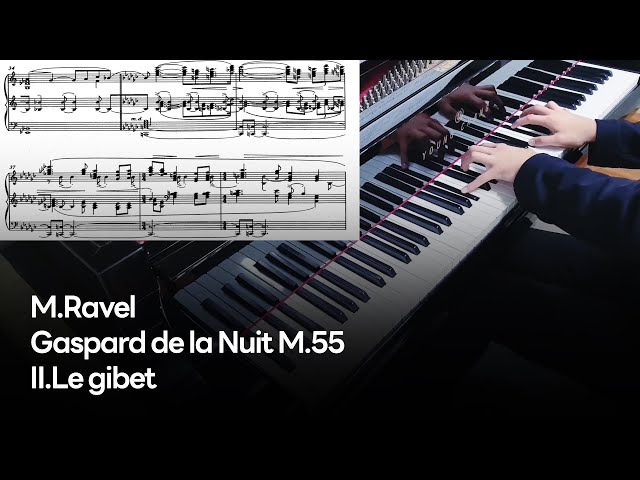
One of the pieces from Maurice Ravel’s 1908 piano suite Gaspard de la nuit, it sonically depicts the desolate scenes evoked by the poetry of Aloysius (Louis) Bertrand.
A striking feature of this work is the relentless repetition of the same note—symbolizing a bell tolling in the distance—more than 150 times from beginning to end.
Over this monotone resonance, eerie harmonies accumulate, drawing the listener into a meditative world dominated by the stillness of death.
For performers, failing to maintain the strict tempo and balance of sonorities risks undermining the work’s harrowing gloom.
This piece is frequently programmed in competitions.
Why not try playing it when you wish to touch the quiet beauty that lies at the bottom of sorrow?
Noble and Sentimental Waltzes: No. 1, Modéré (Moderato), G majorMaurice Ravel
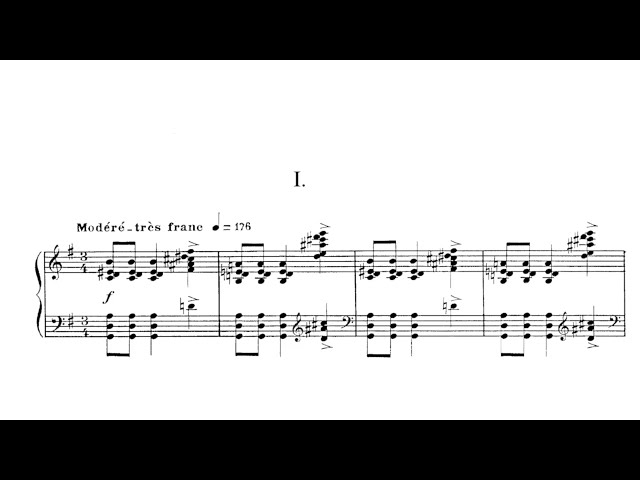
The suite Valses nobles et sentimentales fuses traditional waltz forms with Maurice Ravel’s characteristically modern sonorities.
Its opening piece is graceful yet tinged with melancholy, evoking a curious, elusive mood.
At its premiere in May 1911, the composer’s name was withheld, and the work astonished audiences with its originality.
One can almost picture a glittering ballroom where, amid the dancing, a secret, fleeting thought crosses the heart.
The work is also known in its ballet incarnation as Adélaïde, ou le langage des fleurs.
It’s perfect for those who want to experience the intriguing rhythms and harmonies that overturn conventional images of the waltz.
Aim for a rounded, gentle tone to convey the wistfulness that lies beneath the brilliance.
[Easier Level] Ravel’s Piano Pieces | A Curated Selection of Easier, Light-to-Play Works (21–30)
The Fairy Garden, No. 5 from the suite “Ma mère l’Oye”Maurice Ravel

The fifth piece, The Fairy Garden, from the piano duet suite Ma mère l’Oye, is a work composed on the motif of the old European folktale Sleeping Beauty.
The moving scene in which the slumbering princess awakens with the prince’s kiss is depicted with sparkling arpeggios and harmonies that evoke hope and a bright future.
Because many notes are sounded at once, it is important to firmly grasp the chords and bring out the top note—the one you most want to highlight.
Aim for a dynamic performance without merely playing loudly; divide your practice into small sections and work carefully and meticulously.
