

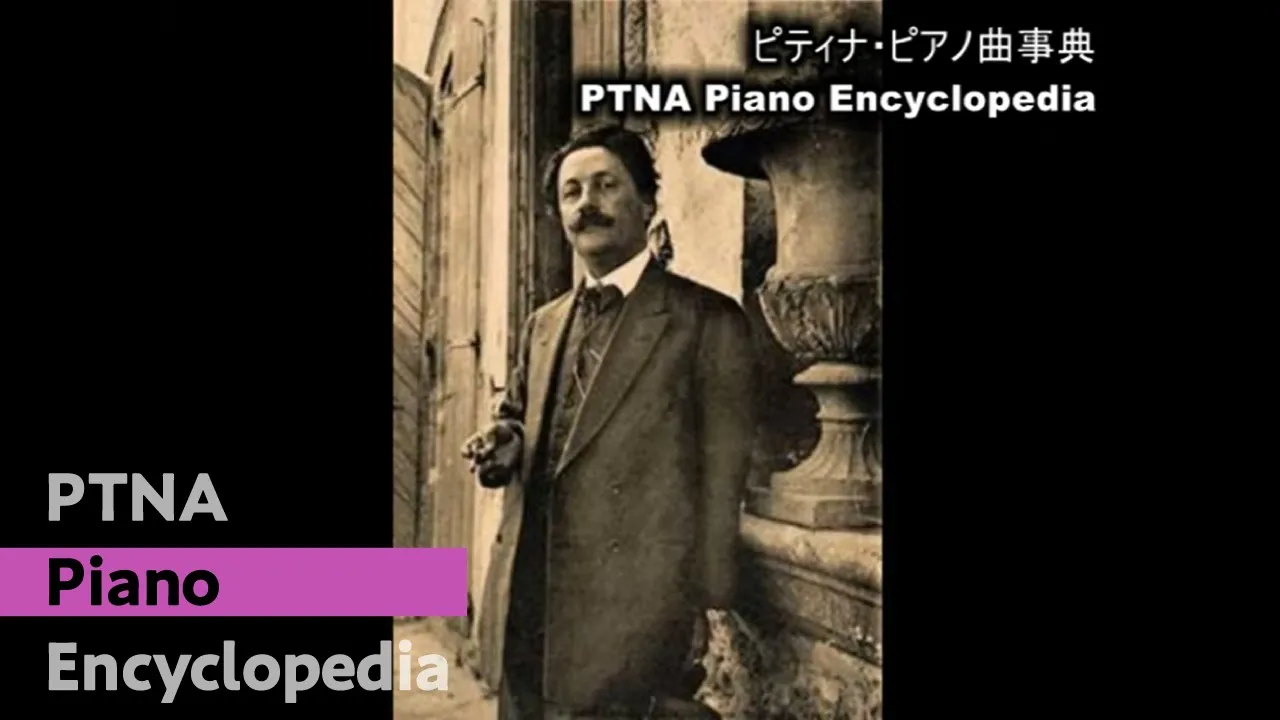
Séverac’s Piano Pieces: Masterworks by the Genius Composer Recognized by Debussy

The composer Déodat de Séverac, born in southern France in 1872.
He loved the traditional music of his native Languedoc, and by weaving its elements into his works, he earned high praise for their sweet melodies and refined harmonies—Claude Debussy, the great master of French music, even lauded them as “music with a pleasant fragrance.”
Although Séverac was a master of improvisation and consequently left relatively few works in written score, all of his surviving pieces are cherished by performers and classical music enthusiasts for their beauty.
In this article, we introduce a carefully selected set of his piano works.
Sévérac’s Piano Pieces: Masterworks by the genius composer recognized by Debussy (1–10)
From the Days of Holiday, Book I, No. 8: Romantic WaltzDéodat de Séverac

While drawing influence from the traditional music of southern France, Déodat de Séverac left numerous piano works that are simple yet richly expressive.
“Valse romantique” is one of the most popular pieces from his piano collection “En vacances.” Its classical waltz form is interwoven with flowing melodies and gentle harmonies that tenderly envelop the listener.
Evoking a deep affection for the nature and culture of his native Languedoc, the piece exudes a calm, nostalgic atmosphere, making it a work that all piano enthusiasts will surely enjoy playing.
Suite ‘In Languedoc’ No. 1: ‘Toward the Farm at the Festival’Déodat de Séverac

Déodat de Séverac, who cherished the local color of southern France and was captivated by the traditional music of Languedoc.
His works convey a deep attachment to the land and an homage to the beauty of nature.
En Languedoc is one of his representative piano suites.
In the first piece, the scene of a farmhouse, brimming with abundant nature and the joy of festivals, is vividly depicted.
With Séverac’s delicate touch and dazzling harmonies, the everyday life of Languedoc is rendered with great savor.
This compelling work is a masterpiece that everyone who loves their homeland should hear.
Women bathing in the sunDéodat de Séverac

Déodat de Séverac was a composer from southern France who loved the traditional music of his native Languedoc and skillfully wove its elements into his works.
Composed in 1908, his signature piece, “Women Bathing in the Sun,” is a pictorial work depicting the beautiful seaside scenery of Banyuls-sur-Mer.
Employing techniques such as glissandi that imitate the shimmer of water and reflections of light, it vividly renders in sound the joyful figures of women beneath the radiant southern French sun.
Showcasing refined pianistic writing, the piece is a colorful masterpiece whose elegant melodies convey, in every detail, a deep affection for the nature and culture of Languedoc.
Stance toward Madame de PompadourDéodat de Séverac
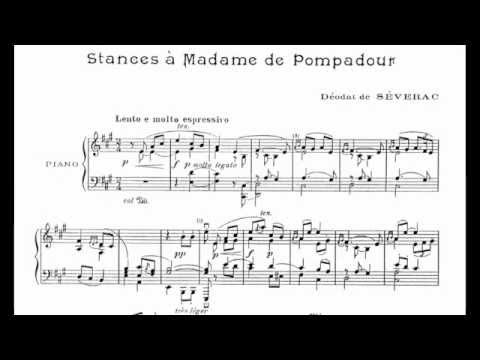
Déodat de Séverac was a French composer active from the late 19th to the early 20th century.
His works are characterized by mellifluous melodies and refined harmonies that reflect the traditional music of his native Languedoc.
The piano piece Stances à Madame de Pompadour, composed in 1907, is thought to have been written as a homage to Madame de Pompadour, a prominent woman of 18th-century France.
Serene yet richly expressive, this work embodies Séverac’s distinctive, sophisticated aesthetic and is highly recommended for lovers of classical music.
From the Days of Holiday, Book II, No. 1: “Chopin’s Spring”Déodat de Séverac

The French composer Déodat de Séverac left works deeply rooted in the musical traditions of Languedoc in southern France, and his sweet melodies and refined harmonies were highly praised by Claude Debussy as “music with a pleasant fragrance.” “The Fountain of Chopin,” included in his piano collection En vacances (Days of Holiday), is a lyrical piece that conveys the composer’s love for his homeland and a sense of gentle everyday life.
Its graceful melody, reminiscent of an homage to Chopin, evokes scenes as if one were looking at a painting.
It is a soothing and beautiful work that I recommend even to those unfamiliar with Séverac’s music.
From the Days of Vacation, Book I, No. 7: When the Old Music Box Is HeardDéodat de Séverac

Déodat de Séverac was a composer who continually created music deeply rooted in the land and culture of southern France.
His works, with their sweet melodies and refined harmonies, were highly praised by Debussy.
The seventh piece from En vacances, Book I is a simple work whose gentle, nostalgic melody evokes the timbre of an old music box.
It carries a wistful atmosphere, as if recalling everyday scenes from childhood.
Performed with tender, delicate expression, it is sure to soothe the listener’s heart.
Cerdanya — Five Picturesque Etudes No. 1: In the Two-Wheeled Carriage — Arrival in CerdagneDéodat de Séverac

Born in 1872, Déodat de Séverac was a composer who loved the traditional music of the Languedoc region.
His works, praised by Debussy as “music with a pleasant fragrance,” are highly regarded for their beautiful melodies and harmonies.
The first piece from his piano suite Cerdanya — Five Picturesque Studies, titled In a Two-Wheeled Carriage — Arrival in Cerdanya, is a pictorial scene piece that reflects his deep affection for his homeland.
From its bright, energetic opening, it invites listeners on an unhurried journey.
Through Séverac’s musical vision, the beautiful landscapes of Cerdanya are vividly portrayed, making you feel as if you’re standing there yourself.
It is a masterpiece that everyone who loves their homeland should hear.