

Séverac’s Piano Pieces: Masterworks by the Genius Composer Recognized by Debussy

The composer Déodat de Séverac, born in southern France in 1872.
He loved the traditional music of his native Languedoc, and by weaving its elements into his works, he earned high praise for their sweet melodies and refined harmonies—Claude Debussy, the great master of French music, even lauded them as “music with a pleasant fragrance.”
Although Séverac was a master of improvisation and consequently left relatively few works in written score, all of his surviving pieces are cherished by performers and classical music enthusiasts for their beauty.
In this article, we introduce a carefully selected set of his piano works.
- Séverac’s Piano Pieces: Masterworks by the Genius Composer Recognized by Debussy
- [Chaminade’s Piano Works] Masterpieces of Delicacy and Boldness by a Woman Composer
- [Easier Level] Ravel’s Piano Pieces | A curated selection of easier works you can play smoothly!
- [Lyadov’s Piano Pieces] A pianistic masterpiece crafted by a brilliant but lazy composer
- [Piano Works of Sibelius] Exquisite Music Crafted by a Nordic Finnish Composer
- Chabrier’s Piano Pieces: Gemlike Masterworks Forged by the Esprit of French Music
- Durand’s Piano Pieces: Masterworks by the Composer Behind Classic Recital Favorites
- [Fauré] Lower Difficulty! Recommended Piano Pieces by a Master of French Music
- [Poulenc’s Piano Works] A Curated Selection of Masterpieces by a Composer of Esprit
- [Contemporary Pieces] A curated selection of classical works that captivate with the piano’s mysterious resonance!
- Dutilleux’s Piano Works: Masterpieces by a Leading French Composer of the Late 20th Century
- Scriabin’s Piano Works: Selected Masterpieces by a Pioneer of Modern Music
- Masterpieces of classical piano that are too beautiful for words. A gathering of delicate tones that cleanse the soul.
Sévérac’s Piano Pieces: Masterworks by the genius composer recognized by Debussy (1–10)
Song of the Earth (an agrarian poem in seven parts), Overture: “Spirit of the Earth”Déodat de Séverac
Déodat de Séverac was a French composer active from the late 19th to the early 20th century, who left many works rooted in the traditional culture of his native Languedoc.
His Chant de la Terre (Song of the Earth) is a suite of seven piano miniatures themed around agrarian poetry.
Séverac carefully depicts the nature and changing seasons of Languedoc, expressing through music the scenes of farm work and the feelings of the farmers who live alongside it.
Filled with affection and respect for the land, this work, while drawing on the currents of Impressionist music, captivates with its simple charm and poetic character.
It is highly recommended for those who want to feel nature through the piano or are seeking music rich in the local color of rural France.
Cerdanya – Five Pictorial Etudes No. 2: Festival ~Memories of Puigcerdà~Déodat de Séverac
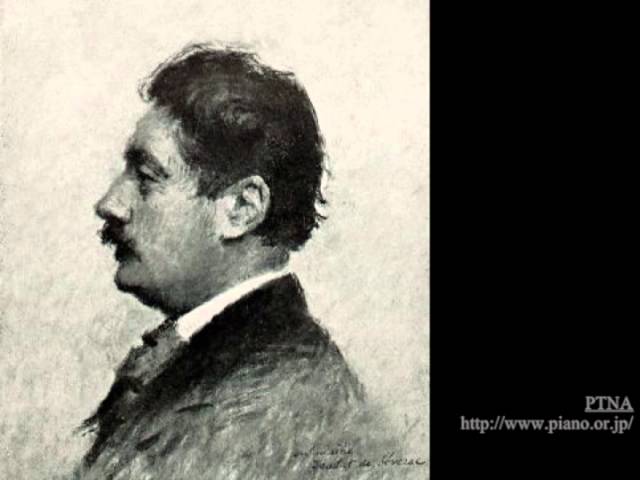
The French composer Déodat de Séverac had a deep affection for the traditional music of his native Languedoc.
His works vividly reflect the local climate and culture.
Cerdanya – Five Picturesque Studies is one of his representative piano suites, depicting the landscapes of the Cerdanya region near the Spanish border.
The second piece, Festival – Souvenir of Puigcerdà, evokes the lively festivities of the border town Puigcerdà.
Spanish-tinged rhythms intertwine with sparkling high-register figures and a sweet, lyrical melody, conjuring a beautiful scene.
Through Séverac’s music, why not immerse yourself in landscapes brimming with exotic charm?
The Water Nymph and the Impertinent FaunDéodat de Séverac

Déodat de Séverac was a composer from Saint-Félix-de-Caraman in southern France.
Among Séverac’s many inspired and beautiful works for piano, The Water Nymph and the Irreverent Faun is a particularly striking piece.
True to its subtitle, “Dance of the Night,” the music evokes the night’s beguiling lights and scents—brilliant and unrestrained.
Séverac’s works are deeply imbued with the landscapes and culture of his homeland.
Why not take your time and savor the charms of this regionally rooted music?
Sévérac’s Piano Pieces: Masterworks by the Genius Composer Admired by Debussy (11–20)
A brilliant concert waltz, “Peppermint Jet.”Déodat de Séverac

Born in southern France, the composer Déodat de Séverac loved the traditions of his native Languedoc and is known for weaving their musical elements into his works.
Claude Debussy praised his style as “music with a pleasant fragrance,” marked by luscious melodies and refined harmonies.
Composed in 1907, the Concert Waltz “Peppermint-Jette” is a bright and buoyant piece named after a popular liqueur from the South of France.
Its appeal lies in a vibrant energy that evokes glittering social scenes and in its sophisticated piano writing.
Among Séverac’s works, it shines for its originality—an inventive reimagining of the waltz.
A piece I highly recommend to anyone who loves the piano.
From the Holiday Days, Book I: No. 1, “Prayer to Schumann”Déodat de Séverac

Déodat de Séverac left works imbued with the spirit of southern France.
A lover of Languedoc’s traditional music, he deftly wove its elements into his piano works, whose refined, mellifluous sonorities are deeply appealing.
Prayer to Schumann, included in From the Days of Holiday, Book I, is a piece that conveys profound respect for Robert Schumann.
While singing Séverac’s characteristic lyrical melodies, it pays homage to Schumann in a musical language that is uniquely his own.
With its gentle, beautiful lines that soothe the soul, this work is highly recommended for admirers of Romantic-era music.
Suite ‘In Languedoc’ No. 4: ‘A Corner of the Spring Cemetery’Déodat de Séverac

In Languedoc is a collection of works by Séverac that depicts the landscapes and culture of southern France through music.
The fourth piece, In a Corner of the Spring Cemetery, is notable for its gentle melody.
It unfolds a world where the rebirth of nature heralding spring blends with thoughts for those who rest in quiet sleep.
The piano, played with a delicate touch, vividly evokes the beautiful scenery of Languedoc.
Conveying Séverac’s deep affection for nature and his homeland, this work is also recommended for those seeking the solace of a tranquil musical mood.
Vals MetecDéodat de Séverac

The French composer Déodat de Séverac was born in 1872 in the Languedoc region of southern France and died in 1921.
His works incorporate elements of the traditional music of his homeland, and his piano pieces in particular have long been praised for their beautiful melodies and harmonies.
His Valse Mécanique is a striking work with a light, nostalgic melody, and can be seen as emblematic of his beautifully wistful musical style.
Through this romantic music, evoking local scenes and memories, why not let your thoughts wander to the beautiful landscapes of France?