

Play ideas kids can enjoy from 1st to 6th grade [indoors & outdoors]


Looking for games everyone from first to sixth grade can enjoy together? In response to those requests, here are activities that bring excitement across grade levels.
From escape-room style games where teammates work together to solve puzzles, to chase games where everyone holds hands to flee from the tagger—there are plenty of options you can enjoy in the classroom or the gym! Build teamwork and share lots of smiles.
From active, movement-based games to brain teasers, you’ll find a wide variety of activities that support children’s growth.
- [Play Right Away!] Exciting Recreation Games Recommended for Elementary School Students
- Indoor and outdoor activities that avoid crowding. Enjoyable for students from first to sixth grade.
- [Children’s Club] Easy and fun indoor games. Exciting party games
- Recommended for upper elementary grades! Exciting indoor recreation and games
- No worries even in the rain! Fun recreational activities you can do in the gym
- [Elementary School] Quick and Easy! Indoor Recreational Activities Perfect for Lower Grades
- Elementary School Fun Day a Big Hit! Indoor Game Idea Collection
- [Elementary School Rec] Recommended Games and Performances for a Fun Party
- [For Kids] Indoor Fun! Large-Group Recreational Activities and Games
- Liven up your children’s club event! A collection of ideas everyone can enjoy
- Recreation Activities That Excite Kids’ Clubs! Plans and Ideas Children Will Love
- [For Kids] Exciting Class-vs-Class Games: Team Competition Activities
- Recommended outdoor games and recreational activities for lower elementary school children
Indoor activities that are easy to do (41–50)
Play to develop hazard awareness

By catching only balls of the specified color, children can develop hazard awareness.
You’ll use a pool cue and colored balls.
Cut the pool cue lengthwise in half and join the halves to make a rail.
Set it up on a table, then roll various colored balls down it.
Ask your child to use the pool cue to catch only the balls in the color you told them beforehand.
Seeing, deciding, and moving instantly—this experience will surely help give children the power to protect themselves from danger.

Bingo Relay

This is a game played on a 3×3 grid of nine squares, where the team that first places three cones in a row wins.
Place cones so they form a straight line vertically, horizontally, or diagonally.
Each team has only three cones, so from the fourth runner onward, move an already placed cone.
When switching runners, always tag to make the change.
This game requires you to instantly grasp the situation and decide your next move.
It’s also important not only to align your own team’s cones, but to block the other team from completing theirs.
Safe Design Marble Game

Kids love rolling toys! Many children want to play with marbles, but when kids are small, there’s a risk of swallowing them, which worries caregivers.
So here’s a toy idea that uses marbles safely.
Inside a box, move plastic bottle caps with marbles set inside them toward a goal without letting them fall into holes.
The marbles are firmly fixed to the caps, and the caps are also tied to the box with string, so it’s safe.
Decorate the box and caps with any designs you like, and play by tilting the box to slide the caps around.
5 Easy DIY Crafts You Can Try

Kids love crafts, but as first graders it can be hard to stay focused for a long time.
So here are some quick craft ideas you can finish in a short time.
You can make five things: a moving boat, a guitar, a fortune slip (omikuji), a ghost that pops out of a box, and a spinning top.
The materials are mostly recyclables—things you likely have at home—such as milk cartons, plastic bottles, wooden chopsticks, straws, ice cream sticks, and plastic bags.
You can play with each item after you make it, so once you’re done, decorate it however you like and put it to use as a fun at-home activity.
7 park games kids can play without equipment
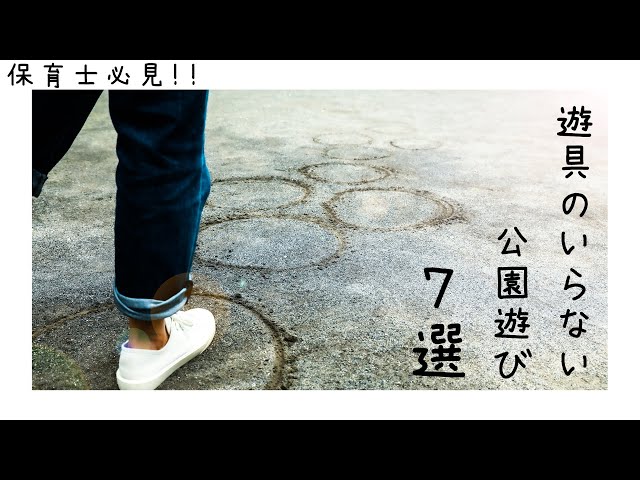
Park games that everyone from small children to adults can enjoy together without any preparation are great because they can be played with whoever happens to be there.
Hopscotch, hand-pushing sumo, number games, playing house, shadow play, and drawing are all familiar activities that don’t require any equipment.
You can also use natural materials like pebbles and sticks, which makes it easy to invent games and come up with original rules with friends.
Let’s make the most of the wide-open space of the park and have fun moving our whole bodies with games that can only be enjoyed in such a setting.

Jump into a rock-paper-scissors game!
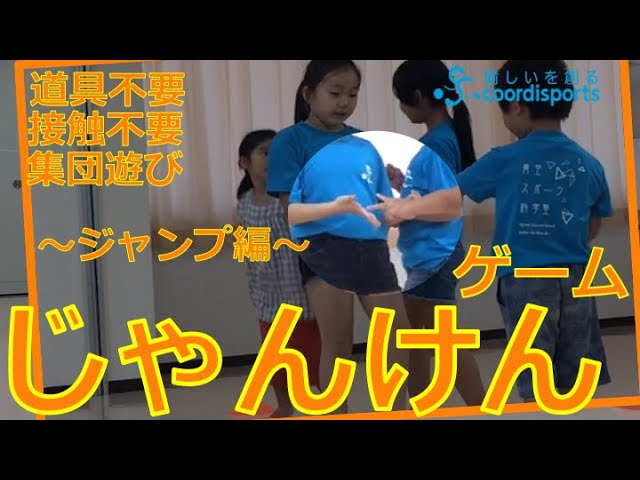
The “Rock-Paper-Scissors Jump Game,” which combines rock-paper-scissors with jumping, is a playful activity that helps children learn how to use their bodies while potentially improving their athletic ability.
Create waiting spots on the left and right, and have participants play rock-paper-scissors with the person next to them.
The winner then jumps while moving from their current waiting spot to the one on the opposite side.
It’s a simple game that repeats this process, so any child old enough to play rock-paper-scissors can join.
For the jumping styles, start with a “rock” jump keeping both feet together, then move to a “scissors” jump.
After that, switch to a gallop and finally to a “paper” jump.
Clap-Clap Game
@mimasakadaigaku A clapping game you can use for class activities! It’s super easy, so give it a try!#Mimasaka University#Pachi-Pachi GameClass party/activity
♬ Pretty and fun Marimba song – Azuline
Here are six quick games you can enjoy in short spare moments: “Pat-and-Rub,” where your left and right hands do different movements; the “Rock-Paper-Scissors Game,” where the right hand always has to win; and the “Command Game,” in which you move according to a leader’s instructions, among others.
All of these can be played indoors and work for small to large groups, so everyone can have fun together.
The simple rules make them suitable for children from the early elementary grades, and it’s great that they help develop motor skills.
Because the rules are simple, you can also add variations to adjust the difficulty.