


Do you like rain?Some people dislike it because events and outings get canceled, while others feel a little rain is necessary for the crops they’re growing.
There are many viewpoints.In this article, we’ll introduce fun facts and trivia about rain for a general audience—so both rain-lovers and rain-haters can learn more about it.We’ve gathered a variety of knowledge: weather forecasts that convey rain, facts about the rainy season, and how animals signal rain.Once you learn more about rain, you might find yourself a bit more interested in it.Be sure to check it out!
- Rainy season trivia roundup: fun facts you'll want to share with someone
- Learn to Love the Rain! Fun Facts & Trivia Quiz about the Rainy Season for Kids
- [For Kids] Trivia Quiz & Fun Facts About Rain
- Make weather forecasts more fun! Trivia and fun facts about the weather
- [Trivia] Did You Know? A Collection of Weather Proverb Quizzes!
- A trivia quiz about typhoons you might not know: questions range from general knowledge to disaster preparedness.
- The rainy season becomes something to cherish: heartwarming quotes for JuneNEW!
- Take on the Lightning Trivia Quiz! From common knowledge to surprising fun facts
- [For Adults] Fun Things to Do on a Rainy Day
- [For Adults] Fun Activities and Hobby Ideas for Rainy Days
- Trivia and fun facts to make summer even more enjoyable
- [For Kids] Fun Summer Trivia Quiz & Facts
- A quiz of fun trivia: bite-sized knowledge that leads to new insights.
Rain Becomes Fascinating! Trivia & Fun Facts Collection (1–10)
It can rain even when the forecast says a 0% chance of precipitation.
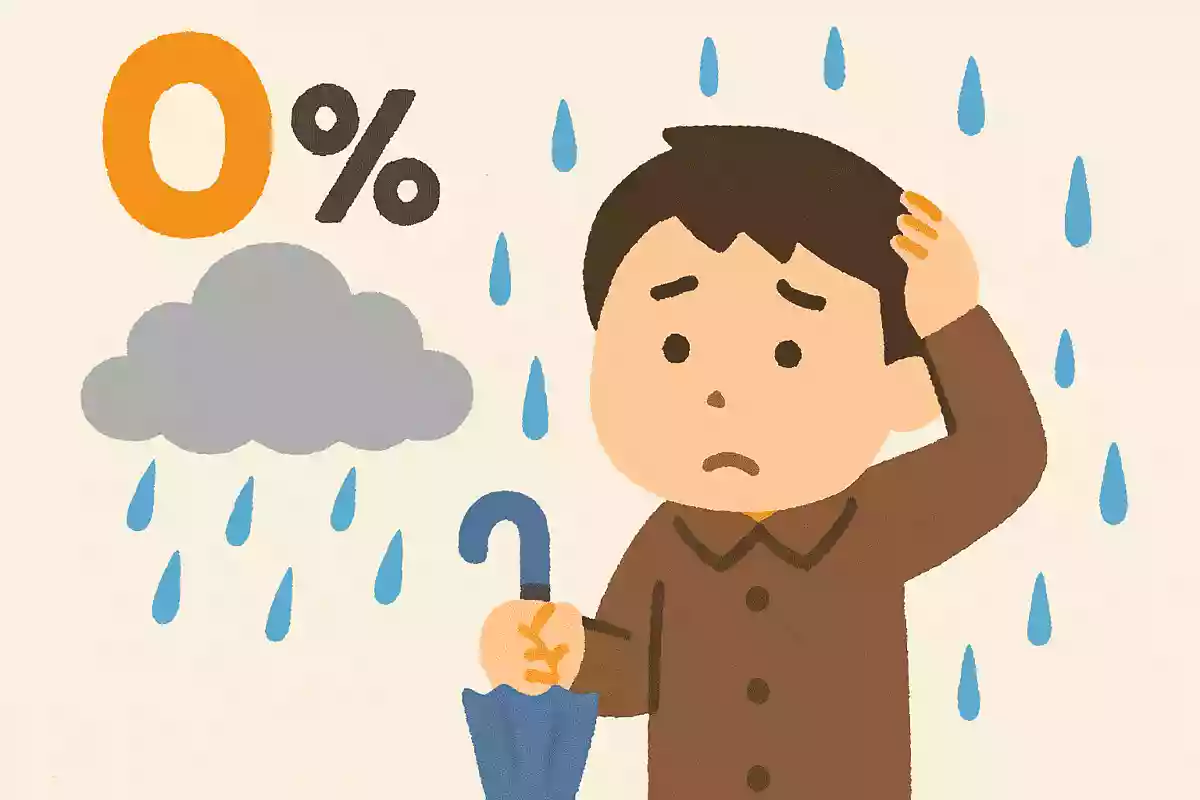
Even when the weather forecast says a 0% chance of precipitation, the sky can suddenly turn ominous and it may rain.
In forecasts, “0% chance of precipitation” doesn’t mean it will never rain; it means the probability is extremely low.
Also, 0% doesn’t literally mean zero—it generally means less than 5%.
In other words, there is still some chance of rain.
To avoid getting caught in a sudden shower, it’s a good idea to carry a foldable umbrella if the weather looks even a little suspicious.

Because it’s the time when plums ripen, the character for ‘rainy season’ (tsuyu) includes the kanji for ‘plum’ (ume).
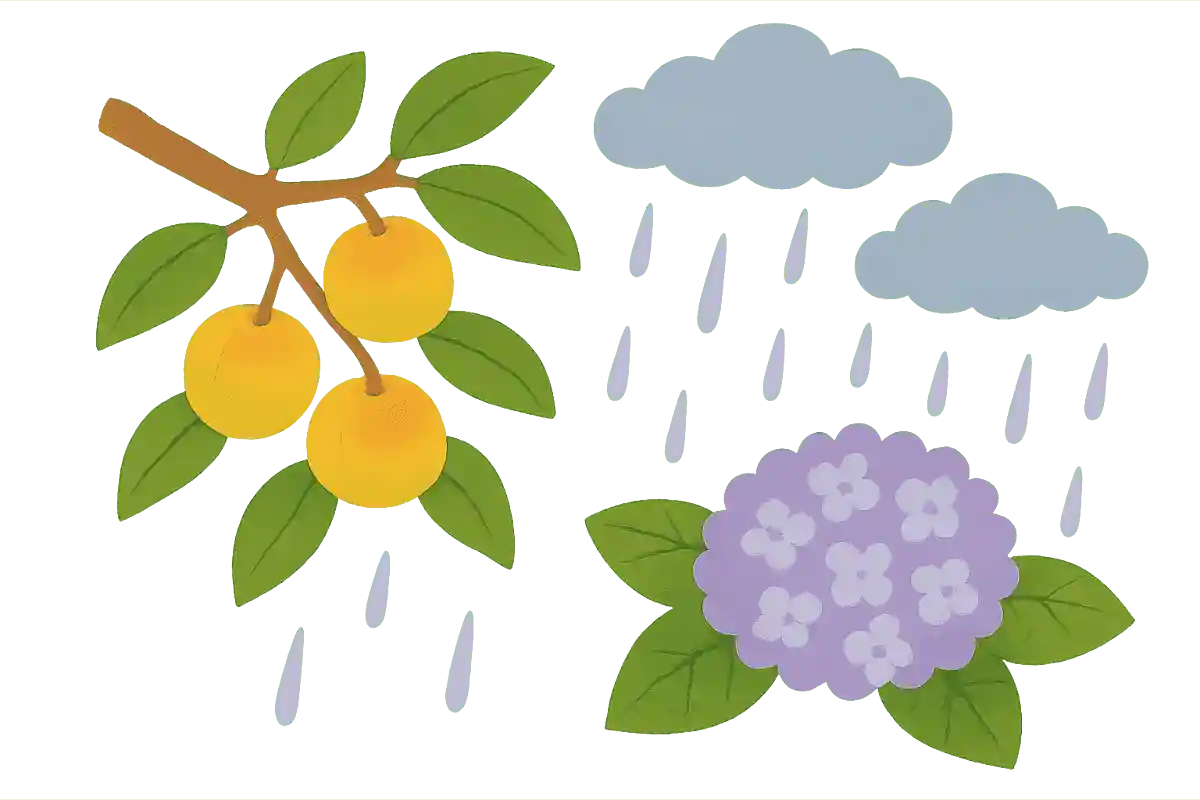
The character for “plum” (梅) is said to be used in the word tsuyu (the rainy season) because this period coincides with when plums ripen.
In China, because the season’s weather and temperature changes make mold likely to grow, it was written as 黴雨, meaning “mold rain.” In Japan, since this season overlaps with the time when plums ripen and is considered auspicious, the character 梅 came to be used, giving rise to the term 梅雨.
You could say that the characters for 梅雨 are closely tied to the season’s natural phenomena and everyday life.
This is also exactly the time when people make plum juice and plum syrup.
The smell of rain is called “petrichor.”

You know how there’s a distinctive smell when it rains? I think everyone has noticed it at least once.
Did you know that smell actually has an official name? It’s called “petrichor.” The term is a coinage combining the Greek words petra, meaning “stone,” and ichor, meaning “the blood of the gods.” In English it’s spelled “petrichor.” The name was coined by mineralogists Isabel Joy Bear and R.
G.
Thomas when they published their paper in Nature.

Teru teru bozu have existed since the Edo period.
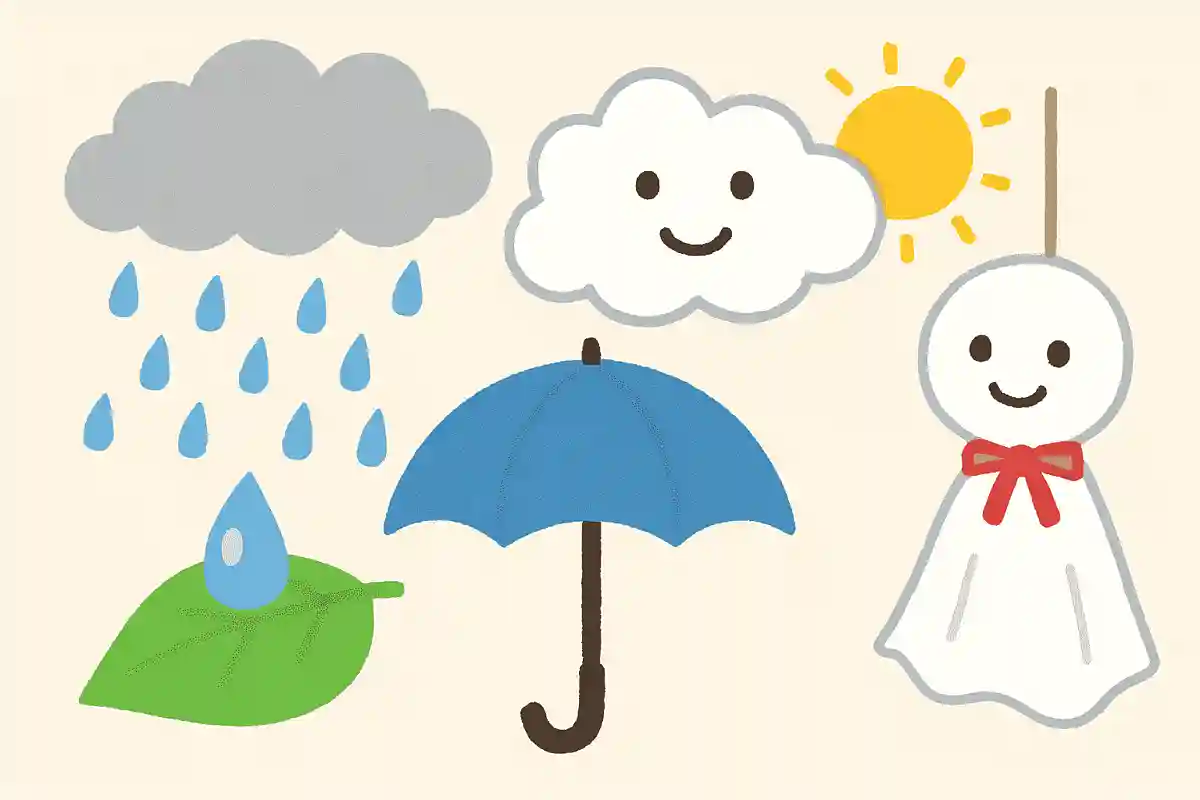
Teru teru bozu is a Japanese custom that has been known since the Edo period.
However, it is said to have originally been introduced from China.
In the Edo period, people did not draw faces on teru teru bozu as we do today; instead, they would draw a face once the weather cleared as a sign that their wish had come true, offer sacred sake, and then float it down a river.
Because agriculture was greatly affected by the weather, people would pray to teru teru bozu for clear skies.
The practice of hanging a teru teru bozu when you want good weather is a tradition that remains unchanged from the past to the present.
“Amemoyō” describes a situation where it isn’t actually raining.
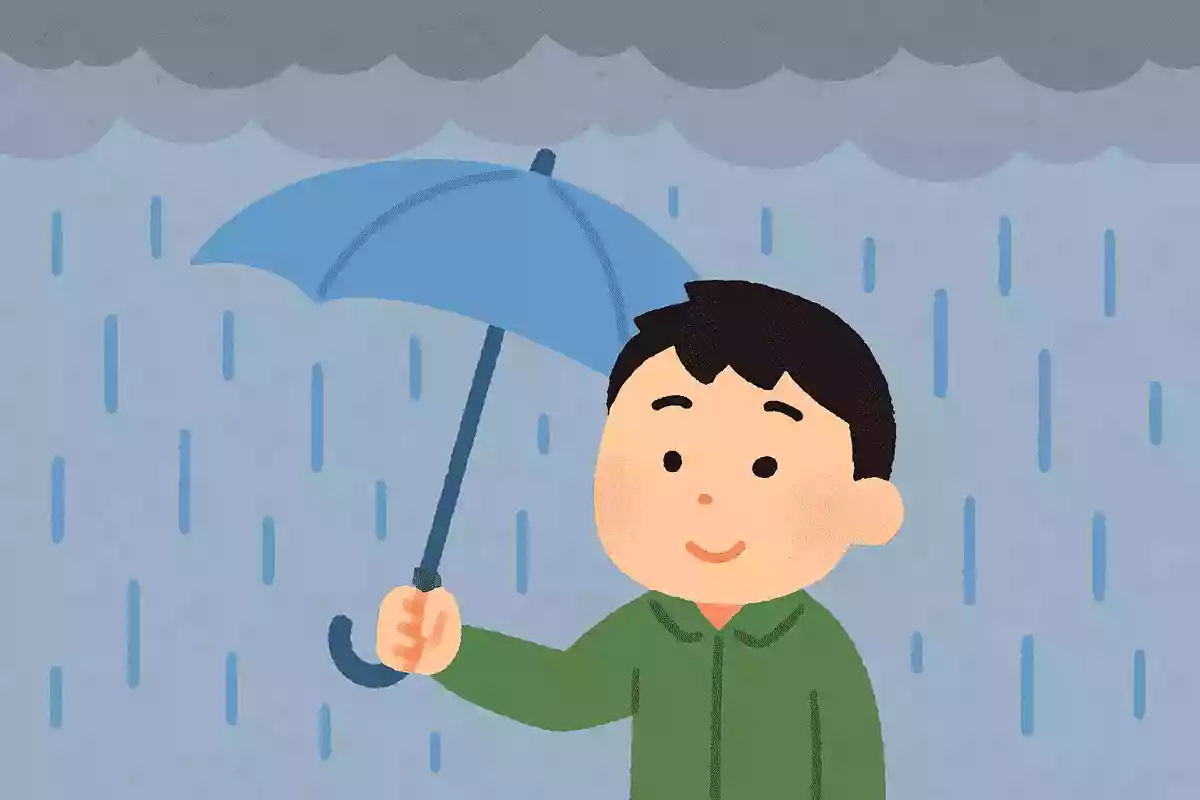
The term “amemoyou” (literally, “rain-like”) is used to describe weather where it hasn’t started raining yet, but it looks like it could any moment.
It conveys a scene where the sky is dull and overcast, or rain seems imminent.
Once it actually starts raining, you wouldn’t call it amemoyou; you would simply say that it’s raining.
When you use the word amemoyou, think of a situation where rain seems about to begin but hasn’t started yet—this will help you use it appropriately.
Try using it before the rain starts.
Raindrops are shaped like steamed buns.
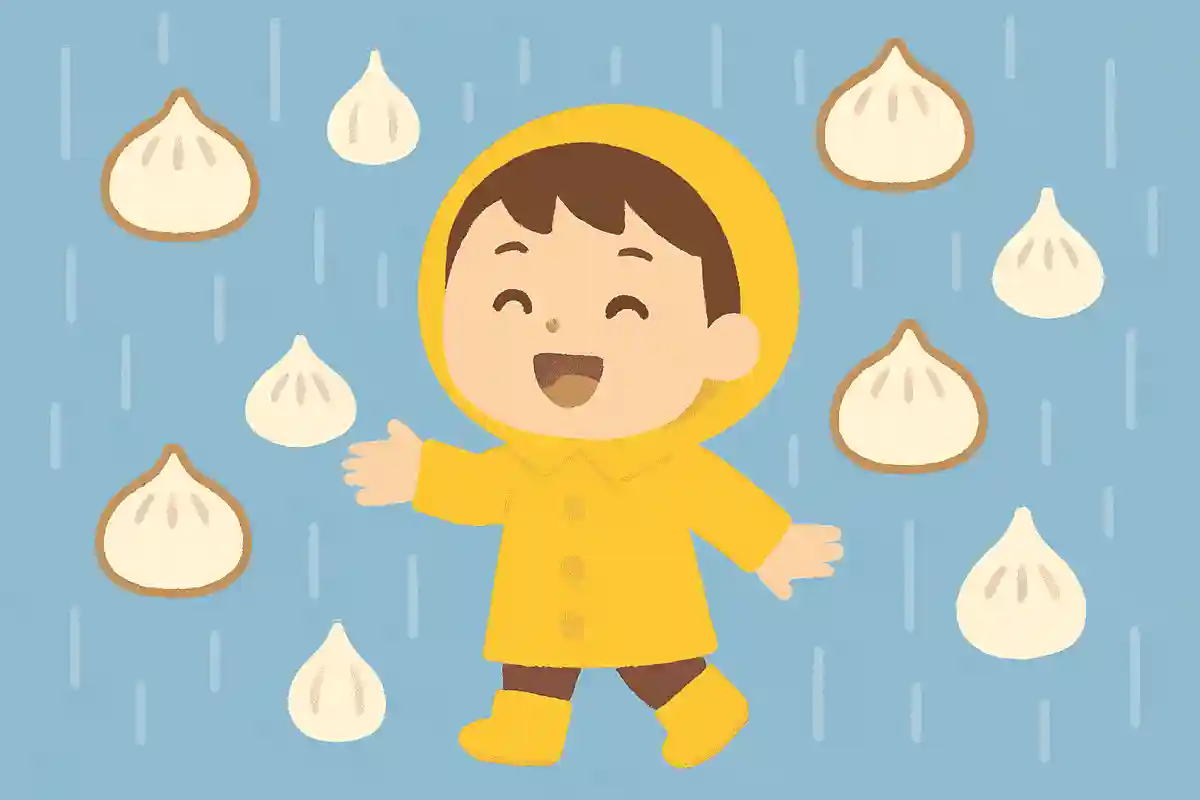
Raindrops are said to be shaped like steamed buns.
While raindrops are often depicted as teardrops in illustrations, in reality they are said to have a flatter shape resembling a steamed bun.
Raindrops range from large to small, and large ones are said to look like a steamed bun that has been squashed.
The teardrop shape commonly shown actually represents a droplet falling from a faucet.
It might be interesting to observe the moment raindrops fall during a rainstorm.
In the American South, a sunshower is called “the devil beating his wife.”
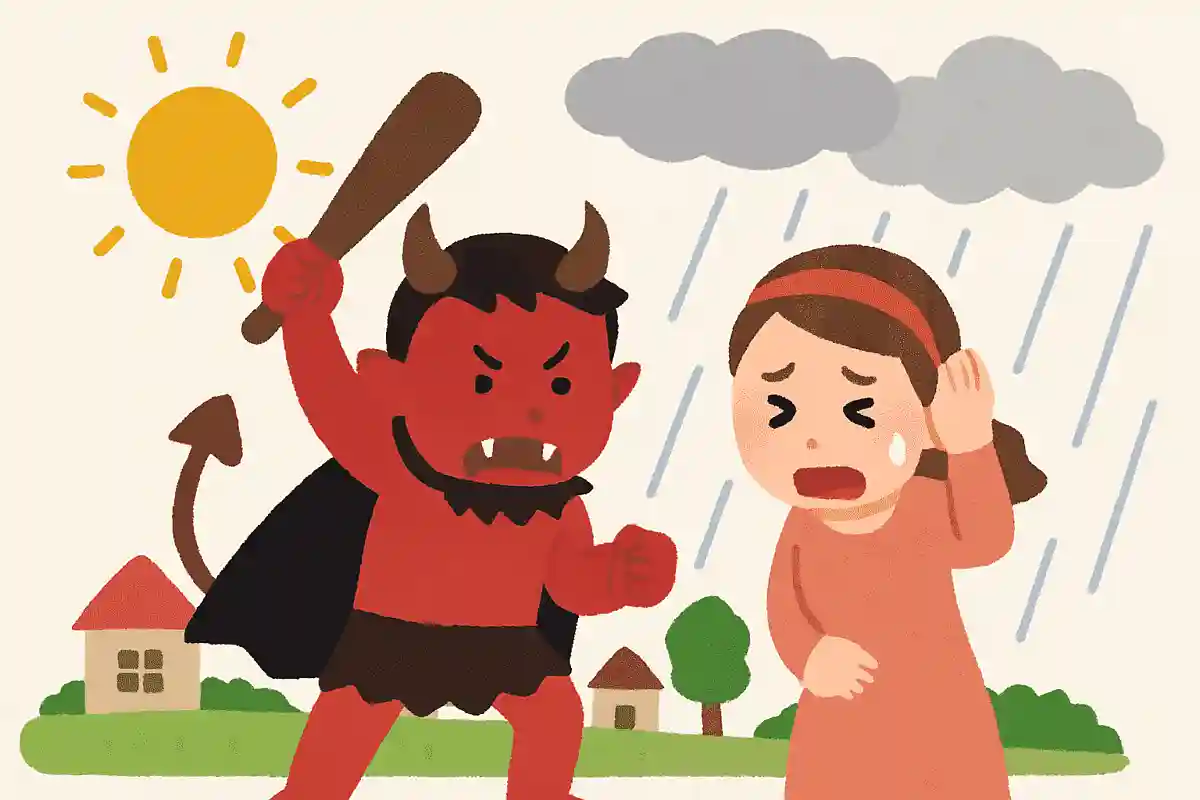
In Japan, a sunshower is described as “a fox’s wedding,” but in the American South, they say “the devil is beating his wife.” It’s a slightly scary expression, but that’s actually what it’s called.
The rain of a sunshower is said to be the devil’s wife’s tears.
There’s also a theory that the devil does this out of anger at God for making such a beautiful day—but that has nothing to do with his wife… how unreasonable.
By the way, there are similar expressions elsewhere: in Korea it’s “a tiger’s wedding,” and in Greece it’s “a gorilla’s wedding.”