

Antonín Dvořák Popular Songs Ranking [2026]

When you think of classical composers, Dvořák is probably one of the first that comes to mind.
You may have studied him in music class.
That said, many people might not have had the chance to really listen to his works.
Here, we introduce his most popular pieces in a ranking format.
Perfect for beginners!
- Anton Bruckner Popular Songs Ranking [2026]
- Dvořák’s masterpiece. Popular classical music.
- Dvořák’s Piano Works: A Curated Selection of Masterpieces Filled with Love for His Homeland, Czechia
- Bedřich Smetana Popular Songs Ranking [2026]
- Johannes Brahms Popular Songs Ranking [2026]
- Gustav Mahler Popular Songs Ranking [2026]
- Bartók Béla Popular Song Ranking [2026]
- Dmitri Shostakovich Popular Songs Ranking [2026]
- Antonio Vivaldi Popular Song Ranking [2026]
- Pyotr Tchaikovsky Popular Song Rankings [2026]
- Wolfgang Amadeus Mozart Popular Song Rankings [2026]
- Ludwig van Beethoven Popular Songs Ranking [2026]
- Jean Sibelius Popular Songs Ranking [2026]
Antonín Dvořák Popular Song Rankings [2026] (71–80)
From Symphony No. 8, Movement IVAntonín Dvořák71rank/position

A wealth of masterpieces by Antonín Dvořák, the composer of works counted among the three great symphonies.
Among them, the fourth movement of Symphony No.
8 is a masterpiece that strongly reflects the natural beauty and folk elements of Bohemia.
Completed in 1889, the work opens with a powerful trumpet fanfare, followed by a theme introduced by the cellos that unfolds through a series of variations.
This piece conveys Dvořák’s deep affection for his homeland and is characterized by a bright, pastoral tone.
Its lively development, incorporating the rhythms and melodies of Czech folk dances, sets listeners’ hearts dancing and evokes images of Bohemian landscapes and everyday life.
It is a highly recommended piece for those looking to become familiar with classical music or seeking warm, heart-stirring music.
Symphony No. 9 “From the New World,” First MovementAntonín Dvořák72rank/position

From Symphony No.
9, Movement I: Adagio, Allegro molto (slowly; very fast).
Composed by Dvořák during his stay in America, it is one of his more familiar works.
Performed by the Moravian Philharmonic Orchestra under the baton of Petr Vronský.
Symphony No. 9 “From the New World,” Movement IIIAntonín Dvořák73rank/position
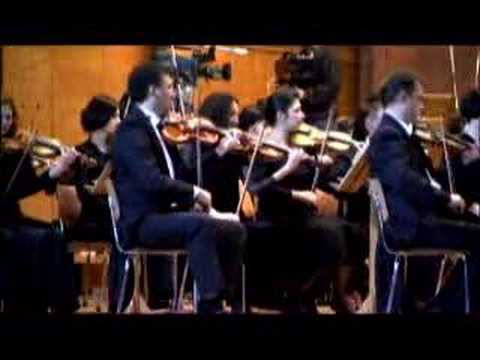
From Symphony No.
9, Movement III: Molto vivace (very fast and lively).
The subtitle “From the New World” is said to convey a message from the New World, America, to the composer’s homeland of Bohemia.
Conducted by Derek Gleeson, performed by the Dublin Symphony Orchestra.
Overture ‘The Hussites’, Op. 67, B. 132Antonín Dvořák74rank/position

This piece, completed in 1883, portrays the Czech religious reformer Jan Hus and his supporters.
It incorporates two chorales familiar to the Czech people and richly weaves in elements of folk music.
Characterized by a weighty, solemn atmosphere, its orchestral sonorities are magnificent.
This work is a masterpiece in which Antonín Dvořák’s patriotism toward the Czech lands and his musical genius are beautifully fused.
It’s recommended not only for those interested in Czech history and culture, but also for fans of Romantic-era music.
Serenade for Strings, Op. 22 – I. MovementAntonín Dvořák75rank/position

“Serenade for Strings, Op.
22 – I.
Moderato” (at a moderate tempo).
A pleasant work featuring a relaxed, warm melody interspersed with rhythmic passages.
Performed by the Arts Chamber Orchestra, conducted by Konstantin Maslyuk.
Serenade for Strings, Op. 22: II. MovementAntonín Dvořák76rank/position

Composed in 1875, the second movement of the Serenade for Strings features a graceful waltz atmosphere and a hauntingly beautiful melody.
At the time, the 33-year-old Antonín Dvořák had secured financial stability through an Austrian government scholarship and is said to have completed the work in just eleven days.
Though understated and refined, with an elusive tinge of melancholy, it is written with a rhythm that seems to dance lightly under a clear blue sky, showcasing Dvořák’s gifts as a melodist to the fullest.
Even those unfamiliar with classical music can enjoy its approachable and engaging character.
Serenade for Strings, Op. 22: IV. MovementAntonín Dvořák77rank/position

Known as one of the finest melody-makers in the classical world, Antonín Dvořák’s works are a veritable treasure chest of classical music.
Composed in 1875, this five-movement piece for string ensemble showcases Dvořák’s talents to the fullest.
Written in just eleven days, it seems to reflect the happiness that filled the 33-year-old composer’s life at the time.
The slow movement, marked by flowing melodies and sweet, lyrical phrases, evokes an atmosphere of tranquility and longing.
Often mentioned alongside the works of Tchaikovsky and Elgar, this masterpiece reveals Dvořák’s rich sensibility and musical genius.
It is highly recommended for those who wish to savor classical music more deeply.