

Bedřich Smetana Popular Songs Ranking [2026]

Bedřich Smetana was a composer regarded as a pioneer who developed the national school of music in his homeland, the Czech lands.
Hailed as the father of Czech music, he is also well known in Japan as the composer of “The Moldau,” often sung in choral settings.
It is said that he was also highly skilled as a performer, having given a piano recital at the age of six.
This time, we present a ranking of Bedřich Smetana’s most popular works—why not immerse yourself in his music, which is celebrated internationally?
- Bedřich Smetana: A selection of famous and representative works!
- Dmitri Kabalevsky Popular Song Rankings [2026]
- Yamada Kōsaku Popular Song Rankings [2026]
- Jean Sibelius Popular Songs Ranking [2026]
- Bartók Béla Popular Song Ranking [2026]
- Johann Nepomuk Hummel Popular Song Rankings [2026]
- Mily Balakirev Popular Songs Ranking [2026]
- Carl Maria von Weber Popular Song Rankings [2026]
- Cécile Chaminade Popular Song Rankings [2026]
- Johann Burgmüller Popular Song Rankings [2026]
- Dmitri Shostakovich Popular Songs Ranking [2026]
- César Franck Popular Songs Ranking [2026]
- Scott Joplin Popular Song Rankings [2026]
Bedřich Smetana Popular Song Rankings [2026] (1–10)
Six Albums of Spelling, Op. 2Bedřich Smetana8rank/position

“Six Album Leaves, Op.
2” is a gem among the piano works left by Bedřich Smetana, the Czech national composer.
Consisting of six short pieces that distill his musical talent and sensibility, the set achieves a cohesive whole while allowing each piece its own distinct character.
From gentle lyricism and lively rhythms to introspective depth, it offers a richly woven world of emotions.
Through Smetana’s music, why not explore the culture and spirit of 19th-century Czechia?
From ‘Má vlast’: No. 1 ‘Vyšehrad’Bedřich Smetana9rank/position

A masterpiece that expresses Czech pride through music.
Inspired by Prague’s ancient castle, this work opens with the solemn resonance of two harps.
The melody, reminiscent of a bard’s lyre, seems to narrate the castle’s history.
The music then swells to a grand climax with the full orchestra, unfolding into a march-like section that evokes scenes of battle.
In the end, however, it closes quietly, leaving a sense of the melancholy of a castle in ruins.
Completed in 1874, the piece also played a role in strengthening the Czech people’s national consciousness.
There is a tradition of performing it every year on May 12 at the Prague Spring International Music Festival, and it continues to be loved by many.
It is a must-listen for anyone interested in Czech history and culture.
Vltava (The Moldau), No. 2 from Má vlast (My Homeland)Bedřich Smetana10rank/position

Smetana’s representative work is the symphonic poem cycle Má vlast (My Homeland).
Its second piece, Vltava (The Moldau), appears in music textbooks, and many of you have probably heard it at least once.
Beginning with two springs, it musically depicts the river as it flows through forests and meadows, past a farmers’ wedding, and on toward Prague.
The pure, flowing waters and the scene of water nymphs dancing under the moonlight are portrayed with great beauty, and the piece carries a sense of hope for the future of the Czech lands.
Composed between November and December 1874, it is a masterpiece imbued with Smetana’s struggle as he continued to compose despite his deafness, and with his deep love for his homeland.
Its beautiful melodies and rich expressiveness make it a must-listen for anyone interested in the nature and culture of the Czech Republic.
Bedřich Smetana Popular Songs Ranking [2026] (11–20)
Šárka, the third movement from My HomelandBedřich Smetana11rank/position
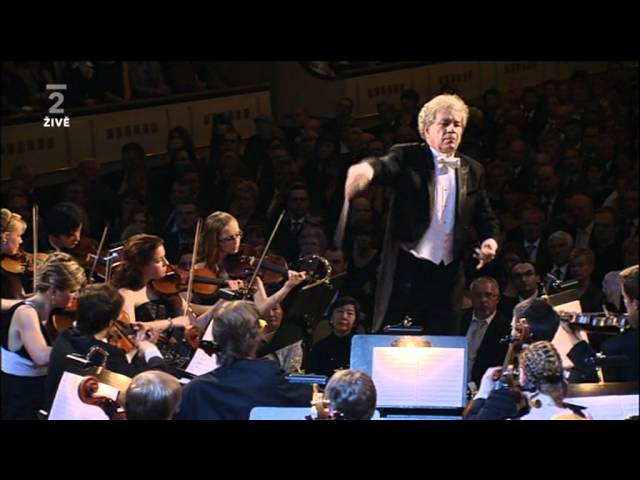
This work depicts the tale of Šárka, the legendary Czech warrior woman.
The music vividly conveys her fierce emotions fueled by revenge, the ruse of intoxicating the enemy and lulling them to sleep, and the final assault scene.
From the intense opening theme, you can feel Šárka’s anger and thirst for vengeance.
In the banquet scene, dance-like rhythms evoke the elation of drunkenness, and the finale escalates to portray the completion of her revenge.
It’s a perfect piece for those who want to enjoy melodies rich in Czech national character and a dramatically unfolding musical narrative.
From ‘Má vlast’ — No. 4: ‘From Bohemia’s Woods and Fields’Bedřich Smetana12rank/position

A symphonic poem depicting the beautiful nature of the Czech lands.
It opens with dark sonorities that evoke a deep forest, over which the clarinet sings a plaintive melody.
A fugue then follows, painting a scene of lush, overgrown woods, while horns and other winds convey the vast expanse of the forest.
In the middle section, a 2/4 polka appears, portraying a lively festive dance suggestive of harvests and weddings.
In the final part, previously heard themes return and drive toward an intense coda.
Completed in October 1875, this work musically expresses the beauty of Bohemia’s nature, the lives of its people, and a sense of national pride.
Highly recommended for those interested in Czech culture and history.
From ‘Má vlast’, No. 5 ‘Tábor’Bedřich Smetana13rank/position

The fifth piece from My Homeland, known as an iconic work of Czech music.
The melody of the Hussite chorale “You Warriors of God” serves as the main theme, symbolically depicting the spirit and struggles of the Hussites during the 15th-century Hussite Wars.
It opens with a powerful melody that musically expresses the courage of the town of Tábor and its inhabitants, as well as the depth of their faith.
This piece is perfect for those who wish to deepen their understanding of Czech history and culture.
Revised in 1881, it was added to Smetana’s catalog of works.
Evoking Czech national consciousness and historical pride, this gem of a masterpiece is imbued with profound love for the homeland.
From ‘Má vlast’ — No. 6 ‘Blaník’Bedřich Smetana14rank/position

From Má Vlast (My Homeland), No.
6: Blaník.
Blaník is a mountain in the Central Bohemian Region.
Smetana wished it to be performed together with No.
5, Tábor.
The performance is by the Second Queensland Youth Orchestra, conducted by Sergei Vkorschmin.