

Camille Saint-Saëns Popular Songs Ranking [2026]

French composer Camille Saint-Saëns (1835–1921), who began playing the piano at the age of two and created numerous magnificent works.
With a modern sound that even those not familiar with classical music can enjoy, it wouldn’t feel out of place rolling over the end credits of a film.
This time, we’ll introduce a ranking of some of his most popular pieces!
- [Masterpiece Classics] A special showcase of gem-like masterpieces so beautiful they’ll move you to tears
- Cécile Chaminade Popular Song Rankings [2026]
- César Franck Popular Songs Ranking [2026]
- Erik Satie Popular Songs Ranking [2026]
- Gabriel Fauré Popular Songs Ranking [2026]
- Georges Bizet Popular Song Rankings [2026]
- Maurice Ravel Popular Songs Ranking [2026]
- Déodat de Séverac Popular Song Rankings [2026]
- Francis Poulenc Popular Songs Ranking [2026]
- Claude Debussy Popular Songs Ranking [2026]
- Emmanuel Chabrier Popular Song Rankings [2026]
- Franz Liszt Popular Song Ranking [2026]
- François Couperin Popular Songs Ranking [2026]
Camille Saint-Saëns Popular Songs Ranking [2026] (1–10)
Bacchanale from the opera Samson and DelilahCamille Saint-Saëns8rank/position

The exotic, evocative melody at the beginning instantly draws you into the world of the piece.
Once you’re captivated, the music barrels forward nonstop, overwhelming you with its momentum.
There’s also a wind band arrangement, and it’s a piece that’s frequently performed at wind ensemble concerts.
Suite “The Carnival of the Animals,” No. 14: FinaleCamille Saint-Saëns9rank/position

Camille Saint-Saëns’s signature work, The Carnival of the Animals, is also very popular in Japan and often heard in media such as commercials.
Among its movements, I’d like to highlight the highly recommended Suite “The Carnival of the Animals,” No.
14: Finale.
As the title suggests, this piece crowns the suite as its finale, and its structure is suitably grand and brilliant.
It’s a piece that easily creates a vivid atmosphere, making it an excellent first choice for those attempting piano four hands for the first time.

The Swan from “The Carnival of the Animals”Camille Saint-Saëns10rank/position

Saint-Saëns was a French composer of the late Romantic era.
He was a precocious genius who entered the Paris Conservatory at the age of 13.
The Carnival of the Animals is often performed by orchestra or chamber ensemble, but in piano performances it is most commonly played as a duet for four hands.
Camille Saint-Saëns Popular Songs Ranking [2026] (11–20)
Symphony No. 3 in C minor, Op. 78, ‘with organ’ — Movement II, Part IICamille Saint-Saëns11rank/position

The work completed in 1886 by French composer Charles-Camille Saint-Saëns is characterized by a powerful fusion of organ and orchestra.
Saint-Saëns displayed musical talent from an early age, giving his first public performance at the age of five.
While upholding the traditions of Romantic music, this piece pursues innovative expression through a novel instrumental arrangement.
The majestic resonance of the organ interwoven with the orchestra’s brilliant melodies leaves a profound impression on listeners.
It is a highly recommended piece for anyone wishing to fully savor the allure of classical music.
The Carnival of the Animals, No. 13: The SwanCamille Saint-Saëns12rank/position

A celebrated work by Camille Saint-Saëns, based on a melody from the suite Le Carnaval des animaux.
Originally conceived as one of the pieces in a suite intended as entertainment for Carnival in early 1886, it was the only movement the composer allowed to be published during his lifetime.
The flowing melody played by the cello evokes the elegant figure of a swan gliding over the water and conjures the dreamlike imagery of the legendary “swan song.” The ballet The Dying Swan, created by Anna Pavlova in 1905 to this music, is renowned worldwide, and figure skater Yuzuru Hanyu’s exhibition performance to the piece also moved many audiences.
This is a piece for those who want to immerse themselves in the beautiful tone of the cello—a sound that seems to make you forget the summer heat and refresh the spirit.
C. Saint-Saëns “Henry VIII” in 4 Acts, Imperial Theatre of Compiègne (France), 1991, Part 2/2Camille Saint-Saëns13rank/position

Henry VIII is an opera by Camille Saint-Saëns, born in 1835, a French composer who was also a pianist and organist.
The work incorporates a great deal of church music—a specialty of Saint-Saëns, who served as a church organist—and its majestic choral and orchestral sonorities are moving and praised alongside its arias.
The Dying SwanCamille Saint-Saëns14rank/position
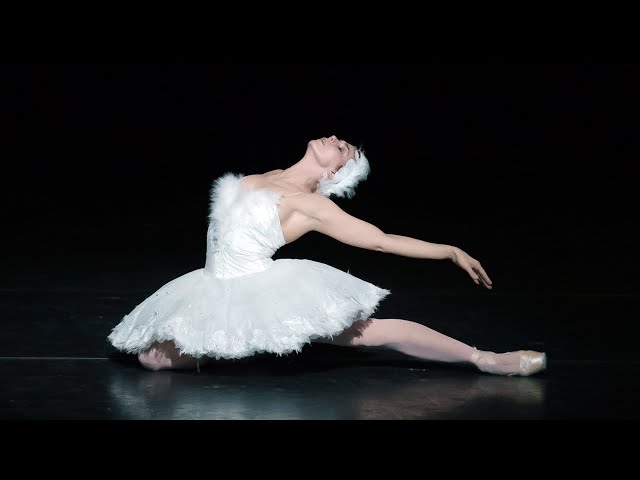
The masterpiece The Carnival of the Animals, composed by Camille Saint-Saëns.
The Dying Swan is a world-renowned piece choreographed by Mikhail Fokine to the movement The Swan from The Carnival of the Animals for the great ballerina Anna Pavlova.
As a short work of about four minutes, it places a strong emphasis on the ballerina’s expressive abilities.
It is a wonderful piece of ballet music on its own, but I believe you will enjoy it even more when seen together with the dance.