

Cécile Chaminade Popular Song Rankings [2026]

Cécile Chaminade, a French composer known as the first woman composer to achieve financial independence.
She began composing in childhood, earning recognition for her talent and even being called a “little Mozart.”
When her piano piece Scarf Dance became a worldwide hit, a British perfume company released a commemorative soap in its honor.
This time, we present a ranking of Cécile Chaminade’s most popular pieces!
- César Franck Popular Songs Ranking [2026]
- Bedřich Smetana Popular Songs Ranking [2026]
- Jacques Ibert Popular Song Ranking [2026]
- Francis Poulenc Popular Songs Ranking [2026]
- Déodat de Séverac Popular Song Rankings [2026]
- Gabriel Fauré Popular Songs Ranking [2026]
- François Couperin Popular Songs Ranking [2026]
- Johann Burgmüller Popular Song Rankings [2026]
- Scott Joplin Popular Song Rankings [2026]
- Pablo de Sarasate Popular Song Rankings [2026]
- Yamada Kōsaku Popular Song Rankings [2026]
- Manuel de Falla Popular Song Rankings [2026]
- Johann Nepomuk Hummel Popular Song Rankings [2026]
Cécile Chaminade Popular Song Rankings [2026] (1–10)
Six Concert Études, Op. 35-2 “Autumn”Cécile Chaminade8rank/position
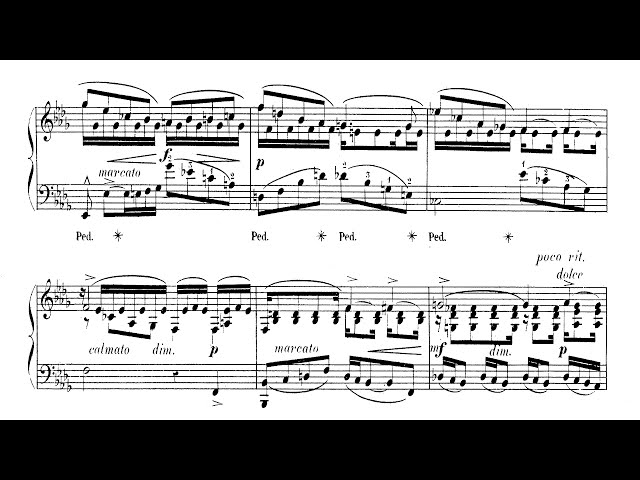
A solo piano piece by the French woman composer Cécile Chaminade, published in 1886.
One of her best-known works, it is characterized by rich Romanticism and deep emotion.
This piece, Autumn, is the second of six études, and it evokes the atmosphere of the season.
Its appeal lies in a structure where quietude and loneliness intersect with occasional surges of intense feeling.
With a relaxed tempo and a wistful melody, it beautifully portrays the transition of autumn and its pensive mood.
It’s a recommended piece not only for piano enthusiasts but also for anyone who wants to savor the spirit of autumn through music.
Cecile Chaminade Concertino for Flute, op 107Cécile Chaminade9rank/position

An orchestral piece composed by Cécile Chaminade with a gentle atmosphere.
It has a vivid sense of presence, as if you can see a peaceful countryside and cows and sheep enjoying spring in the pastures.
The sound quality is excellent, so it still feels natural even when you turn up the volume.
Caprice-Impomptu, Op. 153Cécile Chaminade10rank/position

The French composer Cécile Chaminade, while influenced by Romanticism, established a musical style uniquely her own.
Although it was not easy to pursue a career as a musician in the 19th century, she left behind numerous masterpieces as both a composer and a pianist.
Caprice-Impromptu, Op.
153, published in 1914, is a solo piano work that showcases Chaminade’s distinctive blend of delicacy and passion.
Though it is an instrumental piece with no lyrics, its title suggests an improvisatory caprice, and within its free form a wide range of emotions is woven—allowing the performer’s interpretation to bring out many different characters.
It is a rewarding work even for advanced pianists, so why not take on the challenge of performing it?
Cécile Chaminade Popular Song Rankings [2026] (11–20)
Spanish Serenade, Op. 150Cécile Chaminade11rank/position

French female composer Cécile Chaminade was active from the late 19th to the early 20th century, creating works in a unique style that incorporated Romanticism and French traditions.
Her piano piece “Spanish Serenade” is a passionate work in which romantic, sweet melodies unfold throughout.
The version arranged by Fritz Kreisler—featuring a Spanish-influenced character and a brilliant violin line—has been especially popular.
Its captivating melodies make it a fine recommendation for those new to classical music.
Why not experience the charm of this masterpiece through performances by pianists or violinists?
Toccata, Op. 39Cécile Chaminade12rank/position

Toccata, Op.
39 by Cécile Chaminade, a French composer and pianist.
Her musical style is said to be rooted in the Romantic tradition and French heritage, and she gained worldwide popularity, particularly for her piano pieces and salon music.
Composed in 1887 for solo piano, this work is characterized by its fast tempo and virtuosic passages, making it a showcase for the performer’s skill.
With its brilliant, dynamic melodies and emotional richness that reflects Chaminade’s unique sensibility, it stands as a masterpiece that continues to captivate many music lovers today—alongside the significance of her achievements as a woman who forged a professional path as a composer in an era dominated by men.
Piano Sonata in C minor, Op. 21Cécile Chaminade13rank/position

Cécile Chaminade’s Piano Sonata in C Minor, Op.
21, a work born of her struggle to establish herself as a female composer within the refined musical world of 19th-century Paris.
Composed in 1895, it is her only piano sonata, an exceptionally expressive and moving piece that beautifully fuses profound emotional depth with virtuosic writing.
From the passionate, dramatic first movement, to the second movement with its strikingly beautiful melodies, and the third movement bursting with intense, Schumann-like vitality, the sonata captivates with its rich variety of expression.
A true gem I highly recommend to pianists who wish to savor the essence of Romantic music.
Piano Trio No. 1 in G minor, Op. 11Cécile Chaminade14rank/position

Cécile Chaminade, a female composer of whom France is proud, forged her own path as a musician in the male-dominated society of the 19th century, leaving behind some 400 works.
Her piano compositions in particular are marked by a delicate touch and bold structural design, and she was highly esteemed as a pianist as well.
Published in 1880, the Piano Trio No.
1 in G minor, Op.
11, is an ambitious work in which the young Chaminade displayed deep musical knowledge and exceptional technique.
Consisting of four movements, the trio preserves the classical sense of form while establishing her uniquely refined style; the piano part, in particular, attests to the composer’s own virtuosity.
With a passionate first movement, a lyrical second, a sprightly third, and a powerful finale, the piece presents an impressive range of expression, and can be regarded as a masterpiece that fully showcases Chaminade’s creative richness and youthful sensibility.