

Frederic Chopin Popular Songs Ranking [2026]

Frederic Chopin (1810–1849), a composer born in Poland who was also active in France.
He died young, but he brought many masterpieces into the world.
This time, we have selected some of the most popular pieces among his works.
- Chopin’s masterpieces. Popular classical music.
- [Masterpiece Classics] A special showcase of gem-like masterpieces so beautiful they’ll move you to tears
- Franz Schubert Popular Songs Ranking [2026]
- [Advanced] A Comprehensive Introduction to the Difficult Piano Pieces of Chopin, the Poet of the Piano!
- Scott Joplin Popular Song Rankings [2026]
- Franz Liszt Popular Song Ranking [2026]
- Johann Burgmüller Popular Song Rankings [2026]
- César Franck Popular Songs Ranking [2026]
- Sergei Rachmaninov Popular Songs Ranking [2026]
- Cécile Chaminade Popular Song Rankings [2026]
- Ludwig van Beethoven Popular Songs Ranking [2026]
- Gabriel Fauré Popular Songs Ranking [2026]
- François Couperin Popular Songs Ranking [2026]
Frederic Chopin Popular Song Ranking [2026] (1–10)
Etude Op. 10 No. 3 “Farewell”Frederic Chopin8rank/position

Etude Op.
10 No.
3 by Frédéric Chopin, known as the “Farewell” Etude.
Chopin wrote 27 piano etudes that, in addition to technical elements, possess a high level of artistry; among them, this piece is considered one of the most popular for its beautiful melody and accessible character.
Within Chopin’s etudes, it is relatively less difficult, but practicing fine technical details is essential.
However, rather than becoming fixated on finger movements and producing a mechanical performance, it is best to play with attention to the smoothness of the melody and the changes in character in the middle section.

Farewell SongFrederic Chopin9rank/position

So beautiful that Frédéric Chopin himself is said to have remarked, “I’ve never written a piece this lovely,” the Etude known as “Tristesse” (“Farewell”) boasts an exceptionally beautiful melody and harmony.
Between the calm passages so often heard in dramas, commercials, and films, there are contrasting sections that are bright and lively.
The moments when you truly feel, “I can play the Farewell Etude!” are surely those famous phrases in the first and latter halves.
Why not savor this self-praised, beautiful music with a simply arranged score?
Andante spianato and Grand Polonaise brillante, Op. 22Frederic Chopin10rank/position

Frédéric Chopin’s Andante spianato and Grand Polonaise brillante, Op.
22, consists of a polonaise section with orchestra and an Andante spianato section for solo piano.
It is a challenging work that demands advanced technique and refined sensitivity, requiring the performer to differentiate among a variety of touches and tonal colors—from the delicate touch that seems to caress the keys to the weighty touch that conveys the body’s mass into the piano.
Precisely because of this, the joy is all the greater when you succeed in creating your own “beautiful performance.” It’s a piece that will undoubtedly have people around you saying, “That’s so cool!”
Frederic Chopin Popular Songs Ranking [2026] (11–20)
Waltz No. 1 in E-flat major, Op. 18 “Grande valse brillante”Frederic Chopin11rank/position

Frédéric Chopin’s dazzling waltz is perfect for a wedding where vows of love are exchanged.
Composed in 1833 and published the following year, it was the first of his waltzes to be released to the public.
Opening with a brilliant fanfare in B-flat, its five-part structure seems to bless the newlyweds as they embark on their journey.
Later featured in the ballet Les Sylphides, it has remained beloved by many.
Consider choosing it as a piano performance to adorn the couple’s precious, joyous moment.
Waltz No. 4 in F majorFrederic Chopin12rank/position

Nicknamed the “Kitten Waltz” for its lively character, the Waltz No.
4 in F major, Op.
34-3 evokes a charming scene of kittens dashing about at play.
It’s a delightful piece often chosen for recitals and competitions, and is loved for its strong performance impact.
Play the opening arpeggios boldly and confidently, and render the sparkling right-hand filigree with a bright, clear tone.
For the left-hand accompaniment, aim for lightness and forward motion; take time to practice each hand separately with care.
Ballade No. 4 in F minor, Op. 52Frederic Chopin13rank/position

Frédéric Chopin, a composer who epitomizes the Romantic era.
His passionate musicality and delicate expressiveness—earning him the title “poet of the piano”—continue to captivate people around the world to this day.
One of his signature works, Ballade No.
4 in F minor, Op.
52, is a masterpiece with a complex structure and profound musical depth.
Interweaving melancholic melodies with virtuosic passages, it seems to reflect Chopin’s inner world.
The performance by Samson François brilliantly conveys the work’s delicacy and dynamism.
It is a landmark recording that I highly recommend to all classical music fans who wish to experience the very essence of Chopin’s art.
Nocturne No. 20 in C-sharp minor, Op. posth.Frederic Chopin14rank/position
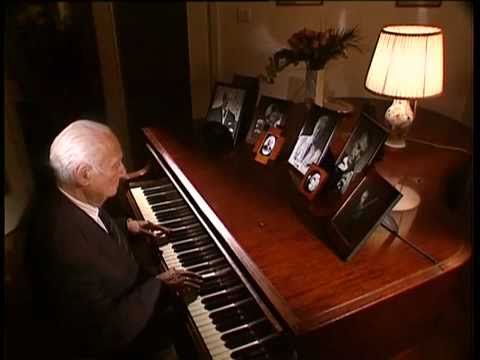
A nocturne composed by Frédéric Chopin in 1830.
Of the 21 pieces in the set, No.
20 was written as practice material for the Piano Concerto No.
2 and dedicated to his sister Ludwika.
Because it was published in 1875, twenty-one years after Chopin’s death, it is labeled “posthumous.” Marked Lento con gran espressione with a gentle tempo, it features a structure in which the right hand unfolds an emotionally rich melody over left-hand broken chords.
Formally in three parts—introduction, middle section, and recapitulation—its beautiful themes and brilliant ornaments heighten a melancholic atmosphere.
Reflecting Chopin’s inner emotions and contemplation, this work is recommended for those who wish to savor delicate tonal colors.