

Edward Elgar Popular Song Rankings [2026]

Edward Elgar (1857–1934) was the British composer and conductor of the march Pomp and Circumstance, who was also awarded a baronetcy.
Throughout his life, Elgar left behind an enormous number of works.
Here, we present a best-of style ranking of his pieces.
- Elgar’s masterpiece. Popular classical music.
- Edvard Grieg Popular Song Rankings [2026]
- [Masterpiece Classics] A special showcase of gem-like masterpieces so beautiful they’ll move you to tears
- A Collection of Piano Works by Edward Elgar, the National Composer of Britain
- Gustav Holst Popular Song Rankings [2026]
- Jules Massenet Popular Song Rankings [2026]
- Déodat de Séverac Popular Song Rankings [2026]
- Jacques Ibert Popular Song Ranking [2026]
- William Walton Popular Songs Ranking [2026]
- Gustav Mahler Popular Songs Ranking [2026]
- Camille Saint-Saëns Popular Songs Ranking [2026]
- Jean Sibelius Popular Songs Ranking [2026]
- Richard Wagner Popular Songs Ranking [2026]
Edward Elgar Popular Songs Ranking [2026] (61–70)
Pomp and Circumstance March No. 5 in C majorEdward Elgar66rank/position

Here is an introduction to No.
5 from Pomp and Circumstance, a representative work by Edward Elgar, one of the foremost British composers of the late 19th century.
Completed in 1930, this piece is the fifth in the Pomp and Circumstance series and is known as a grand march.
It features Elgar’s characteristically brilliant and powerful orchestration, invigorating listeners.
Although it has no lyrics, its melody and rhythm alone convey a thoroughly energetic atmosphere.
It’s a highly recommended piece for anyone interested in classical music.
As a work that lets you feel the depth of Elgar’s music, it’s well worth listening to closely.
Pomp and Circumstance March No. 6 in G minor (Posthumous)Edward Elgar67rank/position

While many classical composers are known for numbering their symphonies, it could be said that for the British composer Edward Elgar, his Pomp and Circumstance Marches serve as his hallmark series.
Did you know there are six of them? The sixth was reconstructed in 2006 by Anthony Payne from material Elgar left unfinished during his lifetime.
It is a characteristically Elgarian, majestic, and grand march, yet it consists of two relatively short movements.
The opening features a heavy, tense melody, while the latter part introduces a brighter, more expansive trio theme.
As with Elgar’s other works, it seems to embody national pride and heroic imagery, yet also contains an undercurrent of anxiety and restrained passion.
It’s a recommended piece not only for those interested in classical music, but also for anyone keen to discover a new facet of Elgar.
Greeting of LoveEdward Elgar (Takano Yūya henkyōku)68rank/position

Speaking of Salut d’Amour, it’s a piece by the English composer Edward Elgar, a beloved classic in Japan as well, thanks in part to its frequent use in commercials.
Many pianists also enjoy performing this piece.
Did you know that Yuya Takano—active as both a composer and arranger—has created an arrangement that can be played with the left hand only? He arranged it for those who, for various reasons, have to play the piano using only their left hand.
For example, it’s ideal for players who can’t use their right hand due to injury but still want to practice, or for those who want to further develop their left-hand expressiveness.

Cello Concerto in E minorEdward Elgar69rank/position
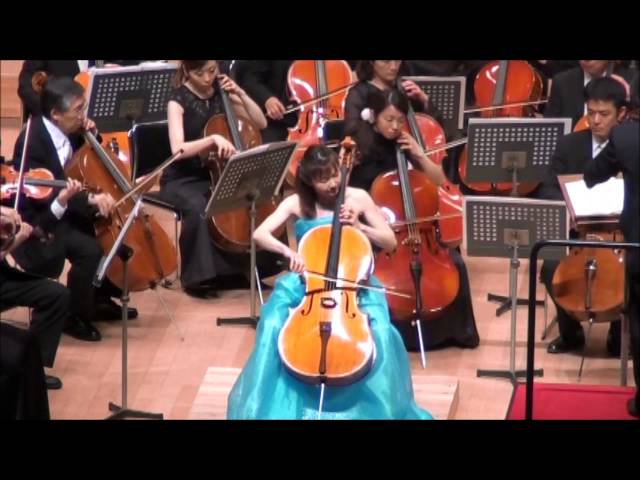
In the hit TBS drama Quartet, the character Suzume, played by Hikari Mitsushima, performed on the cello.
This is the famous piece that Elgar dedicated to that instrument.
In this video performance, Jacqueline du Pré serves as the soloist.
Please take a moment to listen to its deep, powerful melodies.
The conductor is John Barbirolli, and the orchestra is the London Symphony Orchestra.
Beethoven: Violin Sonata No. 4Edward Elgar70rank/position

In 1920, after losing his beloved wife Caroline to lung cancer, Elgar temporarily lost his creative drive.
It is said that instead of publishing his own works, he arranged pieces by other composers.
Beethoven’s Violin Sonata No.
4 is one such piece, and the finale is believed to have been arranged by Elgar.