

Popular Enka. Latest Rankings [2026]

We’re excited to present the latest top 100 enka hits from the monthly popularity rankings, listed in order of most views! Enka is a uniquely Japanese music genre.
With a long history, it continues to captivate devoted fans today—so be sure to check it out! The playlist is updated every month.
- Popular Enka Singers Ranking [2026]
- Enka Karaoke Popularity Rankings [2026]
- [2026] Recent hit enka songs: must-watch popular kayō tracks
- Enka Singer Popularity Ranking in Karaoke [2026]
- [May 2026] Latest Enka and Kayōkyoku roundup. Check out the buzzworthy new songs!
- [2026] All-Time Enka Sales Ranking
- Ranking of Beloved Hit Songs Among Women [2026]
- [2026] Representative Famous Enka Songs: A Compilation of Classic Favorites [Beginner-Friendly]
- [Revisited] A roundup of popular and classic Showa-era songs that are trending now [2026]
- Hiroshi Itsuki Popular Songs Ranking [2026]
- Kohei Fukuda Popular Song Ranking [2026]
- Hikawa Kiyoshi Popular Songs Ranking [2026]
- [50s] Popular Song Ranking by Generation [2026]
Popular Enka. Latest Ranking [2026] (11–20)
Love Town CounterTakeshima Hiroshi15rank/position

Released in 2018 as the first installment of Hiroshi Takeshima’s “Songs That Make You Dance” series, Koimachi Counter is a masterpiece that marked a new frontier for Takeshima, packed with the flavor of Showa-era kayōkyoku and popular songs.
The choreography known as the “Koimachi Dance” also became a hot topic, and it’s unquestionably a killer tune for karaoke.
There’s even a video where he performs the choreography together with fans, so be sure to check that out.
Koimachi Counter is easy to sing for anyone who loves Showa kayōkyoku, regardless of generation, and it’s perfect for getting everyone at a karaoke gathering to join in the choreography and get the party going—so definitely give it a try!

The first person I fell in love withTakeshima Hiroshi16rank/position

Following the so-called “Trilogy of Being Led to Dance” — Koimachi Counter, Uwasa no Futari, and Yume no Furiko — Hatsumete Suki ni Natta Hito, released in 2020, is a beautiful, gently paced medium ballad that showcases Hiroshi Takeshima’s signature sweet and heartrending vocals to the fullest.
With its melody built almost entirely in the mid range and pitched quite low overall, it may feel refreshing to listeners accustomed to contemporary J-pop where high notes tend to take center stage.
Takeshima himself said at the time of the song’s release that he was “returning to basics and competing with just the singing,” so please take the time to fully grasp the world depicted in the lyrics by Goro Matsui — which earned the Special Jury Prize at the 53rd Japan Lyrics Awards — and sing it with all your heart!
The Rumored TwoTakeshima Hiroshi17rank/position

Following Koinmachi Counter—which also made waves for its choreography known as the “Koinmachi Dance”—Rumor Duo was released in 2019 as the second installment of the “irresistibly danceable kayōkyoku,” once again created with the golden duo of Goro Matsui and Takashi Toshimi.
You can also watch a performance video with the School Mates from a concert on the official YouTube channel, so be sure to check that out.
The song is packed with a Showa-era kayōkyoku vibe and has an up-tempo feel that’s perfect for karaoke, and its catchy melody is so easy to remember you’ll have it down after just one listen.
If possible, I’d love for you to aim for a complete copy, choreography and all!
I’m falling in love with you againSakamoto Fuyumi18rank/position

This is a famous song that covers Billy BanBan’s song of the same name from 2007, released in 2009 as the B-side to the single “Asia no Kaizoku.” It was used in a commercial for the shochu “iichiko Hita Zen Koji,” and became a long-running hit beyond the enka singer category, reaching No.
1 on the download charts in 2010.
Because it tones down enka’s characteristic melodic ornamentation, its expansive, soft vocals have become a talking point, making it an accessible song even for beginners to enka.
When singing, it may be good to deliver it in a flowing manner.
Breathing is important, so be careful to take breaths at the right timing.

With a fiery heartKobayashi Akira19rank/position

A work notable for its distinctive sound featuring strings, “Atsuki Kokoro ni.” This piece includes few of Akira Kobayashi’s trademark upward-climbing long tones.
Since most of the long tones occur while the melody descends, even those who struggle with upward vibrato can sing it without issue.
It’s a kayōkyoku with a strong pop flavor, and advanced vocal techniques like kobushi do not appear at all.
However, the rhythm at the beginning of the chorus is somewhat irregular, so you’ll need to practice that part thoroughly.

North TavernHosokawa Takashi20rank/position
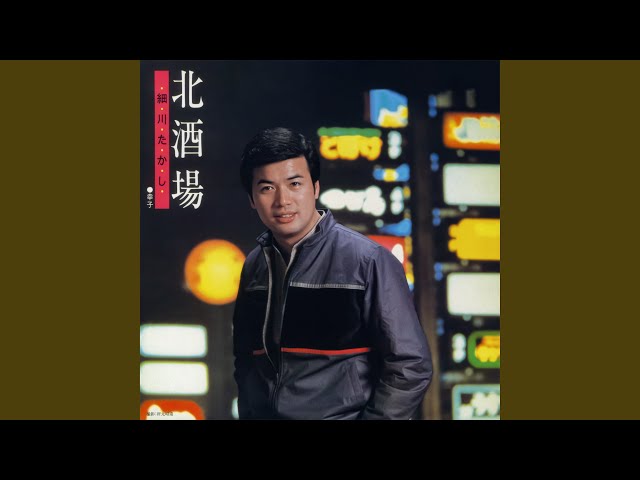
Takashi Hosokawa is one of Japan’s finest vocalists.
Early in his career he pursued a path as an enka singer, but after studying under Michiya Mihashi, who came from a folk song background, his already high-level singing ability grew to a monstrous level.
Among that, he has also actively taken on catchy songs, making him an extremely popular figure among enka fans.
Among Hosokawa’s songs, the one I particularly recommend for its crowd-pleasing energy and ease of singing is “Kita Sakaba.” While the overall range is set on the higher side, the range itself isn’t very wide, so you should be able to sing it if you adjust to the right key.
The song features a structure typical of enka, showcasing scale movements of two notes or more with kobushi (melismatic turns), but since the kobushi don’t continue in rapid succession, their difficulty is relatively low.
Instead of projecting your voice forward, try to produce it with the sensation of it piercing through from the crown or back of your head; doing so will bring you quite close to the original, so give it a try.
Popular enka. Latest rankings [2026] (21–30)
moon pillowTakeshima Hiroshi21rank/position

Tsukimakura, released in May 2017 as a commemorative work for Hiroshi Takeshima’s 15th debut anniversary, became a long-running hit and was later certified Gold Disc.
Created by the golden duo of Goro Matsui and Takashi Toshimi—who gave rise to the “songs that make you dance (odorasarechau kayōkyoku)” series—it’s a masterpiece that lets you fully savor Takeshima’s refined, elegant vocal charm.
While retaining some enka-like elements, its core is a kayōkyoku-style medium ballad, so those who often sing Showa-era pop in karaoke should be able to handle it smoothly.
That said, delivering a mature, restrained performance without becoming overly emotional—like Takeshima does—is not easy to imitate.
I recommend listening to the original many times to deeply understand the song’s world before giving it a try!