

![[Women] Easy-to-Sing Karaoke Songs Ranking [2026]](https://i.ytimg.com/vi_webp/ARwVe1MYAUA/maxresdefault.webp)
[Women] Easy-to-Sing Karaoke Songs Ranking [2026]

The key to choosing songs for karaoke is whether they’re easy for the singer to perform, right?
This time, I’ll introduce some easy-to-sing karaoke songs that have been popular among women so far.
I hope you find this helpful!
These songs are sure to get the crowd going.
[Women] Easy-to-Sing Karaoke Songs Ranking [2026] (1–10)
You don’t listen to rock.aimyon1rank/position

A song by Aimyon that portrays a single-hearted wish to close the emotional distance with the one you care about.
The earnest desire to connect with someone through the music you love is expressed over an approachable melody.
Released in August 2017 by Warner Music Japan, it was selected for power play on 42 radio stations nationwide.
The music video, filmed in abandoned ruins in Fukushima Prefecture, also drew attention.
Its catchy melody makes it easy to remember, and since the vocal range isn’t very wide, it’s appealing because anyone can enjoy singing it.
StoryAI2rank/position

The AI with the famously husky voice.
While there are some high notes in the song, it’s mostly sung in a natural mid-range chest voice, so “Story” should be quite easy to sing! The tricky part of this song is definitely the high notes in the bridge.
My students practiced that same spot over and over.
If you sing it with the same feel as the chorus, you’ll run out of breath and your voice won’t carry.
It’s crucial to prepare before hitting the high notes! Since the song flows straight into the bridge after the end of the second verse, it can move on before you’ve had time to prepare… Take a quick breath right before the bridge and project your voice powerfully as if aiming into the distance! For the vowel “i,” it’s easy to spread the mouth sideways and tense up, so it’s easier to produce if you create space inside your mouth while pronouncing it.

Time goes byEvery Little Thing3rank/position
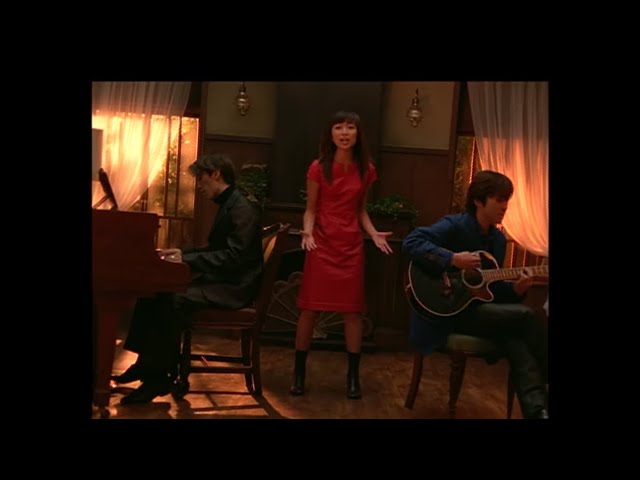
A classic by Every Little Thing, known for its soothing musicality and profound lyrics.
It tenderly depicts the emotions that arise when looking back on a past love, where reflection and lingering attachment intertwine.
The vocal changes in Kaori Mochida’s voice express the song’s emotions even more deeply.
Released in February 1998, it was also used as the theme song for the drama “Amai Kekkon” (Sweet Marriage).
It reached No.
2 on the Oricon charts and was later included on a best-of album.
With its relaxed tempo, it’s easy to sing at karaoke.
Recommended for moments when you want to reflect on memories with someone special or find a bit of calm.
It’s sure to be a song that resonates with your heart.
threadNakajima Miyuki4rank/position

“Ito” is a song sung by every generation.
It was released in 1992, but it’s often used at weddings and in TV dramas, making it a ballad loved across generations.
The vocal range isn’t very wide—F3 to A#4—centered in the midrange, with the low notes being key.
If you sing it in a speaking voice, you’ll end up straining your throat, so aim to sing with a proper singing voice.
The tempo is very slow, so stay calm and take a breath at the end of each phrase.
Instead of “pushing out your voice,” focus on “using your breath” to project forward.
In fact, every consonant in the Japanese ha-row (ha, hi, fu, he, ho) uses breath in its articulation.
If you try singing everything with the “ha” sound for clarity, you might grasp the feeling of “Oh, so this is what it means to use breath!” Give it a try as a reference.
SoupFujihara Sakura5rank/position

This is Sakura Fujiwara’s debut single, released in June 2016.
Incidentally, the lyrics, composition, and production were handled by Masaharu Fukuyama.
The vocal melody doesn’t use extremely low or high notes throughout the song, so it might be an ideal karaoke choice for women who feel hesitant about singing due to a limited vocal range.
The song maintains a relaxed, heartwarming mood from start to finish, so while keeping a slightly bouncy groove, be careful not to rush the vocals or make the pronunciation of the lyrics sound rough.
It seems there’s also a version sung by Masaharu Fukuyama, who produced the track, so it could be helpful to check that out as a reference.

rainbow-coloredayaka6rank/position

“Nijiiro” was sung by many people in vocal training as well.
Of course, many also chose “Mikazuki,” but “Nijiiro” was especially popular because people said, “I can sing it without straining!” Indeed, during lessons, everyone seemed to relax well and found it easy to sing.
The overall range is F#3 to D5, which looks wide if you only consider the range, but since F#4 is used the most, there’s no need to be overly tense.
Also, for the flowing melody in the pre-chorus, if you don’t articulate every word too clearly and just go with the flow, you can avoid getting stuck.
For the last part of the chorus, if you sing each note carefully, it feels good and helps you stay on pitch.
There are points to focus on for each section of the melody, but you’ll likely find it easy to sing—so definitely try learning it.
Unfit to be a loverKoresawa7rank/position

This is Koresawa’s fourth single, released in June 2019.
It was reportedly produced as an answer song to her second single, “Tabako” (“Cigarette”).
The laid-back, not-trying-too-hard vocal style really shines here, and the medium-to-slow tempo makes it very easy to sing.
I highly recommend it as a karaoke pick for women who aren’t confident in their singing! If you listen closely, Koresawa herself uses various timbres and vocal techniques for subtle expression, but if you’re just enjoying it at karaoke, you don’t need to worry about that.
Just sing it for the vibe and have fun.