

[For People in Their 40s] Karaoke Songs That Are Easy to Sing: 2026 Ranking

The key to choosing songs for karaoke is whether they’re easy for the singer to perform, right?
This time, we’ll introduce karaoke songs that have been popular and easy to sing among people in their 40s.
We hope you find it helpful!
It’s sure to get everyone excited.
- Easy-to-sing karaoke songs: Classic picks for women in their 40s
- Even if you’re tone-deaf, it’s okay! Easy karaoke songs for men in their 40s
- [40s] Karaoke Popularity Ranking by Generation [2026]
- [Women in Their 40s] Even If You’re Tone-Deaf, You Can Sing! Karaoke Songs That Fit a Woman’s Vocal Range
- [30s] Easy-to-Sing Karaoke Songs Ranking [2026]
- Karaoke Popularity Ranking by Generation [50s] [2026]
- [For People in Their 50s] Ranking of Easy-to-Sing Karaoke Songs [2026]
- [2026 Edition] Karaoke Songs That Will Get the Crowd Going—Perfect for Women in Their 40s
- [For Women in Their 40s] A Collection of Songs That Score High at Karaoke [2026]
- [For Men in Their 40s] A Collection of Songs That Score High at Karaoke [2026]
- [Calling all low-voiced women in their 40s!] Songs that are easy to sing at karaoke
- Women's Popular Karaoke Rankings [2026]
- Karaoke That Gets Everyone Excited: Women’s Rankings [2026]
[40s] Karaoke Songs That Are Easy to Sing Ranking [2026] (41–50)
You are in full color.Ohtaki Eiichi50rank/position

Eiichi Ohtaki, an artist who laid the foundation for Japanese city pop.
He also worked as a producer and label head, launching talented singer-songwriters such as Tatsuro Yamashita.
Among Ohtaki’s renowned masterpieces is “Kimi wa Ten’nen Shoku” (“You’re Natural Color”).
Although often thought to require a wide vocal range, the actual range is relatively narrow, from mid1 D to mid2 G.
The melody is expansive, so a certain lung capacity is needed, but the pitch movement is gentle, making it a comparatively easy song to sing.

[40s] Karaoke Easy-to-Sing Song Ranking [2026] (51–60)
Swaying feelingsZARD51rank/position

A singable, pleasant melody is key when choosing songs for karaoke.
ZARD’s hit song “Yureru Omoi” fits that bill perfectly.
Known also as a commercial jingle, its bittersweet lyrics and nostalgic melodic line weave a harmony that even those not used to singing can easily hum along to.
The familiar phrases are quick to remember, and you’ll find your body naturally moving to the rhythm.
Why not enjoy “Yureru Omoi” at karaoke—a song everyone can passionately sing along to, filled with memories?
Poem of SunlightLe Couple52rank/position
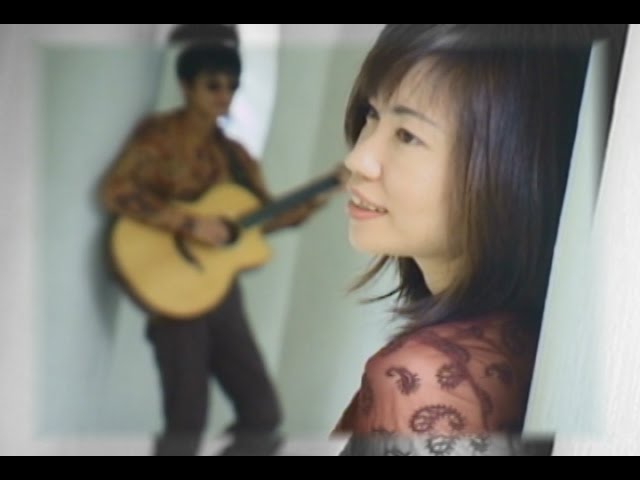
This is Le Couple’s “Hidamari no Uta,” which left a strong impression on many people after being used in the hugely popular TV drama Under One Roof 2.
The lyrics’ sense of modesty perfectly matches the song’s atmosphere.
Please sing it with a delicate, heartrending touch!

JAMTHE YELLOW MONKEY53rank/position

For rock fans in their 40s, many of you may have admired THE YELLOW MONKEY, right? Yemon has produced countless classics, but the song I especially recommend as being easy to sing is JAM.
While it gives off an energetic vibe, its overall vocal range is quite narrow, from mid1C to mid2F.
In terms of singability, it’s a perfect choice.
However, because the range is narrow, it can be hard to create moments of excitement, so you’ll need to be mindful of rhythm and dynamics as you sing.
Watarase BridgeMoritaka Chisato54rank/position

This is the 17th single by singer-songwriter Chisato Moritaka.
It was used as the theme song for the travel program “Ii Tabi Yume Kibun,” and is also known as the first single in which Moritaka, who is also recognized as a multi-instrumentalist, performed the instruments herself.
The lyrics tell a story of remembering a former lover, and they pair perfectly with Moritaka’s distinctive singing voice—many listeners may have felt a twinge of heartache hearing this song.
Its simple melody preserves the song’s atmosphere and makes it easy to sing at karaoke—an enduring classic.

A gentle feelingChara55rank/position

Chara, a female singer-songwriter who gained popularity for her distinctive musicality.
Many women in their 40s might have been fans of hers, right? Among her songs, the one I especially recommend is Yasashii Kimochi.
It’s a track that balances both a gothic feel and cuteness.
The vocal range is on the higher side at mid2 A# to hi D#, but the overall span is relatively narrow.
Using breath-based techniques such as hiccups can instantly elevate the quality, so try singing while referencing her breathing style.
Island SongTHE BOOM56rank/position

The first release of THE BOOM’s song in the original Uchinaaguchi (Okinawan) version was in December 1992.
Since then, several versions have been released, but the one we’re introducing here is the so-called “original version,” issued in June 1993 as their 11th single.
It was a massive hit that made THE BOOM known nationwide, so chances are you’ve heard it at least once.
Just listening to it brings to mind scenes of tropical seas—a classic of Heisei-era J-POP! The slightly folk-like vocal melody is striking, giving the song a strong impact, and it’s very easy to remember and sing.
Vocalist Mr.
Miyatake’s performance also incorporates a touch of traditional folk-style singing, and exploring that aspect could be fun.
For general listeners, of course, it’s perfectly fine to enjoy performing it in a bit of an imitation style.
