

François Couperin Popular Songs Ranking [2026]

François Couperin, a French composer who released harpsichord pieces with elegant and emblematic titles that set them apart from typical dance music.
Known as “le Grand Couperin” due to his particular fame among the many musicians in the Couperin family, which produced numerous artists.
At 18, he became the organist of Saint-Gervais Church—an episode that offers a glimpse of his exceptional talent.
This time, we present a ranking of François Couperin’s most popular works!
- [François Couperin] Introducing famous and popular pieces by the composer who loved the harpsichord
- Jean-Philippe Rameau Popular Songs Ranking [2026]
- [Masterpiece Classics] A special showcase of gem-like masterpieces so beautiful they’ll move you to tears
- Jacques Ibert Popular Song Ranking [2026]
- A masterpiece by Franck. Popular classical music.
- Francis Poulenc Popular Songs Ranking [2026]
- Gabriel Fauré Popular Songs Ranking [2026]
- Johann Burgmüller Popular Song Rankings [2026]
- Classical piano masterpieces: legendary performances from around the world you should hear at least once
- César Franck Popular Songs Ranking [2026]
- Olivier Messiaen Popular Songs Ranking [2026]
- Cécile Chaminade Popular Song Rankings [2026]
- Déodat de Séverac Popular Song Rankings [2026]
François Couperin Popular Songs Ranking [2026] (1–10)
Harpsichord Pieces, Book I, Suite No. 1: No. 3François Couperin8rank/position

From Pieces de clavecin, Premier Livre, Ordre No.
1: No.
3 Sarabande — “La Majestueuse.” Performed on the harpsichord (clavecin) by Louise Acabo, recorded at the Paris Regional Conservatory in France.
Harpsichord Pieces, Book II, Suite No. 6, No. 1: “The Harvesters”François Couperin9rank/position

François Couperin, known as a representative composer of French Baroque music.
“The Harvesters,” included in Book II of his Pieces for Harpsichord (Pièces de clavecin), is a captivating work whose lively, pictorial style expresses in sound scenes of rural life and the joy of harvest time.
Its explicit indications for ornamentation are also characteristic, conveying Couperin’s distinctive delicacy.
It is a recommended piece not only as an introduction to Baroque music but also for piano enthusiasts who wish to study the repertoire more deeply.
From ‘Pièces de clavecin’ Book II, Suite No. 6: No. 1François Couperin10rank/position

From the Second Book of Harpsichord Pieces, Suite No.
6 (Pièces de clavecin, Second Livre, Ordre No.
6), No.
1: The Reapers (Les Moissonneurs).
Performed by Satoko Kihara (oboe), Yuki Akatsuka (piano), and Toru Kihara (tambourine), at the Tiara Koto Small Hall.
François Couperin Popular Song Ranking [2026] (11–20)
From ‘Pièces de clavecin’ Book II, Suite No. 6, No. 5François Couperin11rank/position
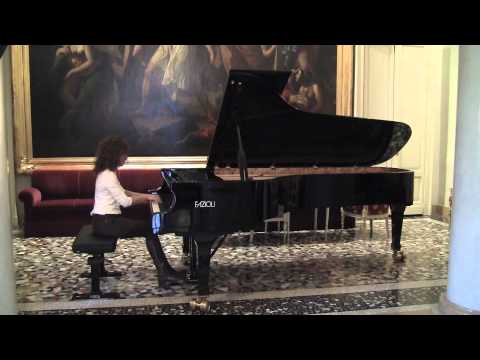
A mysterious world woven by the harpsichord’s elegant timbre.
This is one of the most popular pieces among Couperin’s Pièces de clavecin.
Included in the second book published in 1717, it is characterized by simple figures repeated within a narrow range, creating a mystical atmosphere where light and shadow seem to flicker.
Written in B-flat major and rich in intricate ornamentation, it demands a high level of technique from the performer.
The meaning of the title “Les Barricades Mystérieuses” is unclear, but it may be enjoyable to listen while imagining the composer’s intentions behind it.
From Pièces de clavecin, Book II, Suite No. 8: Nos. 1–7François Couperin12rank/position

The seven selected pieces from Couperin’s Pièces de clavecin invite you into an elegant, evocative musical world.
Titles such as “The Lady Painter” and “The Lady Poet” convey the intellectual atmosphere of the time.
The sprightly “Gavotte” and the beautifully recurring “Rondeau” are filled with a courtly grace reminiscent of courtly dance.
Woven with delicate ornamentation and expressive melodies, this collection is a jewel that distills the essence of French Baroque music.
Highly recommended for those who wish to be soothed by graceful melodies or to experience the refined tastes of the eighteenth century.
From the Second Book of Harpsichord Pieces, Suite No. 8, No. 8François Couperin13rank/position

From the Second Book of Harpsichord Pieces, Suite No.
8 (Pièces de clavecin, Second Livre, Ordre No.
8): No.
8, Passacaille.
The harpsichord (cembalo) is performed by Lorenzo Antinori.
Recorded at the Gioachino Rossini Conservatory in Pesaro, Italy.
From the Second Book of Harpsichord Pieces, Suite No. 9, No. 1François Couperin14rank/position

From Pièces de clavecin, Second Book, Suite No.
9 (Ordre No.
9): No.
1, Allemande for two harpsichords (Allemande à deux clavecins).
The first piece is often performed on its own.
Performed by Evan Cully and Leonard Schmidt.