

Gioachino Rossini Popular Song Rankings [2026]

Gioachino Rossini, who left many masterpieces as an opera composer, is especially well known for the William Tell Overture.
He worked not only on operas but also on sacred music and chamber music.
Here is a ranked list of popular pieces by Gioachino Rossini.
- Giuseppe Verdi Popular Songs Ranking [2026]
- Wolfgang Amadeus Mozart Popular Song Rankings [2026]
- Modest Mussorgsky Popular Song Rankings [2026]
- [Teens] Popular Songs Ranking by Generation [2026]
- Rossini’s Piano Works: A Curated Selection of Masterpieces by the Great Master of Romantic Opera
- Antonio Vivaldi Popular Song Ranking [2026]
- Georg Philipp Telemann Popular Songs Ranking [2026]
- Carl Maria von Weber Popular Song Rankings [2026]
- Arcangelo Corelli Popular Song Rankings [2026]
- Niccolò Paganini Popular Song Rankings [2026]
- Franz Joseph Haydn Popular Song Rankings [2026]
- Pyotr Tchaikovsky Popular Song Rankings [2026]
- Felix Mendelssohn Popular Songs Ranking [2026]
Gioachino Rossini Popular Song Ranking [2026] (1–10)
William Tell OvertureGioachino Rossini8rank/position

The Tokunaru-do series featuring Masato Sakai, now a familiar face in McDonald’s commercials.
This time, they’re promoting a deal where medium and large French fries are 250 yen.
Not only is the price lower, but the ad also reintroduces how delicious the fries are.
I bet many people thought, “I’m definitely going at least once during the campaign.” The familiar William Tell Overture plays as the BGM, perfectly matching the fast-paced feel of the commercial.

Overture to the opera Guillaume Tell (William Tell)Gioachino Rossini9rank/position
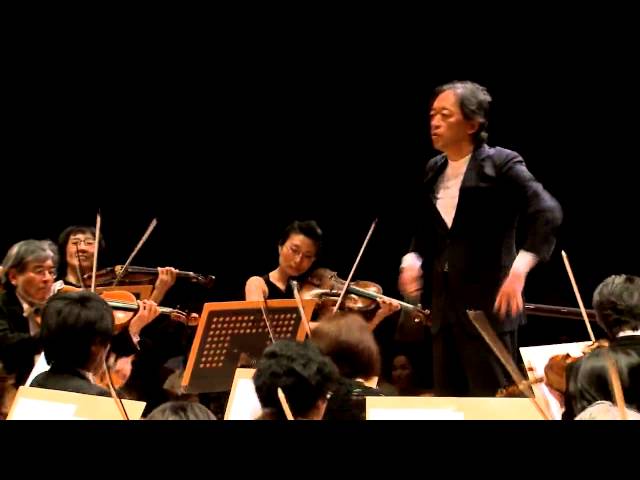
Gioachino Rossini was an Italian opera composer.
Among the operatic pieces he wrote, The Barber of Seville and William Tell remain so popular that they are frequently performed around the world today.
In particular, the William Tell Overture is widely recognized; it’s one of those pieces that makes you think, “Oh, I know this!” once you hear it.
Trumpets and horns play a fanfare, and the clarinet introduces the first motif.
Then the strings join in, and the music transforms into something grand.
Although it lasts only about three minutes, its brisk tempo and numerous intricate passages make it surprisingly virtuosic.
It’s a brilliant showcase for the orchestra, and you may find yourself wanting to shout “Bravo!” when it ends.
Waltz in E-flat majorGioachino Rossini10rank/position

Gioachino Rossini was an Italian Romantic opera composer known for works characterized by graceful melodies and lively rhythms.
The Waltz in E-flat major is a short piece for piano, notable for its familiar tune and light, brisk rhythm.
It distills the musical qualities found in Rossini’s operas, offering an elegant and sparkling atmosphere.
While it is not particularly demanding technically, the key is to convey a smooth musical flow.
Popular at student recitals, it is also a recommended piece for those looking to become acquainted with classical music.
Gioachino Rossini Popular Songs Ranking [2026] (11–20)
A Clockwork Orange The Thieving Magpie OvertureGioachino Rossini11rank/position

A Clockwork Orange is a work by Stanley Kubrick, a master of cinema.
Kubrick’s films often use classical music, and in this film as well, many classical pieces are used, including Beethoven’s Ninth Symphony and the overture to The Thieving Magpie.
Overture from the opera ‘The Italian Girl in Algiers’Gioachino Rossini12rank/position

Gioachino Rossini is known as a composer of Italian opera in the first half of the 19th century.
Among the many operas he produced with remarkable speed and efficiency, The Italian Girl in Algiers, premiered in 1813, is one of his representative comic operas.
Its overture, which seems to foreshadow the atmosphere of the entire work, is characterized by lively, humorous music.
Memorable oboe solos and Rossini’s signature crescendos are woven throughout, drawing listeners into the world of the story.
Cherished not only as an opera overture but also as a popular orchestral repertoire piece, it is a work that lets you fully savor the charm of Rossini’s music.
Overture from the opera “La gazza ladra” (The Thieving Magpie)Gioachino Rossini13rank/position

It’s a piece that appears in Haruki Murakami’s The Wind-Up Bird Chronicle.
The protagonist whistles along to it while listening to FM radio and boiling spaghetti.
The Thieving Magpie is introduced as the piece that signals the beginning of the story.
If you’re not into opera, you probably wouldn’t have many chances to hear it, but I imagine many people bought the CD after reading the novel.
Errors of Old Age, Volume 10: “Miscellany for Piano,” No. 6: “A Little Caprice in the Style of Offenbach”Gioachino Rossini14rank/position

“Péchés de vieillesse” (Sins of Old Age) is the collective title for a group of works composed in the later years of Gioachino Rossini, a leading composer of Romantic opera.
This piece, included as No.
6 in Volume 10, “Album for Piano,” is characterized by its light, humorous music.
It incorporates the style of the then-popular Offenbach, evoking a cheerful, operetta-like atmosphere.
While somewhat demanding technically, its musical quality makes it a recommended work for pianists with solid technique.
Savor Rossini’s playful spirit and refined expressive power to the fullest.