

![Felix Mendelssohn Popular Songs Ranking [2026]](https://i.ytimg.com/vi/fsdThmsffNk/sddefault.jpg)
Felix Mendelssohn Popular Songs Ranking [2026]

Felix Mendelssohn is known for having shown exceptional musical talent as a child prodigy from an early age.He was an important composer who had an extremely significant impact on the 19th-century music world, including reviving the music of Bach.His music is romantic and evokes majestic scenes of nature.Here is a ranking of some of his most popular pieces.
Felix Mendelssohn Popular Songs Ranking [2026] (1–10)
Songs Without Words, Book V, Op. 62, No. 6 “Spring Song”Felix Mendelssohn1rank/position
Felix Mendelssohn, active in the 19th century, was a composer who, while profoundly influenced by Classical masters such as Bach, Handel, Haydn, Mozart, and Beethoven, is also known as a pioneer of Romanticism.
One of his representative works, “Songs Without Words, Book 5, Op.
62,” includes No.
6, “Spring Song,” a picturesque miniature themed around spring.
The piano’s gentle melody seems to announce the end of winter and express the hopeful arrival of spring, when new life begins to bud.
Its light yet transparent touch evokes flowers swaying in the spring breeze and the chirping of small birds.
This piece, which paints the joy and beauty of spring in sound, is perfect for anyone who wants to savor music while sensing the changing of the seasons.
Andante and the Brilliant AllegroFelix Mendelssohn2rank/position

Felix Mendelssohn, known as the composer of the wordless songs Songs Without Words, also wrote a four-hand piano piece titled Andante and Brilliant Allegro.
Although it is not particularly well-known among duet repertoire, it is a work frequently featured in concerts.
This elegant piece showcases the delicacy, beautiful flow, and refined sonorities characteristic of Mendelssohn’s music, yet it is a duet for advanced players that demands a high level of technique.
Practice carefully and steadily until you have enough confidence and freedom to sense each other’s breathing.

Song of SpringFelix Mendelssohn3rank/position

A masterpiece born from Mendelssohn’s Songs Without Words, it captivates the heart with its fresh melody and bright character, enriched by the warm sonority of A major.
Among the many celebrated works Mendelssohn composed, this piece stands out as a gem that balances gentleness with brilliance.
Published in 1844, it has long been beloved as background music for films and television, and exists not only as a piano solo but also in arrangements for various instruments such as violin and flute.
Its light, sunny atmosphere and refined melody make it perfect for weddings and receptions.
With graceful elegance and a warm tone, it is highly recommended as a beautiful soundtrack to brighten a special day.
Rondo Capriccioso, Op. 14, U 67, E majorFelix Mendelssohn4rank/position
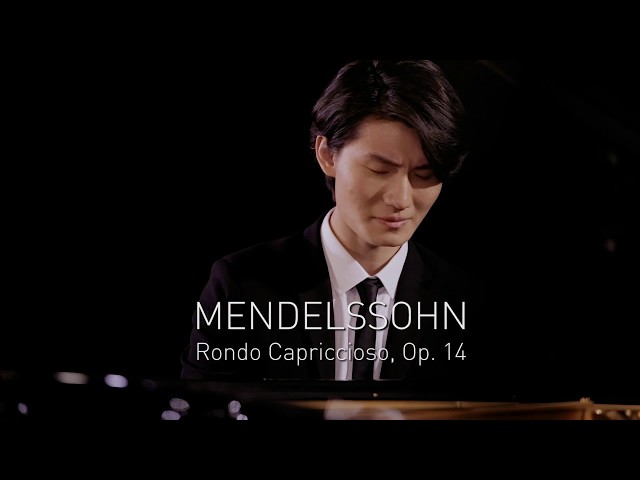
Among the piano works of the German composer Felix Mendelssohn, the Rondo Capriccioso in E major, Op.
14 (U 67), is one of the most beloved pieces.
It is said to be the result of adding a gentle introductory section to his Étude in E major, which he wrote for his first love.
While it is not of the highest technical difficulty, it requires delicate touch and a wide expressive range.
Play it with ample nuance—romantically and passionately.
Fantasia in F-sharp minor, Op. 28 “Scottish Sonata”Felix Mendelssohn5rank/position

Felix Mendelssohn, a great composer beloved for his fantastical musical style, is especially familiar to intermediate pianists and wrote many works suited to their level.
One such piece is his Fantasia in F-sharp minor, Op.
28, the “Scottish Sonata.” Its allure lies in Mendelssohn’s signature brilliance, and the third movement offers an exquisitely romantic melody.
A key challenge is the rapid sextuplets at the beginning of the third movement.
Since both hands must articulate these figures, diligent practice is essential; however, because the passage contains many repeats, this piece is an excellent fit for intermediate classical pianists who are progressing and enjoy this repertoire.

Cello Sonata No. 2 in D major, Op. 58Felix Mendelssohn6rank/position

This work is a chamber piece composed by Mendelssohn in 1843.
It blends features of the early Romantic period with Classical traditions, offering a rich musical texture for cello and piano.
It consists of four movements and has a performance time of about 25 minutes.
In particular, the third movement features recitative-like passages for the cello that quote Bach’s Chromatic Fantasy and Fugue, expressing Mendelssohn’s reverence for Bach.
Expressive and technically demanding, this piece is an important part of the cello repertoire and is one that every classical music enthusiast should hear.
Songs Without Words, Book V, Op. 62, No. 6, Spring SongFelix Mendelssohn7rank/position

“Spring Song,” included in Book 5 of Felix Mendelssohn’s signature piano collection Songs Without Words, is among the most famous and popular of the 48 pieces, and is frequently featured in recitals and concerts.
Its elegant, gentle melody is very easy to remember, but the left-hand leaps are unexpectedly challenging—many players feel that “listening to it and playing it give completely different impressions!” Precisely because it’s so rewarding to tackle, it’s a great choice for those aiming to step up from intermediate to advanced level.
Give it a try!
On Wings of SongFelix Mendelssohn8rank/position

This is a representative work by Mendelssohn, an orchestral piece noted for its graceful and serene melody, first published in 1834 as part of Six Songs, Op.
34.
Originally composed for voice and piano, its beautiful tune has been arranged for various instruments by many performers and remains beloved.
In April 2023, cellist Haruma Sato delivered a superb performance on his album Auf Flügeln des Gesanges: Mendelssohn Works.
Possessing a lightness and elegance like soaring on wings, this piece is ideal as background music for weddings and receptions.
It will accompany life’s important milestones and make those happy moments shine even brighter.
Wedding MarchFelix Mendelssohn9rank/position

A celebrated masterpiece by Felix Mendelssohn that splendidly adorns the wedding entrance scene.
Composed in 1842, this work was created as incidental music for Shakespeare’s play A Midsummer Night’s Dream.
Its bright, hope-filled melody seems to bless the newlyweds as they embark on their journey.
While the grandeur of a full orchestra is captivating, piano or music box arrangements can also create a lovely atmosphere.
It’s perfect not only for weddings but also as background music for anniversaries and other special days.
Why not spend those happy moments with someone dear to you accompanied by this piece?
Six Pieces for Children (Christmas Album), Op. 72: No. 2 in E-flat major, Andante sostenuto, MWV U 170Felix Mendelssohn10rank/position

Composed as a gift for children at Christmas in 1842, Mendelssohn’s piano miniature is enveloped in a gentle, tender atmosphere.
Written in E-flat major, it features a delicate touch and refined harmonic progressions, and despite its brief length of 42 measures, it conveys a profound musicality.
Set at a relaxed Andante sostenuto tempo, its warmly expressive melody has a soothing charm.
Among the six pieces in this collection, it is particularly approachable, making it an ideal work for those just beginning piano study or for listeners interested in Romantic-era music.