

Felix Mendelssohn Popular Songs Ranking [2026]

Felix Mendelssohn is known for having shown exceptional musical talent as a child prodigy from an early age.He was an important composer who had an extremely significant impact on the 19th-century music world, including reviving the music of Bach.His music is romantic and evokes majestic scenes of nature.Here is a ranking of some of his most popular pieces.
- Mendelssohn’s Masterpieces | Popular Classical Music
- Frederic Chopin Popular Songs Ranking [2026]
- Robert Schumann Popular Song Ranking [2026]
- Johannes Brahms Popular Songs Ranking [2026]
- J.S. Bach Popular Songs Ranking [2026]
- Franz Schubert Popular Songs Ranking [2026]
- Carl Maria von Weber Popular Song Rankings [2026]
- Bedřich Smetana Popular Songs Ranking [2026]
- Ludwig van Beethoven Popular Songs Ranking [2026]
- Franz Liszt Popular Song Ranking [2026]
- Richard Wagner Popular Songs Ranking [2026]
- Anton Bruckner Popular Songs Ranking [2026]
- Georg Philipp Telemann Popular Songs Ranking [2026]
Felix Mendelssohn Popular Song Ranking [2026] (41–50)
Violin Concerto in E minor, First MovementFelix Mendelssohn41rank/position

Felix Mendelssohn, a composer who represents German Romantic music.
A child prodigy, he displayed musical talent from an early age and not only produced numerous masterpieces, but also earned credit for reviving Bach’s music, which had been fading into obscurity at the time.
Among his works, a piece I recommend for its poignancy is the First Movement of the Violin Concerto in E minor.
Its melody conveys beauty, but unlike Chopin or John Field, it is crafted to express a passionate intensity—an impassioned kind of wistfulness and beauty.

Piano Trio No. 1 in D minor, Op. 49Felix Mendelssohn42rank/position
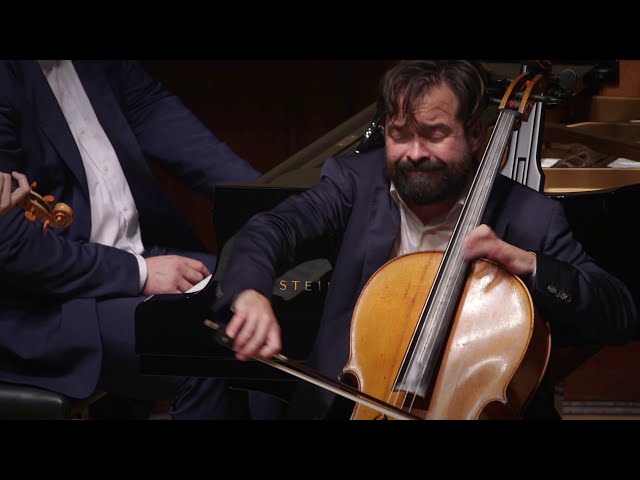
This piano trio for piano, violin, and cello is the work that Schumann praised, saying: “Just as Beethoven’s B-flat major and D major trios and Schubert’s E-flat major trio are their masterpieces, this is the trio of a grand master of our time.
It is an exceptionally fine work that will delight our grandchildren and great-grandchildren for many years to come.” Schumann, his wife Clara Schumann, and Mendelssohn enjoyed a warm friendship.
Mendelssohn, founder and director of the Leipzig Conservatory, was one year older than Schumann and offered them support in many ways.
As a critic and concert promoter (producer), Mendelssohn also helped introduce Schumann’s symphonies.
The performers are the Borodin Trio; movements I–IV, total performance time approximately 31 minutes.
If it feels long, please listen in sections.
Piano Trio No. 2 in C minor, Op. 66Felix Mendelssohn43rank/position

Like the First Piano Trio, this piece is suffused with melancholy.
It isn’t as well known as the First and is performed less often, but if you listen closely, you’ll find it deeply rewarding.
From the passionate first movement—which begins quietly, then swells like an emotional river and builds in tension—to the finale of the fourth movement, clear and radiant like a spotless sky, it is a work of great depth.
This is a somewhat old recording from 1948.
Please enjoy the performance by the legendary violinist David Oistrakh, with Sviatoslav Knushevitsky on cello and Lev Oborin at the piano.
Oistrakh visited Japan in 1955 and caused a sensation; though it’s a lesser-known novel, Yasushi Inoue’s “The Black Butterfly” was inspired by Oistrakh’s visit.
Duration: 29 minutes.
Fingal’s Cave, Op. 26: Concert OvertureFelix Mendelssohn44rank/position

This piece is the overture Mendelssohn composed after being inspired by Fingal’s Cave during his visit to Scotland at age 20.
It vividly depicts the cave’s mysterious atmosphere and the movement of the sea, as if painting a landscape with music.
The opening theme conveys the cave’s power and beauty, while the second theme portrays the surging waves.
Richard Wagner reportedly praised it as “a work like a first-rate landscape painting.” Highly recommended for those who want to express natural scenery through music.
With a performance time of about nine minutes, why not listen while imagining Scotland’s majestic landscapes?
From the Motets, No. 1 “Lord, Come” Op. 39-1Felix Mendelssohn45rank/position

During his trip to Rome, Mendelssohn stayed near the Trinità dei Monti convent for nuns, located at the top of the Spanish Steps.
Attending the convent’s Mass every day, he heard the soft, plaintive, beautiful voices of the nuns—who, at the time, did not appear before the public—singing from behind the scenes.
Moved to write something for them, he composed motets (music for the Divine Office) for the nuns.
Mendelssohn remarked, “Though we do not know each other’s faces, what a delight it is to hear them sing sacred music composed by me, a barbaric German.” Perhaps owing to lingering resentment from the Migration Period, Italians and other Latin peoples of the time regarded Germans as barbarians.
Thus the beautiful first piece, sung in Latin, came to be composed.
Rondo Capriccioso in E major, Op. 14Felix Mendelssohn46rank/position

Felix Mendelssohn, a German composer who left behind many delicate and graceful works.
Among them, the Rondo Capriccioso, Op.
14, showcases his technical finesse and emotional richness.
Beginning with a calm, lyrical Andante and gradually accelerating into the main rondo section, this piece offers an excellent opportunity for middle school students learning piano to experience the essence of Romantic music.
Because the left-hand leaps are unexpectedly challenging, try isolating passages and practicing them carefully.
Nurturing both expressiveness and technique, this piece is an ideal choice for middle schoolers aiming to elevate their performance level by participating in a recital.
Violin Concerto in E minor, Op. 64 – Movement IFelix Mendelssohn47rank/position

The first movement of Mendelssohn’s Violin Concerto in E minor, Op.
64, is a beloved staple of the violin concerto repertoire.
While it fully showcases the instrument’s appeal, its wistful melody and sentimental character also pair beautifully with the piano.
When expressing its passionate lines on the piano, it’s important to keep in mind violin-specific phrasing.
Why not enjoy a delicate and beautiful piano arrangement that offers a different flavor from the original’s rich texture for orchestra and solo violin?
Violin Concerto in E minor, Op. 64Felix Mendelssohn48rank/position

A work that, along with Beethoven’s Op.
61 and Brahms’s Op.
77, is hailed as one of the three great violin concertos.
The sweet, plaintive, and emotionally charged opening melody for solo violin is so famous that many people have likely heard it at least once.
It combines both joy and melancholy, and its bright, brilliant yet gentle and expressive beautiful melodies leave a lasting impression.

From Violin Concerto, First MovementFelix Mendelssohn49rank/position

Mendelssohn’s Violin Concerto—affectionately known by the nickname “Meso-con”—is such a masterpiece that, together with the violin concertos of Beethoven, Brahms, and Tchaikovsky, it is counted among the “Four Great Violin Concertos.” Mendelssohn’s music possesses a pure, mystical resonance, and his musicality led to his being hailed as a prodigy from a young age.
Although this piece opens with power and intensity, it also features Mendelssohn’s characteristically flowing melodies throughout.
It is a work in which poignancy, beauty, and passion are intricately woven together.
Violin Concerto, Second MovementFelix Mendelssohn50rank/position

In stark contrast to the first movement, which begins with an intense melody, the second movement opens with a gentle and beautiful violin soliloquy.
Over the orchestra’s delicate accompaniment, the violin spins an emotionally rich line.
Entering the middle section, the music shifts to the minor key, and a fierce sorrow emerges in contrast to what came before.
The striking interplay between fresh, radiant beauty and profound sadness stands out, making this a piece that highlights the flowing lyricism of Mendelssohn—celebrated as a prodigy since childhood.