

![Hata Motohiro Karaoke Popular Songs Ranking [2026]](https://i.ytimg.com/vi_webp/rKsQ-3N-Bks/maxresdefault.webp)
Hata Motohiro Karaoke Popular Songs Ranking [2026]

Singer-songwriter Motohiro Hata is beloved for his expansive vocals and lyrics that resonate deeply.
His songs have catchy melodies and relatable lyrics, making them popular choices for karaoke as well.
Here, we present a ranking of his most popular tracks for karaoke.
Hata Motohiro’s Most Popular Karaoke Songs Ranking [2026] (1–10)
Promise of SunflowersHata Motohiro1rank/position
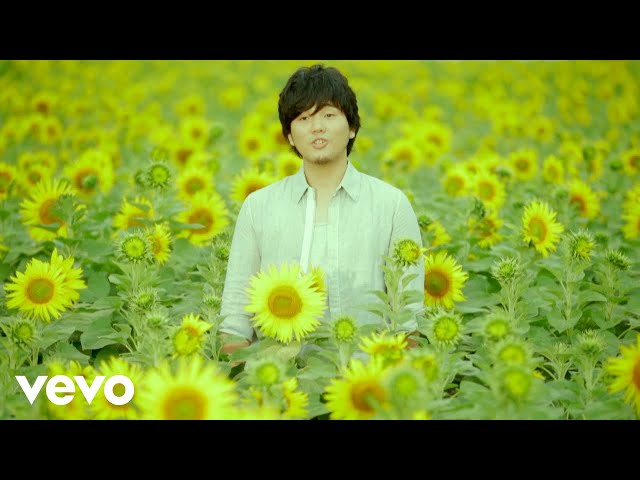
This is a single released in August 2014 as the theme song for the movie “STAND BY ME Doraemon.” It’s a warm ballad that centers on compassion for someone important and the deep bonds that endure even when you’re apart.
Motohiro Hata’s gentle, crystal-clear vocals touched many hearts.
Pure feelings of wanting to ease the other person’s sorrow are carefully expressed in simple words.
It became a hot topic as a masterpiece that amplified the film’s emotional impact many times over, and it has continued to be widely loved in commercials and beyond.
Its outstanding recognition makes it a safe, go-to choice for karaoke with anyone.
The gentle melody is easy to sing, and if you put your heart into it, those around you will surely be drawn in.
scale (as of a fish or reptile)Hata Motohiro2rank/position

A summertime tune for early summer that paints a bittersweet love.
Written and composed by Hata himself, it’s a signature ballad with enduring popularity among fans.
It’s a masterpiece that showcases Hata’s distinctive, powerful yet warm chest voice and his gentle mixed voice.
The A and B verses are sung relatively softly, and it’s characterized by a strong delivery when it lifts into the high notes of the chorus.
When singing, it seems best to generally project your voice forward.
Take solid breaths; in the A and B verses, place the sound and send it forward, and in the chorus, drive it forward with momentum—try singing with that in mind.

AiHata Motohiro3rank/position

A song by Motohiro Hata that portrays a sweet yet bittersweet feeling of love.
It delicately expresses the uncertainty and anxiety of love, as well as the joy of embracing it.
The story is striking: a protagonist who couldn’t believe in the invisible “ai” (love) comes to learn the truth of love through an encounter with someone.
Released in January 2010, it was also featured in a Panasonic commercial.
Despite its simple structure, this piece delivers profound emotion and is recommended for those experiencing unrequited love or wanting to reflect on love.
Motohiro Hata’s clear, pure vocals resonate deeply in this emotionally rich track.
RainHata Motohiro4rank/position

Here is a romantic song themed around rain: “Rain.” It’s sung by singer-songwriter Motohiro Hata.
Hata’s gentle voice is as soothing as a light mist.
“Rain” was originally released in 1988 by singer-songwriter Senri Oe.
It has since become a classic, covered by artists such as Noriyuki Makihara and Motohiro Hata.
The version introduced here by Motohiro Hata was used as the theme song for the animated film The Garden of Words.
It’s a song that turns rainy days—so often gloomy—into something dramatic.

An unfinished love song I’ve been working on foreverHata Motohiro5rank/position

A gem of a ballad inspired by the film’s protagonist, who keeps writing love letters to his wife.
Hata Motohiro’s warm, gentle vocals beautifully express the unwavering love of a long-married couple.
Our feelings for a lifelong partner deepen day by day, and their presence brings new colors to life.
This moving work spins an inexhaustible form of love into a beautiful melody.
Written as the theme song for the film “Love Letter: Year 35,” released in February 2025, it was issued as a CD single in March of the same year.
Reflecting the film’s worldview in vivid detail, the song will surely offer a lovely time—both as a prompt to face someone dear to you and as a heartwarming companion to your moviegoing experience.
IcarusHata Motohiro6rank/position

Singer-songwriter Motohiro Hata has been active since the 2000s.
It’s truly remarkable that he has continued to thrive at the forefront for so many years with a musical style that resonates with young people.
I think many middle schoolers are fans of his as well.
Among Hata’s songs, the one that’s particularly easy to score high with at karaoke is Icarus.
Partly because it has a story-like feel, the overall vocal line is arranged to hold back on sheer power.
In other words, it’s a song that showcases the lyrics, so the melody isn’t very difficult.

Gift of the Holy NightHata Motohiro7rank/position

A heartwarming Christmas song by Motohiro Hata that brings gentle kindness to winter nights.
Included on the album “Aono Koukei,” released in December 2015, it was also featured in a House Stew TV commercial.
The lyrics, depicting two people holding hands on a quiet night as pure white snow piles up, are especially memorable.
The song carries a message of warmth born from human connection and hope for the New Year.
It’s perfect for deepening bonds with a loved one or expressing your honest feelings—why not gift this piece to someone you cherish?