

![Hikawa Kiyoshi Popular Songs Ranking [2026]](https://i.ytimg.com/vi_webp/CSEkbmAhcZw/maxresdefault.webp)

Kiyoshi Hikawa, the prince of the enka world who captivates enka-loving ladies across Japan.
He truly has a wonderful voice, doesn’t he?
Here’s a ranking of some of Kiyoshi Hikawa’s most popular songs.
Whether you’re an enka fan or just getting interested in the genre, why not start by checking out this list?
- Popular Enka Singers Ranking [2026]
- A male singer with exceptional vocal skills: a powerhouse performer who captivates with volume, technique, and expressiveness.
- The Most Idol-Like Star in the Enka World: Easy-to-Sing Songs by Kiyoshi Hikawa
- Yoshi Ikuzo Popular Song Rankings [2026]
- Popular Enka. Latest Rankings [2026]
- Male singers with great voices: a collection of cool, seductive vocals
- Yoshimi Tendo Popular Song Rankings [2026]
- Enka Singer Popularity Ranking in Karaoke [2026]
- Harumi Miyako Popular Songs Ranking [2026]
- Sayuri Ishikawa Karaoke Hit Songs Ranking [2026]
- Sayuri Ishikawa Popular Song Ranking [2026]
- Popular Songs Ranking of Saburo Kitajima [2026]
- Mitsuhiro Mihashi Popular Song Rankings [2026]
Hikawa Kiyoshi Popular Song Ranking [2026] (1–10)
Limit-Break x SurvivorHikawa Kiyoshi1rank/position

This is the 32nd single, released on October 25, 2017.
It’s the opening theme for the anime Dragon Ball Super, and instead of enka, it’s a fiery band-rock anisong.
I was surprised at the time too, but it’s a fast-paced track that goes beyond the bounds of enka, and I remember Hii-sama with bold, striking makeup looking incredibly cool.
It’s very popular among Dragon Ball fans, and the lyrics are cleverly written, so if you put it in at karaoke, it’s sure to get the crowd going.
By the way, I once saw a band cover it live, and they were truly awesome—watching them got me super hyped! The chorus has a feeling of sprinting straight through, so I think it’s best to sing it without stopping.

Kiyoshi’s Zundoko SongHikawa Kiyoshi2rank/position

Kiyoshi Hikawa, a figure who sent shockwaves through the enka world.
Though an idol-type enka singer, he possesses solid vocal prowess and has influenced many as an artist who combines skill with catchiness.
“Kiyoshi no Zundoko Bushi” is one of his hit numbers.
While this song spans a fairly wide range—mid1 C to hi B—the pitch shifts in the kobushi (melodic ornaments) are kept to at most two notes, making the overall difficulty as enka relatively low.
If you have a reasonably wide vocal range, you should be able to sing it without trouble.
It’s immensely popular among madams, so consider adding it to your repertoire.

Hanjirō of the Hakone Eight RiHikawa Kiyoshi3rank/position

With its signature catchphrase, Kiyoshi Hikawa’s debut single “Hakonê Hachiri no Hanjirō” quickly became widely known.
Beyond his powerful vocals, his handsome looks won broad acceptance among younger women who had previously been less interested in enka, propelling him to instant nationwide stardom.
The song’s phrases function as a call-and-response with fans, reportedly creating an electrifying atmosphere at concerts.
Thanks to this, the song is widely recognized and enjoys great popularity at karaoke.
It’s also sure to liven up recreational activities at senior care facilities.

GeGeGe no KitaroHikawa Kiyoshi4rank/position
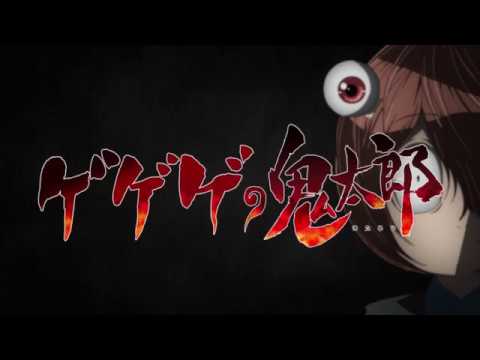
This song, GeGeGe no Kitaro, has long been beloved as the opening theme of the nationally cherished anime GeGeGe no Kitaro.
In the sixth series, which aired from April 2018, the “prince of enka,” Kiyoshi Hikawa, took on vocal duties.
Arranged by Kohei Tanaka, the piece—paired with Hikawa’s clear, soaring voice—achieves a wonderfully bewitching finish.
Released as a single CD in October 2018, could there be a track more perfect as BGM for a game of musical chairs? Its melody, which anyone can hum along to, is sure to be enjoyed across generations.
With a comfortable walking tempo, it will undoubtedly make recreation time even more exciting!
First Love TrainHikawa Kiyoshi5rank/position

“First Love Train” is a single released in 2005 by enka singer Kiyoshi Hikawa as his eighth single.
With this work, he achieved the remarkable feat of reaching No.
1 on the Oricon overall singles chart for the first time in his career.
Set to the characteristic melodies of enka that resonate with the ears and hearts of Japanese listeners, it depicts someone recalling their first love in Aomori and then crossing over to Hokkaido to search for that person.
The lyrics mention various place names within Hokkaido, so you might recognize some of them.
Give it a listen when you venture beyond Honshu and visit Hokkaido.

Ooi Stalker OntaroHikawa Kiyoshi6rank/position

Oikake Onjiro from Oi, a song by Kiyoshi Hikawa, is marked by its heartwarming melody.
While catchy, it still features melodies and vocal lines that firmly embody the essence of enka.
The kobushi (ornamental vocal turn) delivered with Hikawa’s signature hiccup-style flip of the voice is less difficult than the more typical kobushi that finely moves up and down the scale.
Since this song contains many such hiccup-inflected kobushi, its overall difficulty level is relatively low.
It’s okayHikawa Kiyoshi7rank/position

Life brings various hardships and joys, and Kiyoshi Hikawa delivers a warm, gentle song that embraces them all.
Released in 2019, this work expresses the sadness and feelings of love that everyone experiences through his beautiful vocals.
Like the moon setting and the sun rising, its hopeful message—that tomorrow will surely come—resonates in the heart.
Also included on the album “Shin Enka Meikyoku Collection 9,” this piece is perfect for singing along at recreational gatherings.
Its friendly, singable melody and uplifting lyrics are part of its charm.