

![Kiyoshiro Imawano’s Most Popular Songs Ranking [2026]](https://i.ytimg.com/vi/rP-qGDu7Hmw/sddefault.jpg)
Kiyoshiro Imawano’s Most Popular Songs Ranking [2026]

This is a ranking that gathers the signature, classic, and popular songs left by Kiyoshiro Imawano—from his solo work, RC Succession, HIS, 2,3’s, and duets with numerous big-name artists.
It’s not just rock; there’s folk, soul, and jazz as well, with different styles incorporated depending on the moment, so listening to them all together is especially rewarding.
Kiyoshiro Imawano Popular Songs Ranking [2026] (1–10)
Strange WorldImawano Kiyoshirō1rank/position
A singer-songwriter hailed as a legend in the Japanese music scene who continues to influence many musicians to this day, Kiyoshiro Imawano’s song.
Featured on his fourth solo album, “KING,” it vividly depicts the bewilderment at the reality of war, as if it exists on a different timeline from ordinary life.
In Japan—a place long removed from war—many listeners may be struck by the message that the conflicts erupting around the world are all strange, unnecessary intrusions into our lives.
It’s a thought-provoking number that makes you want to tell every country in the world that war is not normal, but something uncanny.

In the night sky after the rainImawano Kiyoshirō2rank/position
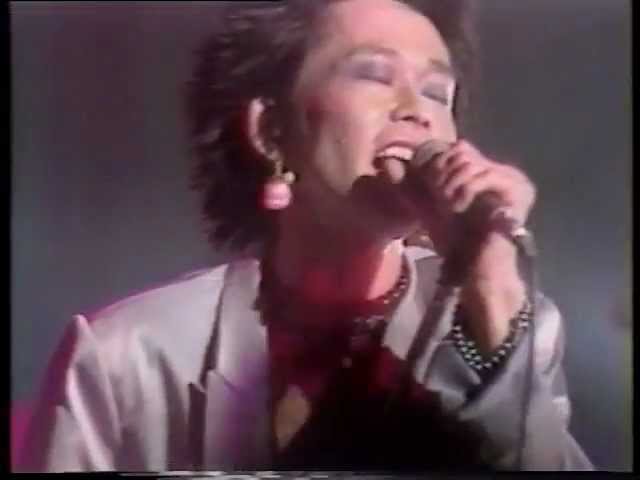
It’s a classic that had a major impact on Japan’s rock scene.
Released in 1980, the song depicts the scene of driving a car on a night after the rain.
Using the car as a metaphor for human relationships and life’s journey, it expresses a strong will to stay positive and overcome difficulties.
Kiyoshiro Imawano’s distinctive vocals and the band’s raw sound are captivating.
It was included on RC Succession’s live album “RHAPSODY,” and the single version was later featured on the best-of album “EPLP.” It’s a recommended track for those who want to reminisce about their youth or who are struggling with life.
In the night sky after the rainImawano Kiyoshirō3rank/position

Speaking of Kiyoshiro Imawano, his musical style is striking for evoking nostalgic scenes within a punky vibe.
Among his works, “Ameagari no Yozora ni” especially showcases his musical character.
While the highest notes aren’t very high, the pitch mid2F# appears frequently, so when adjusting the key, it’s best to center your tuning around that note.
The lyrics are a bit risqué, but it’s a song that tends to get the crowd going at karaoke, so consider adding it to your repertoire.

Daddy’s SongImawano Kiyoshirō4rank/position

This is a song that portrays warm, heartfelt family love.
Released in May 1991 as a solo single by Kiyoshiro Imawano, it was also used in a commercial for Shimizu Corporation.
The lyrics were written by copywriter Shigesato Itoi, with music composed by Kiyoshiro Imawano.
Reaching No.
12 on the Oricon weekly singles chart, the song was later included on the album “abcd” as well as the best-of compilation “MAGIC – KIYOSHIRO THE BEST,” and has been loved across generations.
Centered on the theme of a working father, its gentle lyrics depict a father’s presence in everyday life and his love for his family, resonating deeply with listeners.
It’s a wonderful piece that prompts us to reflect on the importance of fathers.
With Father’s Day approaching, why not listen to it together with seniors at a day service and let the memories flow?
I-ke-na-i Rouge MagicImagawa Kiyoshiro + Sakamoto Ryuichi5rank/position

It can truly be called a masterpiece etched into the history of Japanese music—a groundbreaking work that transcended the confines of techno kayō! Born from the collaboration between Kiyoshiro Imawano and Ryuichi Sakamoto, this track was produced as the theme song for Shiseido’s spring 1982 campaign.
The initial working title was reportedly “Suteki na Rouge Magic,” but the two changed it to the current title on their own initiative.
This piece also effectively marked Imawano’s solo debut, and upon its 1982 release it reached No.
1 on the Oricon charts.
A signature hit of the 1980s, its free-spirited ethos had a profound influence on later J-pop.
JUMPImawano Kiyoshirō6rank/position

This commercial showcases the journey of Nodogoshi
By featuring the people involved at each stage, it powerfully conveys the dedication of many individuals.
The background music is a brass arrangement of Kiyoshiro Imawano’s “JUMP,” adding a bright and festive tone to the commercial.
Daydream BelieverImawano Kiyoshirō7rank/position

For those who aren’t from the RC Succession generation, there may be people who first became aware of Kiyoshiro Imawano after hearing this “Daydream Believer” in Acecook’s popular “Super Cup” commercials.
Even after Kiyoshiro’s passing, it continued to play in 7-Eleven ads and has now settled in as a standard classic.
Originally a cover of The Monkees’ hit, it first appeared as the debut single by The Timers, so strictly speaking it isn’t a Kiyoshiro solo track.
However, the Japanese lyrics—written with thoughts of his birth mother, who died young—are filled with Kiyoshiro’s kindness and warmth, and they’re truly moving.
Since the original is a pop song written by an excellent songwriter, it’s easy for anyone to sing, and as mentioned, Kiyoshiro’s Japanese lyrics are wonderful—so sing it out freely and with feeling!
