

Sayuri Ishikawa Popular Song Ranking [2026]

Sayuri Ishikawa, who debuted as an idol singer in 1973, was highly regarded for her vocal ability but seemed to struggle to really break through.
However, when “Tsugaru Kaikyō Fuyugeshiki” became a massive hit in 1977, she quickly rose into the top ranks of the enka world and followed it with a string of hits, eventually becoming one of the leading figures representing Japanese enka.
- Sayuri Ishikawa Karaoke Hit Songs Ranking [2026]
- Hitomi Ishikawa Popular Songs Ranking [2026]
- Enka Karaoke Popularity Rankings [2026]
- Fuyumi Sakamoto’s famous and popular songs
- [Queen of Enka] A Collection of Easy-to-Sing Songs by Sayuri Ishikawa [2026]
- Miyuki Nakajima’s Moving Songs and Popular Tracks Ranking [2026]
- Harumi Miyako Popular Songs Ranking [2026]
- Hiroshi Itsuki Popular Songs Ranking [2026]
- Ishida Ayumi’s Most Popular Songs Ranking [2026]
- Sachiko Kobayashi Popular Songs Ranking [2026]
- Hikawa Kiyoshi Popular Songs Ranking [2026]
- Breakout after her re-debut! Introducing a ranking of Miyuki Kawanaka’s popular songs
- A roundup of commercials featuring Sayuri Ishikawa. Includes ads where you can hear her singing!
Sayuri Ishikawa Popular Songs Ranking [2026] (21–30)
A Midsummer Night’s DreamIshikawa Sayuri22rank/position

Sayuri Ishikawa is a grand dame of the enka world who debuted in 1973 and is known for numerous hit songs, including “Tsugaru Straits—Winter Scene.” “A Midsummer Night’s Dream,” released on September 28, 2000, portrays the passion and transience of a woman who lives for love.
With a melody that paints vivid summer scenes and Ishikawa’s rich, resonant vocals, the song delicately expresses the emotions of a woman in love.
In particular, the lyrics—depicting the joy of a summer spent with a beloved and the loneliness when it ends—are sure to resonate deeply with listeners.
It’s a track that evokes a certain nostalgia while also giving listeners the courage to welcome a new season with optimism.
Marital AffectionIshikawa Sayuri23rank/position

Set against the nostalgic backdrop of old Naniwa, this song richly portrays the bond between husband and wife.
The lyrics mention Tsutenkaku and Sennichimae, conveying how deeply Osaka’s culture is intertwined with married life.
It sings of an inseparable relationship—like actors in a traditional takekomi-shibai—and of walking together along life’s uphill paths, leaving listeners with a warm, cozy feeling.
Released in January 2018, the piece was also used as an in-play song for Sayuri Ishikawa’s special stage production “Meoto Zenzei.” It’s perfect not only for couples to enjoy together, but also for expressing gratitude to someone important.
Day by day, repeatedly and earnestlyIshikawa Sayuri24rank/position
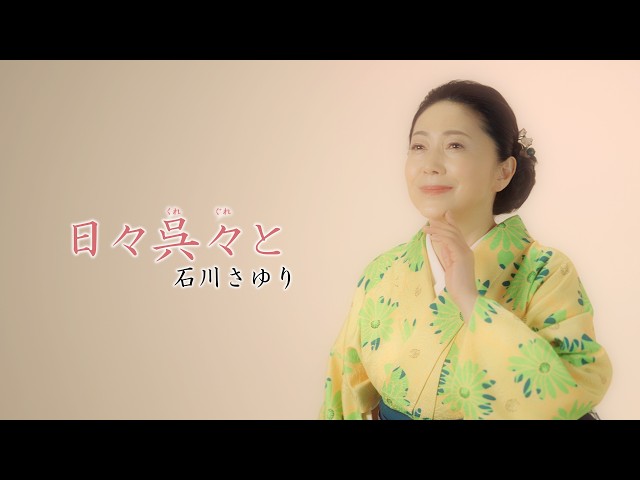
This is a message song that embraces the preciousness of the unassuming, everyday moments that repeat amid changing times.
Released as a single in April 2026, it drew attention for featuring lyrics and composition by Kazufumi Miyazawa of THE BOOM and arrangement by Takayuki Hattori.
Precisely because we live in an age of social uncertainty, it conveys a prayer-like wish to cherish small happinesses, expressed through Sayuri Ishikawa’s compassionate, loving vocals.
Please take your time to savor this heartfelt, high-quality music.
Flowers are blooming.Ishikawa Sayuri25rank/position

Seiji Kameda has also produced songs for Sayuri Ishikawa, a grand dame of enka.
This particular track was written and composed by Yoshiki Mizuno of Ikimonogakari.
While the piano and strings arrangement has the gentle feel of a kayōkyoku-style tune, the strength of the melody really stands out.
Ishikawa’s vocals have an expected commanding presence, and I can feel Kameda’s prowess in how he harnesses that voice within a pop framework.
fireworksIshikawa Sayuri26rank/position

Since her debut in 1973, Sayuri Ishikawa has been a leading figure in Japan’s enka scene.
Among her works, the 2012 release “Hanabi” (“Fireworks”) portrays memories of the past and bittersweet emotions that resurface at summer’s end.
The song drew attention for being written by singer-songwriter Hako Yamasaki.
Through the motif of fireworks—a hallmark of summer—it delicately expresses memories of a childhood friend and a secret, unspoken love.
Ishikawa’s richly expressive vocals and the song’s poetic diction blend beautifully, leaving a deep impression on listeners.
Sayuri Ishikawa’s “Hanabi” is a memorable piece that epitomizes the wistfulness of late summer.
Hotel Minato-yaIshikawa Sayuri27rank/position

When it comes to songs about a woman’s heartbreak set in the northern country, it has to be Sayuri Ishikawa.
Even with commonplace words like harbor, sake, and tears, her vocal prowess naturally conjures vivid images.
It seems there isn’t actually a “Hotel Minatoya” in the north, but there was a Hotel Minatoya in Kochi Prefecture.
Safflower Picking SongIshikawa Sayuri28rank/position

This is a new folk song from Yamagata Prefecture—a drinking song.
Safflower belongs to the daisy family, but like a rose it has thorns.
There are thornless varieties used for fresh flowers, but for dyeing, thorny safflowers are used.
They are picked in the morning because the thorns soften with the early-morning dew.
It’s a folk song that sings of Yamagata along with the wisdom of the past.