

Enka Singer Popularity Ranking in Karaoke [2026]

We’ve put together a ranking of popular enka singers, from legendary veterans who have supported the enka world for many years to promising up-and-coming talents.
It’s common to be unsure what song to sing when you go to karaoke, isn’t it?
In those moments, try using this ranking as a reference.
- Popular Enka Singers Ranking [2026]
- Enka Karaoke Popularity Rankings [2026]
- Popular Enka. Latest Rankings [2026]
- Classic enka songs you’ll want to sing at karaoke: recommended popular tracks
- [2026] Recent hit enka songs: must-watch popular kayō tracks
- [For People in Their 60s] Ranking of Easy-to-Sing Karaoke Songs [2026]
- [2026] Easy Enka Songs for Karaoke: Recommended Picks — Women Singers Edition
- Hiroshi Itsuki Popular Songs Ranking [2026]
- [Men] Ranking of Easy-to-Sing Karaoke Songs [2026]
- [2026] Easy Enka Songs Recommended for Karaoke – Male Singers Edition
- [For People in Their 40s] Karaoke Songs That Are Easy to Sing: 2026 Ranking
- Karaoke Popular Song Ranking of Ikuzo Yoshi [2026]
- [2026] All-Time Enka Sales Ranking
Top 10 Most Popular Enka Singers at Karaoke [2026]
Like the flow of a riverMisora Hibari8rank/position

Released on January 11, 1989, this was Hibari Misora’s final single during her lifetime—an immortal masterpiece bridging the Showa and Heisei eras, with lyrics by Yasushi Akimoto and music by Akira Mitake.
It likens the journey of life to a “narrow, long river,” featuring lyrics that gently embrace countless hardships and joys, paired with a grand melody.
In 2006, it was selected for the “100 Best Japanese Songs,” and it remains a long-loved piece.
Listening to it brings a sense of peace.
I’m sure it would be a hit at karaoke and have a soothing effect, so it’s worth memorizing for the right moment.
When you sing it, imagine yourself performing in a wide, open space—your voice will flow freely, and you’ll likely find it very pleasant to sing.

freezing rainKayama Akio9rank/position

A signature work by Akio Kayama that poignantly sings of the heartache of unrequited love through the figure of a woman enjoying a solitary drink at a bar.
This classic captivates many fans with its bittersweet vocals and richly expressive delivery.
Released in 1977 as his debut single, it has gradually seeped into people’s hearts over time.
In 1983, it won the Long-Seller Award at the Japan Record Awards and is highly regarded as a beloved song of the Showa era.
With a light, folk-tinged melody, the key is to value rhythm and hold back overt power, emphasizing restrained emotion over force.
For karaoke, try singing up to the chorus as if speaking to the listener, and have fun by getting friends to handle the tricky parts.
Dotonbori SentimentTendō Yoshimi10rank/position

Yoshimi Tendo is an enka singer highly acclaimed for her live performances.
With first-class qualities across the board—vocal power, expressiveness, and fine techniques such as kobushi—she also has songs that are relatively easy to sing.
Among them, the one I especially recommend is Dotonbori Ninjo.
It’s a robust enka number with the flavor of Kawachi Ondo, but most of the kobushi are the type that undulate at the start of each phrase, so it’s not particularly difficult.
Of course, if you aim to replicate every detail, the difficulty is high; however, since most of the Kawachi Ondo-style kobushi occur in the lower register, anyone who can control pitch in the low range should be able to sing it without issue.
By the way, the reading of the title is not “Dotonbori Ninjo,” but “Tonbori Ninjo.”

Karaoke’s Most Popular Enka Singers Ranking [2026] (11–20)
North TavernHosokawa Takashi11rank/position
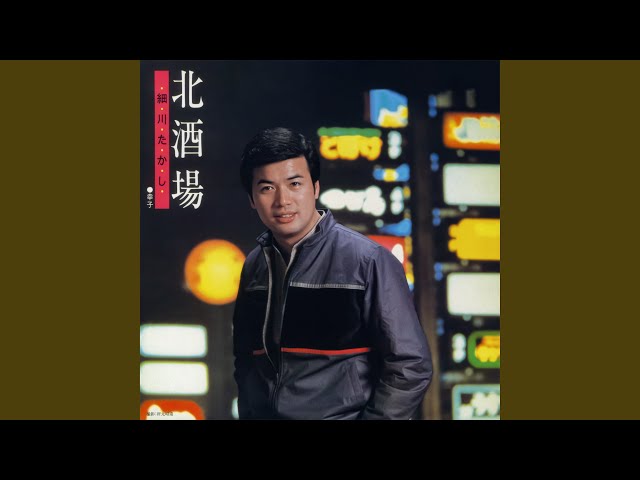
Takashi Hosokawa is one of Japan’s finest vocalists.
Early in his career he pursued a path as an enka singer, but after studying under Michiya Mihashi, who came from a folk song background, his already high-level singing ability grew to a monstrous level.
Among that, he has also actively taken on catchy songs, making him an extremely popular figure among enka fans.
Among Hosokawa’s songs, the one I particularly recommend for its crowd-pleasing energy and ease of singing is “Kita Sakaba.” While the overall range is set on the higher side, the range itself isn’t very wide, so you should be able to sing it if you adjust to the right key.
The song features a structure typical of enka, showcasing scale movements of two notes or more with kobushi (melismatic turns), but since the kobushi don’t continue in rapid succession, their difficulty is relatively low.
Instead of projecting your voice forward, try to produce it with the sensation of it piercing through from the crown or back of your head; doing so will bring you quite close to the original, so give it a try.
atonementTeresa Ten12rank/position

The Showa-era classic “Tsugunai” is a poignant enka masterpiece that sings of tragic love.
Teresa Teng’s clear, translucent voice gently conveys the end of a forbidden romance and her atonement to the one she loves.
The chorus phrase “ai wo tsugunau” (to atone for love) is especially memorable and leaves a deep impression on listeners.
Released in January 1984, the song was also used in a YKKap commercial and became a major hit.
It has a strong kayōkyoku flavor, making it easy to sing and recommended even for those who aren’t yet comfortable with full-on traditional enka.
It was rainy again in Nagasaki today.Uchiyamada Hiroshi to Cool Five13rank/position

This was the debut single of Hiroshi Uchiyamada and the Cool Five, who debuted in 1969, and it’s the group’s biggest hit.
The lead vocal is by Kiyoshi Maekawa, who later self-covered the song as well.
To score high, instead of trying to sing the entire song straight through, it’s effective to practice so you can sing one full verse perfectly without mistakes.
I often introduce this practice method in various places, and especially for enka and kayōkyoku, there are relatively few songs whose melodies change drastically between the first and second verses, so it’s wise to thoroughly learn the melody first.
Also, since the opening lyric starts on a vowel and enters from a low note, if you sing that part with just a slight catch in the throat, you’ll be able to hit the pitch more clearly.
Give it a try!
With a fiery heartKobayashi Akira14rank/position

A work notable for its distinctive sound featuring strings, “Atsuki Kokoro ni.” This piece includes few of Akira Kobayashi’s trademark upward-climbing long tones.
Since most of the long tones occur while the melody descends, even those who struggle with upward vibrato can sing it without issue.
It’s a kayōkyoku with a strong pop flavor, and advanced vocal techniques like kobushi do not appear at all.
However, the rhythm at the beginning of the chorus is somewhat irregular, so you’ll need to practice that part thoroughly.