

Enka Singer Popularity Ranking in Karaoke [2026]

We’ve put together a ranking of popular enka singers, from legendary veterans who have supported the enka world for many years to promising up-and-coming talents.
It’s common to be unsure what song to sing when you go to karaoke, isn’t it?
In those moments, try using this ranking as a reference.
- Popular Enka Singers Ranking [2026]
- Enka Karaoke Popularity Rankings [2026]
- Popular Enka. Latest Rankings [2026]
- Classic enka songs you’ll want to sing at karaoke: recommended popular tracks
- [2026] Recent hit enka songs: must-watch popular kayō tracks
- [For People in Their 60s] Ranking of Easy-to-Sing Karaoke Songs [2026]
- [2026] Easy Enka Songs for Karaoke: Recommended Picks — Women Singers Edition
- Hiroshi Itsuki Popular Songs Ranking [2026]
- [Men] Ranking of Easy-to-Sing Karaoke Songs [2026]
- [2026] Easy Enka Songs Recommended for Karaoke – Male Singers Edition
- [For People in Their 40s] Karaoke Songs That Are Easy to Sing: 2026 Ranking
- Karaoke Popular Song Ranking of Ikuzo Yoshi [2026]
- [2026] All-Time Enka Sales Ranking
Enka Singers Most Popular at Karaoke [2026] (21–30)
married coupleNakamura Mitsuko22rank/position

Mitsuko Nakamura’s famous song “Fūfu” portrays the love between a married couple.
Its lyrics depict the pure love of partners who have been together for many years, and the piece is characterized by a heartwarming melodic line that matches this theme.
The kobushi ornamentation that appears in the song incorporates a slight Kawachi-ondo flavor, so it uses the hiccup-like technique of flipping the voice.
It’s similar to the style of kobushi used by Sachiko Kobayashi.
Although this piece employs that technique, there are very few instances of kobushi involving pitch changes of more than two notes, so the overall level of difficulty can be considered low.

Izakayaitsuki hiroshi, kinomi nana23rank/position

The duet song Izakaya by Hiroshi Itsuki and Nana Kinomi was released on October 25, 1982.
The song depicts a one-night encounter between a man and a woman who happen to sit next to each other at an izakaya.
They neither ask each other’s names nor share personal stories, yet it portrays a stylish scene of the two spending time together at the izakaya until the next morning.
Even after all these years since its release, it remains a highly popular duet choice for karaoke, so be sure to try singing it as a male-female pair.
The Camellia Sasanqua InnŌkawa Eisaku24rank/position

Eisaku Okawa’s signature song, whose passionate vocals move listeners to the core.
The lyrics depict a heartrending love story with the theme of an affair, beautifully harmonized with an emotive melody.
Released in August 1982, it became a massive hit with total sales of 1.8 million copies.
At the 1983 Japan Record Awards, it won the Long-Seller Award, and in the same year he made his first appearance on NHK’s Kohaku Uta Gassen.
Even those new to enka are likely familiar with this song, though it does require a certain level of vocal technique.
It’s recommended to start by carefully listening to Okawa’s delivery and studying elements like breathing timing.
Kokoro KaleidoscopeYamauchi Keisuke25rank/position

It’s no exaggeration to call this a new signature song for Keisuke Yamauchi born in the Reiwa era! “Kokoro Mangekyo,” released in 2023, marked a new challenge for Yamauchi as it’s a song from the year he entered his forties.
It’s a dynamic kayōkyoku that skillfully fuses orchestral and Japanese flavors, and if you nail it, it will definitely liven up any karaoke session.
The spot where the melody shifts at the end of the final chorus while applying vibrato requires particular practice, but overall the key is on the lower side and it doesn’t rely much on traditional enka techniques, so it’s also recommended for beginners to enka.

matchIwa Misaki26rank/position

If you want to immerse yourself in the world of contemporary enka, how about this one song? It’s a track by Misaki Iwasa, an enka singer who got her start in AKB48.
It was released in August 2024 as her 11th single.
The lyrics are achingly bittersweet, likening a fading flame of love to the flicker of a match swaying in a nighttime snack bar.
If you fully inhabit the protagonist and sing with rich emotion, I think it will resonate deeply with listeners.
Anemone flaccida (nirinsō; literally “two-flowered anemone”)kawanaka miyuki27rank/position
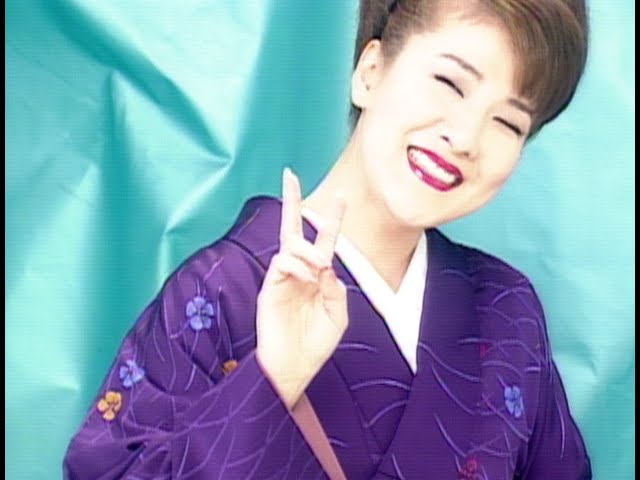
Among Miyuki Kawanaka’s songs, “Nirinsō” stands out as one of the most well-known, with sales reaching one million copies.
Kawanaka herself released an album titled “Shiawase Enka,” and it’s fitting that “Nirinsō” is the first track—its bright, upbeat tone is distinctive and seems to symbolize the “sunny” side of enka, which expresses the full spectrum of life’s emotions.
For enka fans, it needs no introduction, and it’s also immensely popular at karaoke, so there’s no need for excessive commentary.
For beginners, however, practicing this song can be a great way to learn fundamental enka techniques like vibrato and kobushi.
If the high notes are tough, adjust the key to suit your voice, study the wonderful lyrics, and sing with feeling.
hay feverIchikawa Yukino28rank/position

Hanawazurai is a striking piece with a melody that exudes allure and passion.
While it carries the distinctive luster of enka, it also contains a generous dose of Showa-era pop essence.
In fact, elements typical of enka—such as the kobushi vocal ornament—rarely appear in the vocal line; the enka quality remains more of an atmospheric impression.
Because Showa pop forms the foundation, the vocal line is inherently less demanding, so if you sing with careful attention to dynamics and phrasing, it will sound professional.