

Enka Karaoke Popularity Rankings [2026]

When you sing popular enka songs, it gets everyone excited—even people who aren’t that into enka.
Still, when it comes time to pick a song at karaoke, it’s easy to get stuck.
I’ve put together a ranking of popular enka songs for karaoke, so let me share it with you.
I hope you find it helpful!
- Popular Enka. Latest Rankings [2026]
- Enka Singer Popularity Ranking in Karaoke [2026]
- Classic enka songs you’ll want to sing at karaoke: recommended popular tracks
- Hiroshi Itsuki Popular Songs Ranking [2026]
- [For People in Their 60s] Karaoke Songs That Get the Crowd Going: Ranking [2026]
- Popular Enka Singers Ranking [2026]
- [Women] Easy-to-Sing Karaoke Songs Ranking [2026]
- [2026] Recent hit enka songs: must-watch popular kayō tracks
- [Men] Karaoke Crowd-Pleasers Ranking [2026]
- [2026] Easy Enka Songs for Karaoke: Recommended Picks — Women Singers Edition
- Karaoke Popular Song Ranking of Ikuzo Yoshi [2026]
- Cool masterpieces of enka, the heart of Japan
- [2026] Representative Famous Enka Songs: A Compilation of Classic Favorites [Beginner-Friendly]
Enka Karaoke Popularity Rankings [2026] (31–40)
Anemone flaccida (nirinsō; literally “two-flowered anemone”)kawanaka miyuki36rank/position
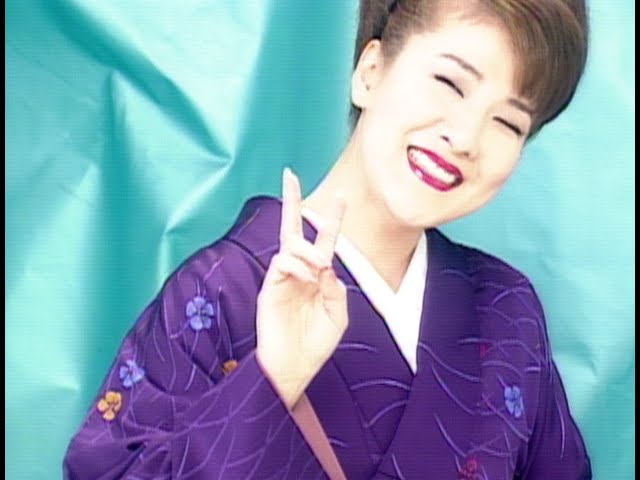
Among Miyuki Kawanaka’s songs, “Nirinsō” stands out as one of the most well-known, with sales reaching one million copies.
Kawanaka herself released an album titled “Shiawase Enka,” and it’s fitting that “Nirinsō” is the first track—its bright, upbeat tone is distinctive and seems to symbolize the “sunny” side of enka, which expresses the full spectrum of life’s emotions.
For enka fans, it needs no introduction, and it’s also immensely popular at karaoke, so there’s no need for excessive commentary.
For beginners, however, practicing this song can be a great way to learn fundamental enka techniques like vibrato and kobushi.
If the high notes are tough, adjust the key to suit your voice, study the wonderful lyrics, and sing with feeling.

hay feverIchikawa Yukino37rank/position

Hanawazurai is a striking piece with a melody that exudes allure and passion.
While it carries the distinctive luster of enka, it also contains a generous dose of Showa-era pop essence.
In fact, elements typical of enka—such as the kobushi vocal ornament—rarely appear in the vocal line; the enka quality remains more of an atmospheric impression.
Because Showa pop forms the foundation, the vocal line is inherently less demanding, so if you sing with careful attention to dynamics and phrasing, it will sound professional.

draft (cold air seeping through gaps)Sugi Ryōtarō38rank/position

This song is the best-selling signature hit in Ryotaro Sugi’s career as a singer, who is also renowned as an actor.
Used as the theme song for the classic period drama “Toyama no Kin-san,” in which he himself starred, it achieved the astonishing feat of staying within the Oricon Top 100 for 147 weeks.
It’s also a popular karaoke choice, so you’ll want to sing it with plenty of mood and aim for a high score.
While the melody may sound steady overall, you’ll notice when you sing it that the pitch range is actually quite wide.
Since the piece’s rich appeal lies in its deep, resonant low notes, if you’re not confident with low tones, I recommend listening to the original repeatedly and focusing your practice on that area.
Come back.Matsumura Kazuko39rank/position

Kazuko Matsumura is an enka singer from Hokkaido.
While she also performs orthodox enka, her essence arguably lies in rock-influenced enka.
Many people have surely been moved by her performances, where she holds a shamisen and sings as if she were a rock musician doing an acoustic set.
“Kaette Koi yo” is one of her signature songs; it maintains the fundamentals of enka yet stands out with a rock-tinged power.
The range is somewhat high, from mid2 A# to hi D#, but since the overall span is narrow, it shouldn’t be difficult to sing if you adjust to a suitable key.
It also features fewer kobushi (ornamental turns) than typical enka, making it a recommended choice.
Life waits for no one.Moriyama Aiko40rank/position

Aiko Morikawa is an enka singer from Toyama Prefecture.
Despite her solid vocal abilities, she has produced many catchy songs, so even those not from the Hokuriku region may know her.
Her famous song “Matta Nashi da yo Jinsei wa” features many kobushi (ornamental vocal turns) with a shouted edge, but because most of them descend and the pitch movement in the kobushi stays within three notes, the overall difficulty is on the lower side.
The melody also has the feel of a fight song, giving it a bright tone, so you can expect it to really get the crowd going.
Enka Karaoke Popularity Rankings [2026] (41–50)
I’ve fallen for you.Ishihara Junko41rank/position

Junko Ishihara’s classic “Horemashita.” Released in 1988, this piece marked her memorable debut and is still beloved by many fans today.
While it inherits elements of enka, the song as a whole features an easy-to-sing vocal line reminiscent of kayōkyoku.
In particular, the kobushi (ornamental vocal turns) are very easy—there are no difficult kobushi in this piece at all.
They’re limited to, at most, a one-step pitch change, so anyone with experience singing enka should be able to perform it with ease.
Tsugaru Strait – Winter SceneIshikawa Sayuri42rank/position
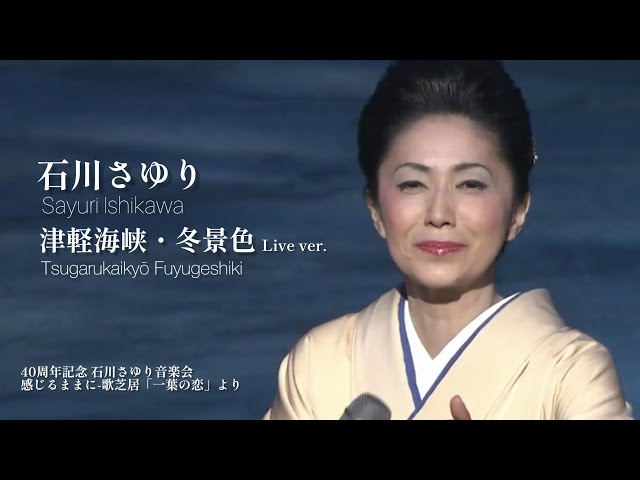
Sayuri Ishikawa’s signature song “Tsugaru Strait—Winter Scene,” released on January 1, 1977, is a masterpiece that portrays parting and resolve set against the northern strait, and it marked her turning point into a full-fledged enka singer.
The intro is also very striking—so famous you can hum it right from the start.
The song’s overall range is a slightly high F#3–D5, and the chorus suddenly leaps into the high register, so be careful—some people may end up tensing up by trying to sing powerfully.
Keep your head resonance engaged at all times, and when you go into the high notes, aim to resonate in the same place.
