

Misorah Hibari Popular Song Rankings [2026]

Hibari Misora, the legendary diva Japan is proud of.
This is a ranking of popular songs by Hibari Misora, a leading singer of the Showa era who continues to be loved by people today.
The list includes a variety of tracks, from signature songs that became nationwide hits to covers of jazz standards and songs featured in musical films.
- Hibari Misora’s Most Popular Karaoke Songs Ranking [2026]
- Ranking of Beloved Hit Songs Among Women [2026]
- Harumi Miyako Popular Songs Ranking [2026]
- Hibari Children's Choir Popular Song Rankings [2026]
- Sayuri Ishikawa Popular Song Ranking [2026]
- [Tearjerker] Songs that make your heart tremble with tears & moving tracks with lyrics that touch the soul
- Karaoke Popular Song Rankings of Momoe Yamaguchi [2026]
- Miyako Otsuki Popular Songs Ranking [2026]
- Aki Yashiro’s Most Popular Songs Ranking [2026]
- Sad Song Rankings [2026]
- Sachiko Kobayashi Popular Songs Ranking [2026]
- Popular Love Song Rankings [2026]
- Miyuki Nakajima’s Moving Songs and Popular Tracks Ranking [2026]
Hibari Misora’s Most Popular Songs Ranking [2026] (1–10)
Sad SakeMisora Hibari8rank/position

It’s a classic song known for its wistful melody and lyrics that resonate deeply.
Released in June 1966, this piece is recognized as one of Hibari Misora’s signature songs, and a version featuring spoken lines also gained popularity.
The lyrics, which portray the pain of heartbreak and the strength to overcome life’s hardships, have struck a chord with many and continue to be loved today.
Combined with Misora’s emotionally rich vocal performance, it’s a track that leaves a lasting impression on listeners.
It’s recommended not only for those interested in enka and mood kayō, but also for younger music fans who want to experience the great songs of the Shōwa era.
Take your time to savor the heartfelt vocals and lyrics.
Tangled HairMisora Hibari9rank/position

This is a gem of a song released in December 1987 as the first work marking the phoenix-like comeback of Hibari Misora, a defining figure of the Showa-era pop scene, after a long period of recuperation.
Against the backdrop of waves surging and receding, the helpless feelings of a woman who does nothing but pray for the happiness of the lover who left her tighten the listener’s chest.
The image of her heart growing ever more emaciated as the seasons turn—so much so that the obi that was double-wrapped in spring becomes triple-wrapped in autumn and still has slack—is truly a breathtaking display of expressive power.
It is said this piece was recorded in one vigorous sweep together with an orchestra, and you can feel Misora’s extraordinary intensity in her vocals.
When you tackle this classic at karaoke, try to sing with a picture in your heart of the heroine’s deep sorrow and her earnest determination to face forward nonetheless.
It will surely resonate deeply with those who listen.
Ringo OiwakeMisora Hibari10rank/position

This masterpiece gracefully portrays a farewell scene alongside the landscapes of Tsugaru.
With white clouds floating over Mount Iwaki, peaches and cherry blossoms, and early-blooming flowers as the backdrop, a fragile, aching sentiment—like petals dancing in the moonlight—touches the heart.
Hibari Misora beautifully conveys a lyrical world through her distinctive melodic phrasing infused with elements of folk songs and enka, and her deeply expressive singing.
Released in May 1952, the piece was produced as an insert song for the radio drama “Ringoen no Shōjo” (The Apple Orchard Girl) the same year, and was later chosen as the theme song when it was adapted into a film.
It achieved an astonishing 700,000 sales and is known as one of Hibari Misora’s signature songs.
Highly recommended for those who cherish deep memories in their hearts or wish to experience the charm of traditional Japanese popular music.
Misorah Hibari Popular Song Rankings [2026] (11–20)
soft; gentle; pliantMisora Hibari11rank/position

Hibari Misora’s “Yawara” is a classic distinguished by powerful lyrics that convey a way of life through the spirit of judo.
Her commanding voice and singing will inspire courage and hope in listeners.
Since its release in 1964, it has been loved as a TV drama theme song and has been covered by many artists.
It’s a song you’ll want to hear when you need the courage to face life’s hardships.
Hibari Misora’s soul-stirring cry is sure to ignite your heart.
Hibari’s Sado Love StoryMisora Hibari12rank/position
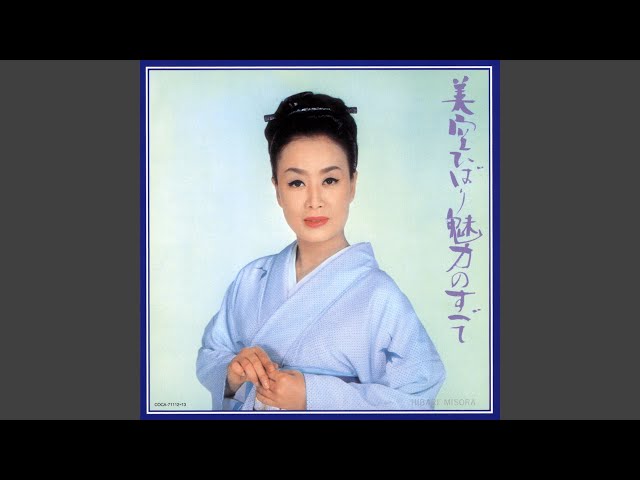
It’s a single released by Hibari Misora in 1962.
That same year, Toei produced the film “Hibari no Sado Jowa,” starring Misora, and this song was used as its theme.
The song was performed at the 13th NHK Kouhaku Uta Gassen in 1962, and it has been covered by many artists.
The Izu DancerMisora Hibari13rank/position

This is the song Hibari Misora sang as the theme for the 1954 film based on a novel by Yasunari Kawabata.
In the movie, Misora herself plays the lead role, and the wistful melody blends beautifully with her emotionally rich vocals to create a gem of a track.
Upon the film’s release, the song quickly became a major talking point, and Misora’s powerful yet delicate singing captivated many hearts.
As a classic that represents the Showa era, it’s sure to stir nostalgic memories of youth.
Why not reminisce about those days with friends who lived through the same era, listening together to Misora’s voice? You’re sure to enjoy a delightful time.
Hometown of TsugaruMisora Hibari14rank/position

Misora Hibari’s “Tsugaru no Furusato” is themed around a town where apples—at their best from autumn to winter—are grown.
Released in 1953, the song was used as the theme for the film “Ringoen no Shōjo” (The Girl of the Apple Orchard).
It has also become a local song of Aomori Prefecture, where many apples are produced.
Set to a melody that conjures the chilly scenery of Tohoku, the lyrics express a longing for one’s hometown.
Whether you’re from Tohoku or not, why not listen while reminiscing about the landscapes of the place where you spent your childhood?
