

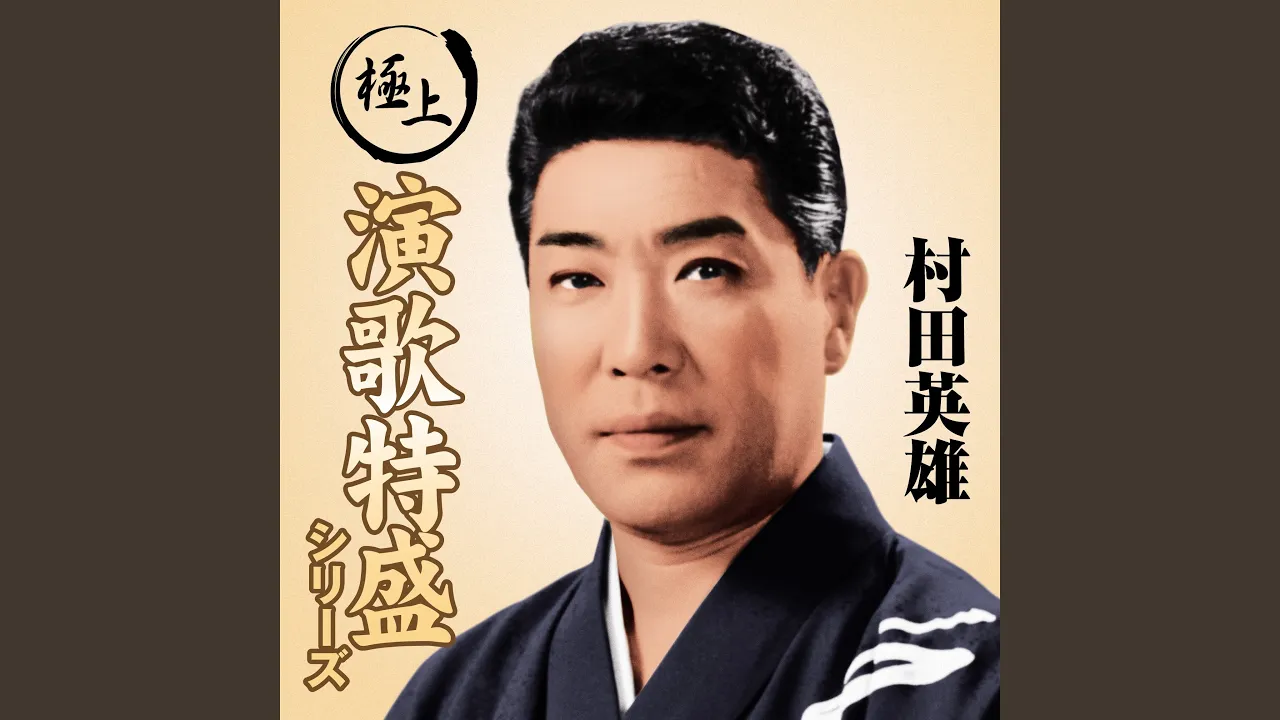
Enka singer who led the postwar pop scene! Hideo Murata’s most popular songs ranked

Originally active as a rōkyoku singer, Hideo Murata demonstrated his show-business talent from a young age, even becoming the leader of the Sakai Unbō troupe at the age of 14.
His singing voice and worldview, honed through rōkyoku, have been passed down as those of one of the leading enka singers of the postwar popular music scene.
From the 1980s onward, his appearances on television increased, and despite being a veteran, he also gained popularity among younger generations.
This time, we present a ranking of popular songs by the legendary enka singer Hideo Murata—be sure to check it out!
Enka singer who led the postwar pop scene! Hideo Murata’s most popular songs ranked
king (shogi piece)Murata Hideo1rank/position

A quintessential classic of the Showa era, this song powerfully portrays a man’s pride and poignant loneliness.
Using a shogi grandmaster as its motif, it movingly depicts a man who refuses to abandon his dreams despite a life of poverty, as well as his gratitude toward his beloved wife.
Released in November 1961, it became an instant smash after Hideo Murata performed it on that year’s NHK Kohaku Uta Gassen.
The following year, it was chosen as the theme song for a film of the same name, ultimately selling over three million copies.
Marked by its distinctive waltz (3/4) rhythm, the chorus is meant to be sung with powerful conviction.
It’s a perfect choice not only for shogi fans, but also for anyone striving toward their dreams or wishing to sing with heartfelt thanks to someone dear.
The Life of Mutsu (Including “A Thousand Ryō of Guts”)Murata Hideo2rank/position

This is a song by Hideo Murata, who, with a commanding voice honed through rokyoku narrative singing, proudly gives voice to the spirit of a Kyushu man.
With personal conviction and “guts worth a thousand ryō” in his heart, the protagonist lives straightforwardly despite his awkwardness—evoking a scene straight out of a yakuza film.
Released as a single in July 1958, the piece resonated with many, overlapping with the imagery of the film of the same name.
Casting the sorrow of an unrequited love into the rough waves of the Genkai Sea and facing forward to the beat of festival drums, he embodies a strength tempered by a bittersweet humanity.
Perhaps it speaks deeply to the hearts of those who have weathered a turbulent era.
The Seasons of a Married CoupleMurata Hideo3rank/position

One of the signature songs by Murata Hideo, a stalwart of the enka world.
Its lyrics, which portray the journey of a married couple—at times tender, at times heartrending—leave a deep impression.
Enjoying enduring popularity, it was re-released in November 2003 as “
You can almost picture the two of them overcoming a turbulent life side by side.
It’s perfect for couples to listen to together, and it might also spark new conversations when enjoyed by the whole family.
The day I marryMurata Hideo4rank/position

A once-in-a-lifetime moment—the daughter’s wedding.
This beloved classic warmly sings of a father’s complex feelings.
Released in 1987, Murata Hideo’s song continues to be cherished at weddings and receptions today.
It has often been featured on NHK music programs and is regarded as one of the signature pieces showcasing Murata’s vocal prowess.
The lyrics, filled with a father’s unconditional love and his blessings and hopes for his daughter, resonate deeply with listeners.
It’s perfect not only for weddings but also as a gift to fathers with daughters.
A moving masterpiece that every enka fan should hear at least once.
The Life of Matsu the UntamedMurata Hideo5rank/position

In addition to the mega-hit “Ōshō,” enka singer Hideo Murata, who passed away in 2002, left behind numerous songs.
This piece, “Muhōmatsu no Isshō,” was his debut single, released in 1958.
He also performed it on NHK’s Kōhaku Uta Gassen in 1975.
Originally a rōkyoku narrative ballad, it was arranged and released as a popular song.
The lyrics feature many hallmarks of Hakata, including Kokura in Kyushu and the Genkai Sea.
It’s a masculine, powerful number.

Ladies and gentlemenMurata Hideo6rank/position

Hideo Murata’s “Minna no Shū” celebrates the importance of honestly expressing life’s joys, anger, sorrow, and pleasure.
It’s striking how the song offers concrete coping tips for everyday life, such as drinking water to calm down when you feel angry.
Released in 2009, this gem of a track is infused with Murata’s rich life experience.
When older listeners sing it at karaoke, it’s sure to spark a sense of shared empathy.
If everyone raises their voices together, it can become a wonderful time to talk about life across generations.
Heisei 5/5 OndoMurata Hideo, Sakamoto Fuyumi7rank/position

Heisei 5.5 Ondo by Hideo Murata and Fuyumi Sakamoto is a song released in June 1989 to celebrate the dawn of the Heisei era.
Combined with its bright, upbeat tone, it’s the kind of track that lifts your spirits as you listen.
The lyrics sing of iconic Japanese motifs such as Mount Fuji and cherry blossoms.
Hideo Murata’s powerful vocals and Fuyumi Sakamoto’s clear, pristine voice blend beautifully, creating a one-of-a-kind charm.