

Karaoke Ranking of Popular Songs by Yutaka Ozaki [2026]

Since his debut in 1983 as a “youth icon,” Yutaka Ozaki enjoyed overwhelming support from teenagers of the time.
Even long after his passing, his songs remain popular and are often sung at karaoke.
So this time, we present a ranking of Yutaka Ozaki’s most popular songs for karaoke.
- Yutaka Ozaki Popular Songs Ranking [2026]
- Ballad Songs by Yutaka Ozaki: Popular Songs Ranking [2026]
- Easy-to-sing songs by Yutaka Ozaki. Songs you want to belt out at karaoke.
- Yutaka Ozaki Love Songs: Popular Song Rankings [2026]
- Yutaka Ozaki’s Motivational Songs and Popular Tracks Ranking [2026]
- [For People in Their 40s] Karaoke Songs That Are Easy to Sing: 2026 Ranking
- Kazuyoshi Saito’s Most Popular Karaoke Songs Ranking [2026]
- Kiyohiko Ozaki Popular Songs Ranking [2026]
- Miyuki Nakajima’s Most Popular Karaoke Songs Ranking [2026]
- Songs Women Want Men to Sing: Popular Karaoke Picks Chosen by Girls
- Karaoke Popularity Ranking by Generation [50s] [2026]
- X Japan Karaoke Popular Song Rankings [2026]
- Even karaoke beginners can relax! Easy-to-sing songs for men
Ozaki Yutaka Karaoke Popular Songs Ranking [2026] (21–30)
Donut ShopOzaki Yutaka22rank/position

It starts with a mellow intro and is set in a donut shop in the city suburbs, giving the song a mature atmosphere that evokes loneliness and emptiness.
The track is on the longer side at 5 minutes 43 seconds, and there’s a spoken section in the latter half, so the key is whether you can sing confidently all the way through like Mr.
Ozaki without getting shy.
When you sing, if you pay close attention to the accents at the beginning of each phrase, it will add contrast, making it easier to sing and easier to listen to.
The range shouldn’t be that high, so if you lift your facial muscles, your throat will naturally open up and you should find it easier to project your voice.

RosannaOzaki Yutaka23rank/position

It features semi-autobiographical lyrics that reflect Mr.
Ozaki’s state of mind after turning 21, getting married, and becoming a father.
Included on his 5th album, Birth, released in 1990, the song sold 250,000 copies and topped the Oricon chart, marking an important work that signaled a new direction for him.
Its vibe is similar to Ozaki’s hits like “15 no Yoru” and “OH MY LITTLE GIRL,” so many listeners may find it familiar.
Although Ozaki is known for his raspy voice, trying to imitate it too much will only hurt your throat; you’ll likely get a more comfortable sound by projecting your voice powerfully as if singing toward the distance.
Lost 1/2Ozaki Yutaka24rank/position

It’s a positive song that powerfully voices the contradictions of society and the loss of innocence over a driving band sound.
The overall vocal range is D3–G4, and according to JOYSOUND karaoke info, the key is set slightly higher at +2; if you want to sing in the original key, please press “Original Key Transfer.” When singing, the range gradually rises and the energy builds from around the pre-chorus, so be careful not to overstrain your voice.
The melody line isn’t difficult and has a lot of repetition, so once you learn the first verse, you should be able to sing the full song right away.
existenceOzaki Yutaka25rank/position

It’s a classic song from the 1985 second album “Kaikisen” that questions the importance of accepting yourself amid inner conflict and facing challenges with love and sincerity.
The lyrics encourage confronting the city’s shadows and pain, reexamining your true self, and finding the strength to make a fresh start.
The pitch leaps sharply from the chorus, which may be tough for some singers.
You’ll need a solid breath before hitting the high notes; after taking in plenty of air, let your voice ride that recoil and it will come out smoothly.
Aim your voice as if projecting into the distance.
Take care not to strain too much.
The City Where Love Has VanishedOzaki Yutaka26rank/position

It’s a rock tune included on the debut album “Seventeen’s Map,” released on December 1, 1983.
It’s a classic filled with cries of frustration at the contradictions and absurdities of the world and the powerlessness felt as a student, expressing inner conflict and pure desire.
The overall vocal range is D3–B4, and it features the passionate singing style typical of Ozaki.
If you push too hard, you may lose your voice even within an otherwise comfortable range.
Until you’re used to it, avoid using your throat and focus on resonating in your chest.
Even just placing your hand on your chest can help you feel the resonance and make your singing sound fuller.
Try singing with the sensation of projecting your voice strongly toward your chest.
Stained BondsOzaki Yutaka27rank/position
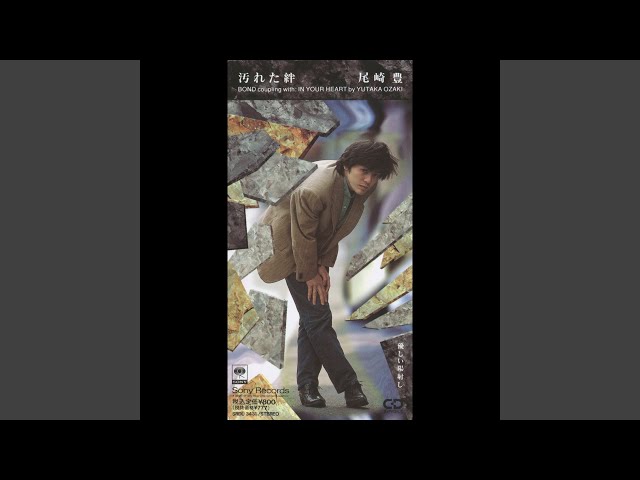
This was Yutaka Ozaki’s final single released during his lifetime, featuring his early-period arranger Akira Nishimoto returning after about four years, resulting in a bright sound that aims to revisit his roots.
While set against a backdrop of betrayal, the lyrics ultimately affirm the beautiful bonds of the past.
The structure raises the vocal range from the A verse to the B verse and then the chorus, building momentum so you can sing each section solidly.
For the chorus, it seems best to sing with a bold, confident mindset—really let it out so your voice projects well.
In the calmer parts around the three-minute mark, try placing your voice forward to avoid sounding too muffled.
Give it a try while using expressive gestures as you sing.
TownscapeOzaki Yutaka28rank/position

Yutaka Ozaki’s song “Townscape” vividly portrays the sterile atmosphere of the city and the loneliness of youth.
With most of the song arranged in a low register—aside from part of the chorus—it’s easy to sing even for those who are older.
The track is included on the 1983 album “Seventeen’s Map.” Despite being his debut album, it was highly acclaimed, reaching No.
2 on the Oricon charts.
When you’re worn out by everyday life or feel like you’re losing sight of life’s meaning, why not give this song a listen? You’re sure to find new hope.