

Rimsky-Korsakov Popular Songs Ranking [2026]

Nikolai Rimsky-Korsakov is a Russian composer.
Renowned for his emotionally rich and majestic music—melodies whose every note resonates with the heart—he is considered such an important figure that he is counted among the “Mighty Handful” (The Five) of Russian composers.
Said to have had synesthesia, perceiving colors in sounds, I have compiled a ranking of his popular pieces.
Please enjoy his richly colorful music.
- Rimsky-Korsakov’s Masterpieces | The Vividly Colorful World of Russian Music
- Mily Balakirev Popular Songs Ranking [2026]
- Modest Mussorgsky Popular Song Rankings [2026]
- Igor Stravinsky Popular Songs Ranking [2026]
- Sergei Rachmaninov Popular Songs Ranking [2026]
- Alexander Borodin Popular Song Ranking [2026]
- Alexander Scriabin Popular Songs Ranking [2026]
- Pyotr Tchaikovsky Popular Song Rankings [2026]
- Dmitri Kabalevsky Popular Song Rankings [2026]
- Peter Ilyich Tchaikovsky Popular Songs Ranking [2026]
- Dmitri Shostakovich Popular Songs Ranking [2026]
- Sergei Prokofiev Popular Songs Ranking [2026]
- Ottorino Respighi Popular Songs Ranking [2026]
Rimsky-Korsakov Popular Songs Ranking [2026] (21–30)
From the Quintet for Piano and Winds, Movement INikolai Rimsky-Korsakov22rank/position
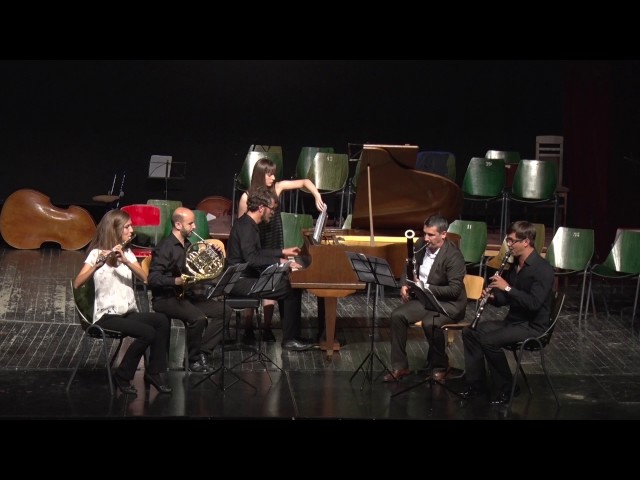
From the Quintet in B-flat major for Piano and Winds, Movement I: Allegro con brio.
Performed by Piano: Shkëlqen Baftiari, Flute: Lejla Beqiri, Clarinet: Pëllumb Vula, Horn: Bledar Bujupi, Bassoon: Meritón Ferizi.
From the Quintet for Piano and Winds, Movement IINikolai Rimsky-Korsakov23rank/position

From the Quintet in B-flat major for Piano and Winds, Movement II: Andante.
Performed by the chamber group “After Hours Session.” Flute: Keiko Ueda; Clarinet: Hiroki Matsubara; Bassoon: Gen Shuto; Horn: Sosuke Seko; Piano: Kyoko Ukon.
From the Quintet for Piano and Winds, Movement IIINikolai Rimsky-Korsakov24rank/position

From the Quintet in B-flat major for Piano and Winds, Movement III: Rondo – Allegretto.
Performed by the Royal Concertgebouw Orchestra Wind Ensemble, based in Amsterdam, with pianist Jeroen Bal, recorded at the former Blasius Church in Delden, the Netherlands.
Piano Concerto in C-sharp minor, Op. 30Nikolai Rimsky-Korsakov25rank/position
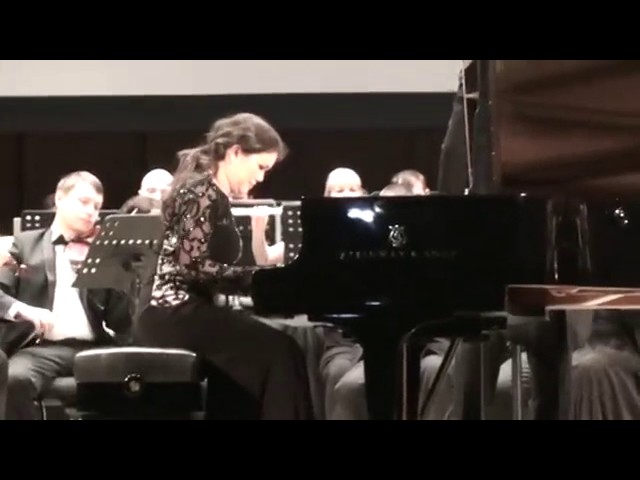
Composed between 1882 and 1883, the work was premiered the following year, in 1884, at a concert of the Free Music School in Saint Petersburg.
Although it consists of three movements, it is performed without interruption via attacca.
The piece is built from two recurring melodies: the opening theme and a Russian folk-song theme recommended by Mily Balakirev, a fellow member of the Mighty Handful.
Movement I: Moderato – Allegretto quasi polacca; Movement II: Andante mosso; Movement III: Allegro.
The performance features Daniya Kaybrina with the Novosibirsk Philharmonic Orchestra, conducted by Etibar Akhmedov.
Fantasy on Two Russian Themes for Violin and OrchestraNikolai Rimsky-Korsakov26rank/position
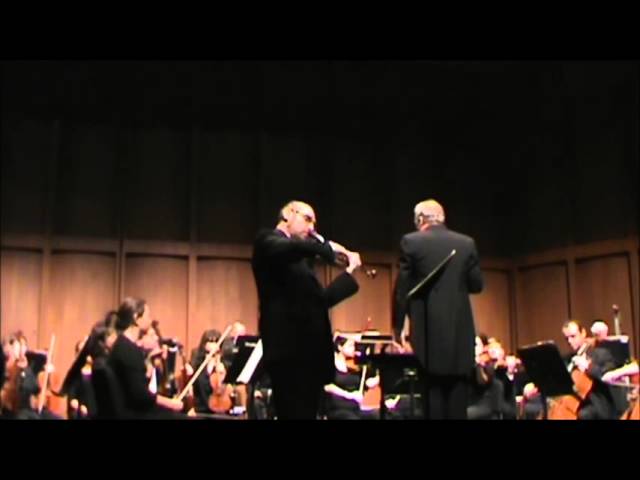
A violin sings a melody steeped in Russian nostalgia.
The orchestra resounds in vivid colors, and its interplay with the violin makes this a captivating work.
The performance features violinist Leonid Yanovsky with the Northwest Florida Symphony Orchestra, conducted by Jeffrey Rink, at the Mattie Kelly Arts Center in Niceville.
Symphony No. 1Nikolai Rimsky-Korsakov27rank/position

A symphony composed by Rimsky-Korsakov when he was around 18.
Written during his naval service, the work is characterized by a powerful tone that conveys youthful passion.
It consists of four movements, beginning with an energetic opening, moving through an emotional and lyrical middle section, and concluding in a bright, dazzling finale.
By incorporating melodies from Russian folk songs, the piece communicates the composer’s deep passion for music.
It’s highly recommended for those interested in Russian music or anyone who wants to experience the brilliance of youthful talent.
Premiered in December 1865 under the baton of Mily Balakirev, it was highly praised as “the first Russian symphony.”
From Symphony No. 1, Movement INikolai Rimsky-Korsakov28rank/position

From Symphony No.
1 in E minor, Op.
1: I.
Largo assai – Allegro.
This work was originally in E-flat minor but was later transposed to E minor.
The performing ensemble, Orchestra Nadezhda, is dedicated to discovering and presenting masterworks from Russia and the Nordic countries.
The conductor is Arata Watanabe.